In Short
- Start from the HR problems that cost the most, then decide which systems must change.
- An honest system inventory with owners, costs and contract dates is the foundation of the plan.
- Rank priorities with a simple score for impact, effort and risk, then stop at three.
- A strategy without a named owner, budget and review date does not survive the first quarter.
Most HR technology strategies I am asked to review are a vendor wish list with a timeline. They name products but not problems. A real strategy is shorter and harder: it says what you will fix, in what order, who owns each fix and what you will leave alone.
If you want help running the process, HR technology consulting covers the workshops and scoring. The playbook below shows how I structure the work in five phases, so you can run it yourself.
Five Phases, Summarized
| Phase | Main question | Output | Typical time |
|---|---|---|---|
| 1. Problems | What hurts most today? | Ranked problem list | 1 week |
| 2. Inventory | What do we own and what does it cost? | System map with owners and dates | 1 to 2 weeks |
| 3. Target picture | What should the stack look like in two years? | One-page target architecture | 1 to 2 weeks |
| 4. Priorities | What do we do first? | Three scored initiatives | 1 week |
| 5. Ownership | Who does it and how do we know it worked? | Budget, owners, review dates | 1 week |
Phase 1: Start With the Problems, Not the Products
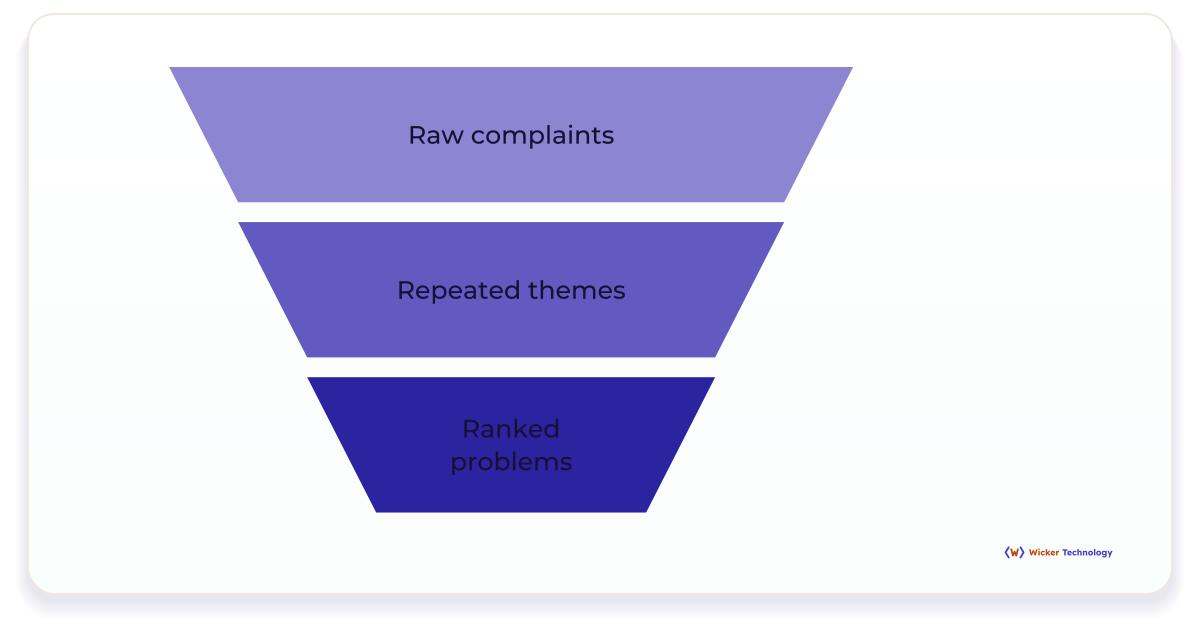
Interview six to ten people: HR operations, recruiters, payroll, two managers, IT and finance. Ask what takes the longest, what produces errors and what employees complain about. Write each problem as a sentence with a cost: "Payroll corrections take two days every month" is useful. "We need better analytics" is not.
You will hear the same three or four problems repeatedly. Those are your list. In my experience, the loudest request in the first meeting is rarely the costliest one, and the interviews usually move it down.
Phase 2: Inventory What You Actually Run
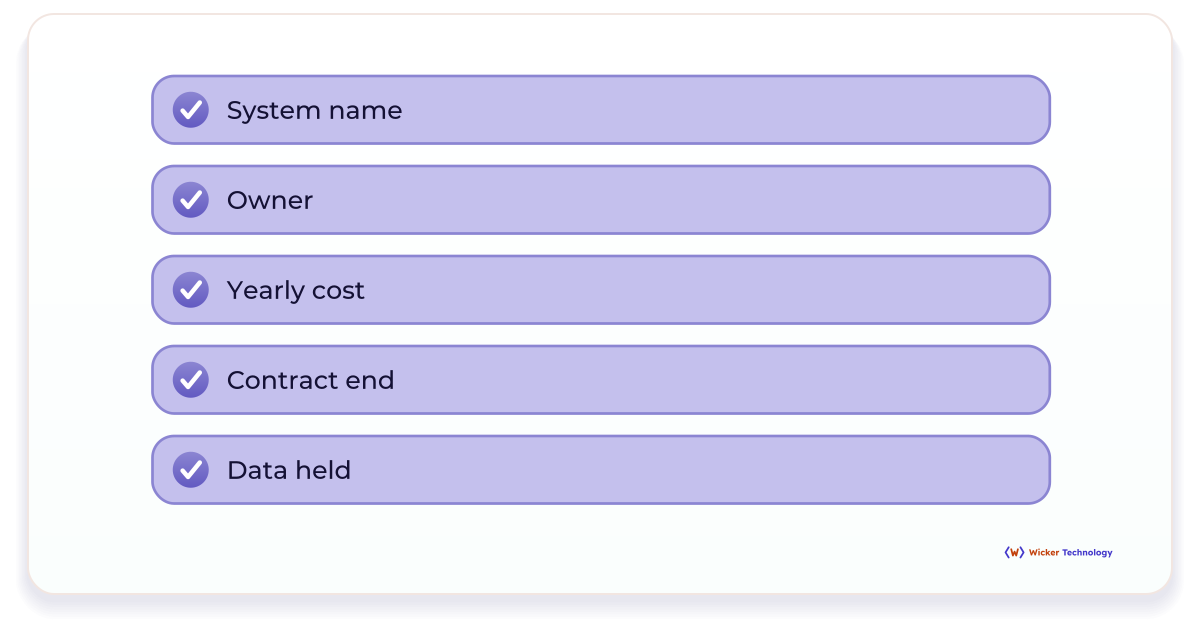
List every system that holds employee data, including the spreadsheets. For each, record the owner, the annual cost, the number of active users, the contract end date and the other systems it connects to. Payroll, HRIS, recruiting, learning, time tracking, benefits and the employee portal are the usual rows. Shadow tools appear too: a manager's own scheduling sheet counts.
Contract end dates matter more than people expect. A renewal notice window of 90 days, missed by a week, can lock you in for another year and shape what is possible in your strategy. Put the dates on a calendar that someone actually checks.
Phase 3: Draw the Target Picture
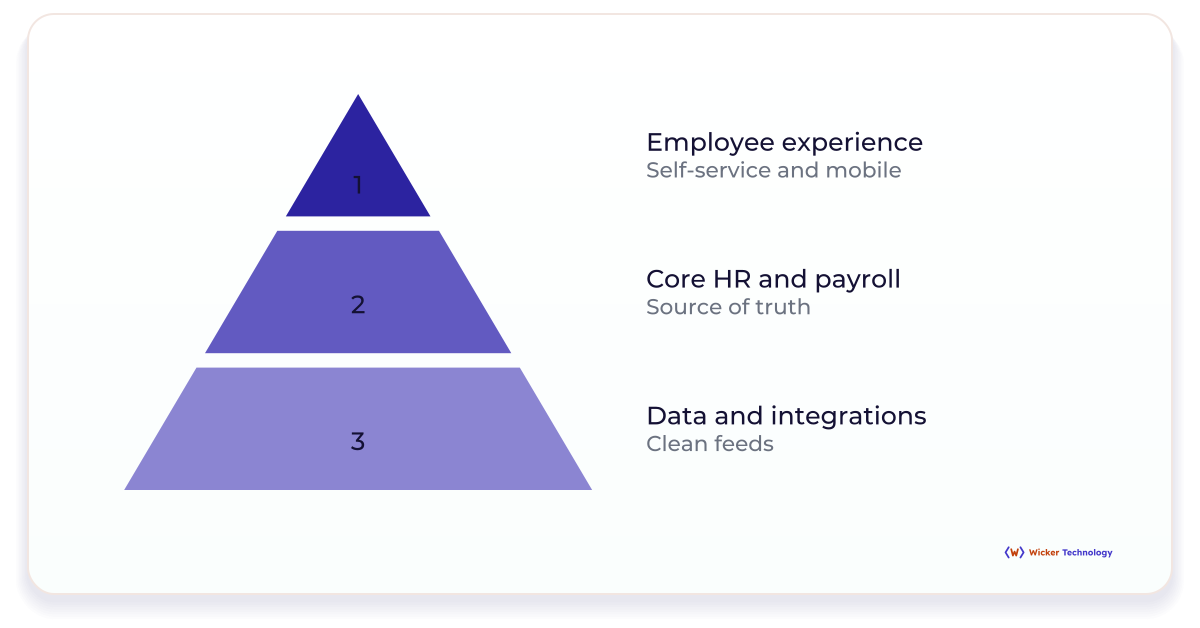
Sketch where employee data should be created, which system is the source of truth for each field and how data flows to the others. One page is enough. The system of record for job title, manager, pay and status should be clear for every field. Where two systems claim the same field, you have found a future error.
Keep the picture honest about trade-offs. A suite lowers integration work and may weaken recruiting. Separate tools give you strength per task and more connections to maintain. If you compare product options, my HR software roundup helps you build the short list, but decide the architecture first and the product second.
Phase 4: Score and Limit the Priorities
Take every initiative that came out of the first three phases and score it from 1 to 5 on three things: impact on the ranked problems, effort and risk. Multiply impact by the inverse of effort and risk, or simply sort by impact and break ties on effort. Then stop at three. A fourth priority competes with the first three for the same people.
Expect some arguments. Compliance-driven work, such as a payroll change that must happen by a statutory date, jumps the queue regardless of score. Mark those separately so the score stays honest. The sequencing then continues in the HR technology roadmap, which turns three priorities into dated phases.
Phase 5: Assign Owners, Money and Review Dates
Each priority needs one named owner, a budget range, a target date and a measure. Measures should be simple: hours of manual work per month, time to hire, payroll corrections per cycle. Record today's number before you start, since a baseline taken afterward is a guess.
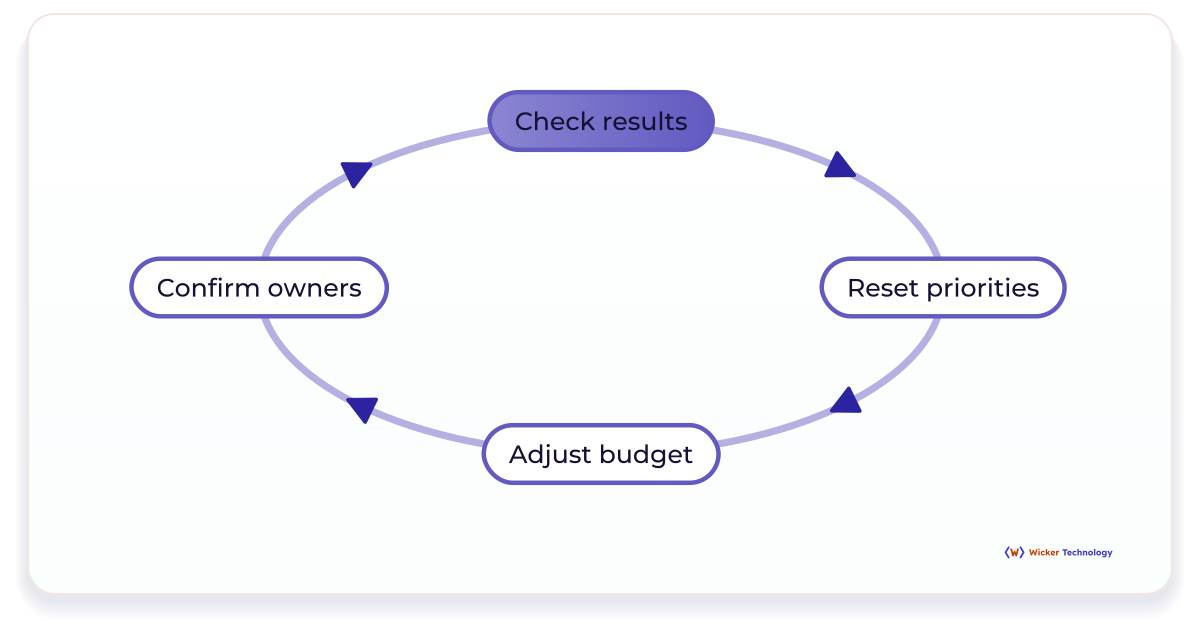
Add a six-month review to the calendar now. At the review, ask three questions: did we do what we said, did the problem shrink, and has anything changed that makes the plan wrong. Plans should be allowed to change, as long as someone decides.
A Worked Example: A 600-Person Company
Take a company with 600 employees, a payroll provider, an HRIS, a separate recruiting tool and a learning platform. The interviews surface three problems: new hire data is typed into three systems, payroll corrections take two days a month, and managers cannot see their team's time off.
The inventory shows the recruiting tool's contract ends in seven months and the HRIS is cheaper to extend than to replace. The target picture makes the HRIS the source of truth. The priorities become: connect recruiting to the HRIS (impact high, effort low), fix the payroll data feed (impact high, effort medium) and roll out manager self-service (impact medium, effort low). A bigger suite migration scores lower and moves to next year. The plan fits on three pages.
| Initiative | Impact | Effort | Decision |
|---|---|---|---|
| Connect recruiting to HRIS | High | Low | Do first |
| Fix payroll data feed | High | Medium | Do second |
| Manager self-service | Medium | Low | Do third |
| Full suite migration | Medium | High | Revisit next year |
Where Trends Fit in the Plan
Strategy documents tend to fill up with buzzwords. Keep trends out of the core of the plan and treat them as inputs. Reading current HR technology trends helps you spot what vendors will push in the next renewal cycle, which is useful for negotiation. It should not add an initiative unless it solves a problem from Phase 1.
The same goes for the risks you already know about. A short list of HR technology challenges that tend to hit mid-sized teams belongs in an appendix, with a mitigation for each.
What the Budget Section Should Include
HR technology budgets usually list licenses and stop there. Add four more lines: implementation help, internal time, data cleanup and training. Internal time is the one people leave out, and it is often the biggest. If your payroll lead spends eight hours a week on a project for six months, that is a real cost, even without an invoice.
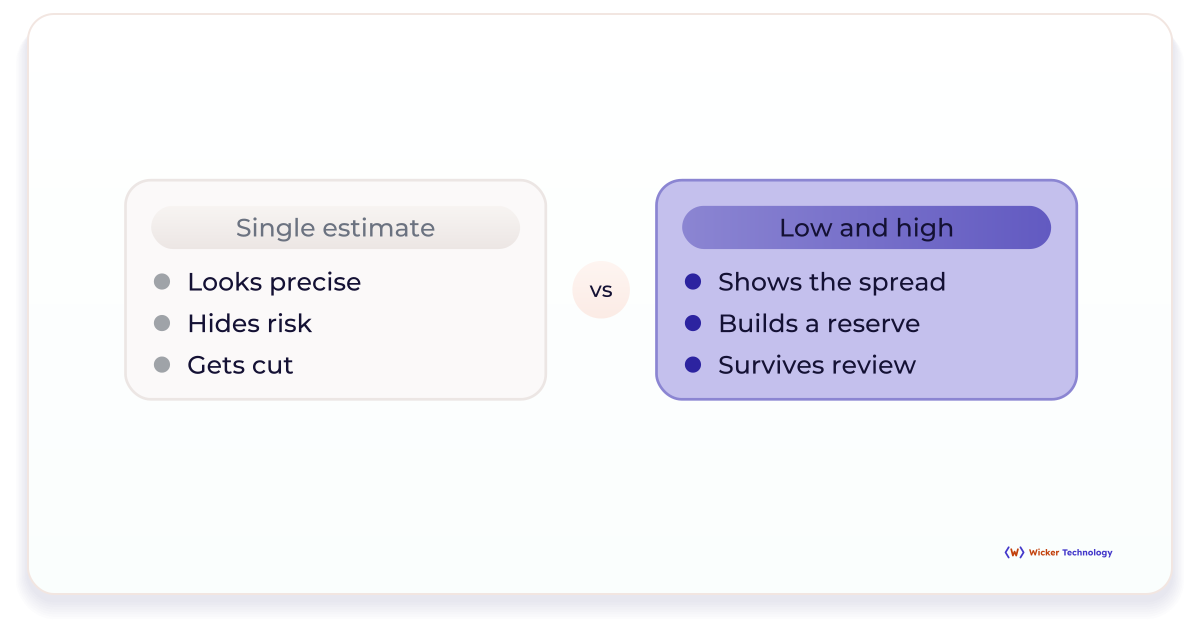
Give each priority a low and a high estimate. A range tells your finance partner that you understand the uncertainty, and a single number invites the question of where it came from. Add a contingency of 15 to 20 percent for the first project in a new area, and say so openly. In my experience, leaders accept a contingency that is named and refuse one that is hidden inside other lines.
Mistakes That Make a Strategy Useless
Four patterns show up again and again. The first is writing the strategy as a product comparison, which locks you into a vendor before you know your problem. The second is a plan with no owner, no date and no number, so nobody can tell later whether it worked. The third is a list of eight priorities, which means none of them gets staffed. The fourth is writing it once and filing it. A plan that is not revisited at least twice a year describes a company that no longer exists.
A quick test: hand the document to a new HR manager and ask what they would do in their first month. If they cannot answer in five minutes, the strategy is too vague.
Governance After the Plan Is Approved
Set up a small steering group of three people: the HR leader who owns the plan, an IT lead and a finance partner. They meet every month for 30 minutes, review the three priorities and approve or reject new requests against the plan. New requests are the real test. Without a group that can say "not this quarter", every vendor pitch and every manager's idea becomes a project.
Keep a single intake list. Anyone can add a request, with the problem, the people affected and a rough size. Once a quarter the group scores the list against the same criteria as the original priorities. Most requests stay on the list, and that is fine. The list is the record that they were heard, and it feeds the next yearly rewrite.
Finally, report back. A half-page summary after each quarter with what shipped, what moved and what it cost keeps leadership engaged and protects your budget when finance looks for savings.
If you run out of time, keep three things: the ranked problem list, the system inventory with contract dates and the three scored priorities with owners. Everything else can be added later. Those three pages give you more control than a polished forty-page document that nobody reads.
How to Choose Between Strategy Options
When two paths both look reasonable, such as renewing a platform or replacing it, test them with four questions:
- Which option removes the highest-ranked problem on your list?
- What does each cost over three years, including internal time?
- How hard is it to reverse if it goes wrong?
- Does your team have the capacity to run it, given the other two priorities?
The capacity question is the one companies skip. Strategy fails more often because three projects land in one quarter than because someone chose the wrong tool. When a priority becomes a project, the guide to HR technology implementation covers how to run it.
Questions About HR Technology Strategy
What Is an HR Technology Strategy?
It is a short written plan that says which HR problems your technology must solve, which systems you keep, which you replace, who owns each one and how you will measure progress. It is not a vendor list. A good one fits on a few pages and survives a change of HR leader.
How Long Should an HR Technology Strategy Take to Write?
For a mid-sized company, four to eight weeks is realistic, including interviews with HR, IT and finance. Faster is possible if your system inventory already exists. Slower usually means the group could not agree on priorities, which is the real work.
Who Owns the Strategy?
A named HR leader should own it, with an IT partner who owns the technical side. When ownership sits with a committee, decisions drift. Finance should review cost assumptions, since payroll and benefits data affect the budget directly.
Do I Need a Strategy If I Only Run Payroll and One HRIS?
A one-page version still helps. Write down the problems you want fixed in the next two years, the contract end dates and what would make you switch. It takes an afternoon and prevents a rushed renewal.
How Do I Choose Between a Suite and Separate Tools?
Count your integrations, how often they fail and how much manual work sits between systems. If those numbers are low, keep separate tools. If your team re-types data every week, a suite or a better integration layer should rank high in your plan.
How Often Should I Update the Strategy?
Review it every six months and rewrite the priorities once a year. Update it earlier after an acquisition, a reorganization or a major vendor change.
What Is the Most Common Reason HR Technology Strategies Fail?
No one owns the decisions after the document is approved. Priorities need a budget line, an owner and a date. Without those, the plan becomes a file that nobody opens.
Important: nothing in this article is legal, financial or tax advice. All figures are estimates from typical projects, so verify them with your own providers and advisers.
Was this useful?
We appreciate the feedback.
Paige Mulvaney
Paige leads the Wicker editorial team and works with the consultants who run the roadmaps, software selections, implementations and integrations to turn real client projects into practical guides. Her focus is plain-language advice on IT strategy, choosing business software and connecting systems so they work together. Every article she edits is checked against current vendor pricing and documentation before it is published.