In Short
- A strategy states the business outcomes, the few moves that get you there and what you will not do.
- Score candidate changes on value, urgency, effort, risk and readiness, and re-score every quarter.
- Choose from six plays, such as quick win, consolidate and retire or connect instead of replace.
- Release money phase by phase against gate evidence, so long moves survive the budget cycle.
A technology transformation strategy answers three questions: what you will change, in which order and why. The answers set which projects get money and which wait. When a business skips it, the loudest request wins, and the portfolio fills with unrelated projects. Many firms ask technology transformation consulting teams for a second opinion at exactly this point.
This guide covers the priorities I use to rank work, six plays that fit different situations and the governance that keeps the strategy alive after the workshop. Dates and sequencing belong to the technology transformation roadmap, so I stay with the choices here.
What the Strategy Has to Decide
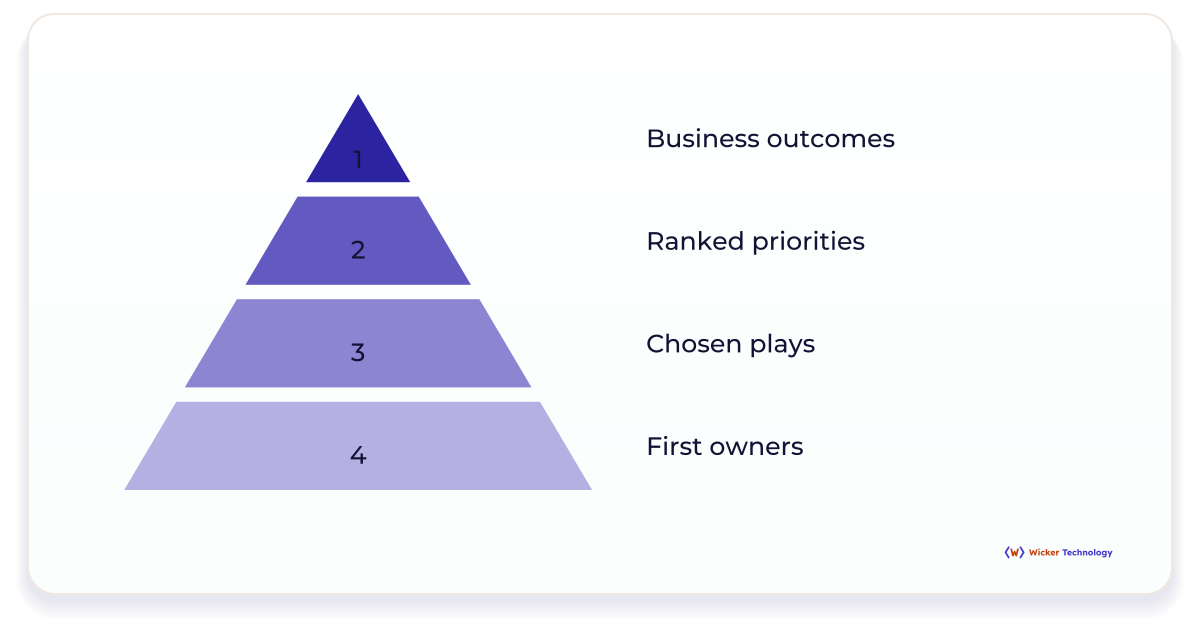
A useful strategy fits on two pages. The first page states the business outcomes the technology must support over the next two to three years, such as faster onboarding, lower cost to serve or a new market. The second lists the handful of moves that get you there and the ones you have decided not to make.
The not-to-do list matters as much as the plan. Naming what you are leaving alone gives teams permission to stop asking for it. It also protects scarce people from being pulled into five programs at once. I ask sponsors to put at least two items on that list before they sign.
Priorities: How to Rank What You Could Do
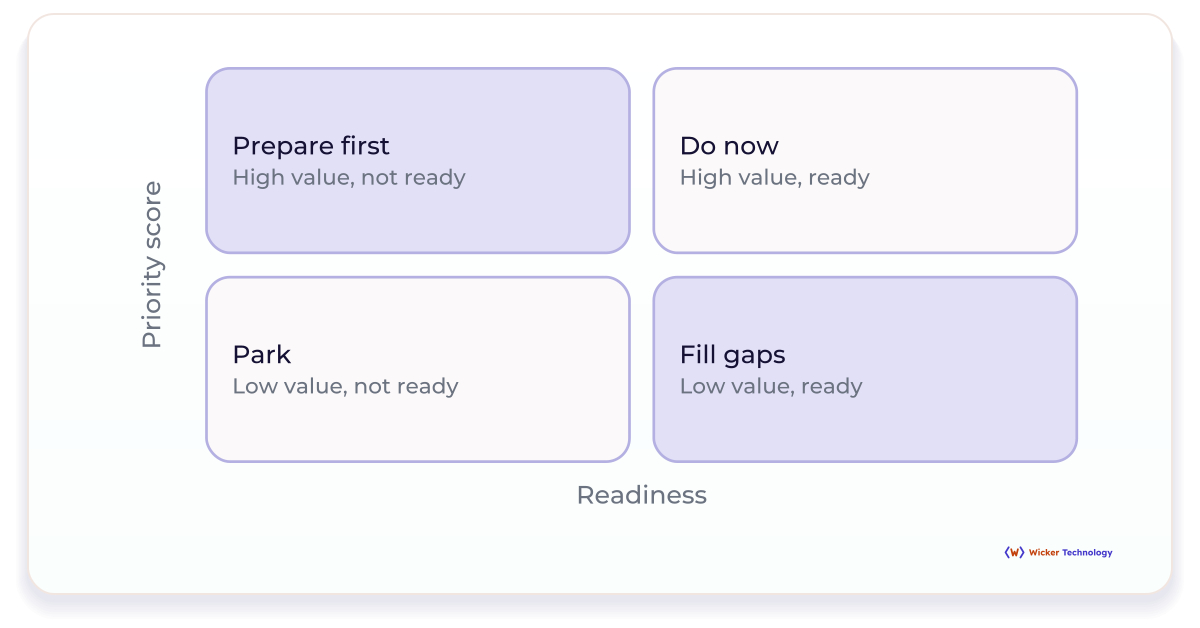
Every business has more good ideas than capacity. Score each candidate change on five criteria, using the starting weights below and adjusting them with your leadership team. The numbers are a conversation tool, not an answer, so expect people to argue about the weights. That argument is useful.
| Criterion | Key question | Weight to start with |
|---|---|---|
| Business value | How much revenue, cost or risk does this change? | 30% |
| Urgency | Does a deadline, contract end or support end force the date? | 20% |
| Effort | How many systems, teams and months does it touch? | 20% |
| Risk of doing it | What breaks if it goes wrong, and can you roll back? | 15% |
| Readiness | Are data, owners and budget available now? | 15% |
Two rules improve the scores. Have the same small group score everything, so the scale stays consistent. And re-score every quarter, since urgency and readiness change fast. A contract end date, an acquisition or a failed audit can move a project from fifth to first.
The Playbook: Six Plays and When to Use Them
Most transformation strategies are a mix of the same few plays. Pick the ones that match your situation, and avoid running all six at once. The table shows when each fits and what to watch for.
| Play | Use it when | Watch for |
|---|---|---|
| Quick win first | You need proof within a quarter | Picking a win that nobody values |
| Foundation first | Data or access problems block everything | Spending a year before anyone sees a result |
| Consolidate and retire | Overlapping tools drive up cost | Archiving requirements and renewal dates |
| Connect, do not replace | Systems work but handoffs hurt | Interfaces nobody owns |
| Phased platform move | A core system is past support | Parallel running cost |
| Buy before build | A standard product fits 80% of the need | Customizing the product back into a legacy system |
The next sections cover three of the plays in more detail, since they are the ones I am asked about most.
Quick Wins That Earn Your Next Budget
A quick win is a visible improvement delivered in a quarter. Examples are retiring an unused tool, connecting two systems that force re-keying or giving a team a shared dashboard. The value is partly the saving and partly the credibility.
Choose a win that a senior person feels personally. A saving in a back-office process impresses finance, while a faster quote process impresses sales. Both are good, but pick the one whose sponsor controls the next budget. One manufacturing client funded most of a two-year program from the saving of a single license consolidation.
Foundation Work Nobody Wants to Fund
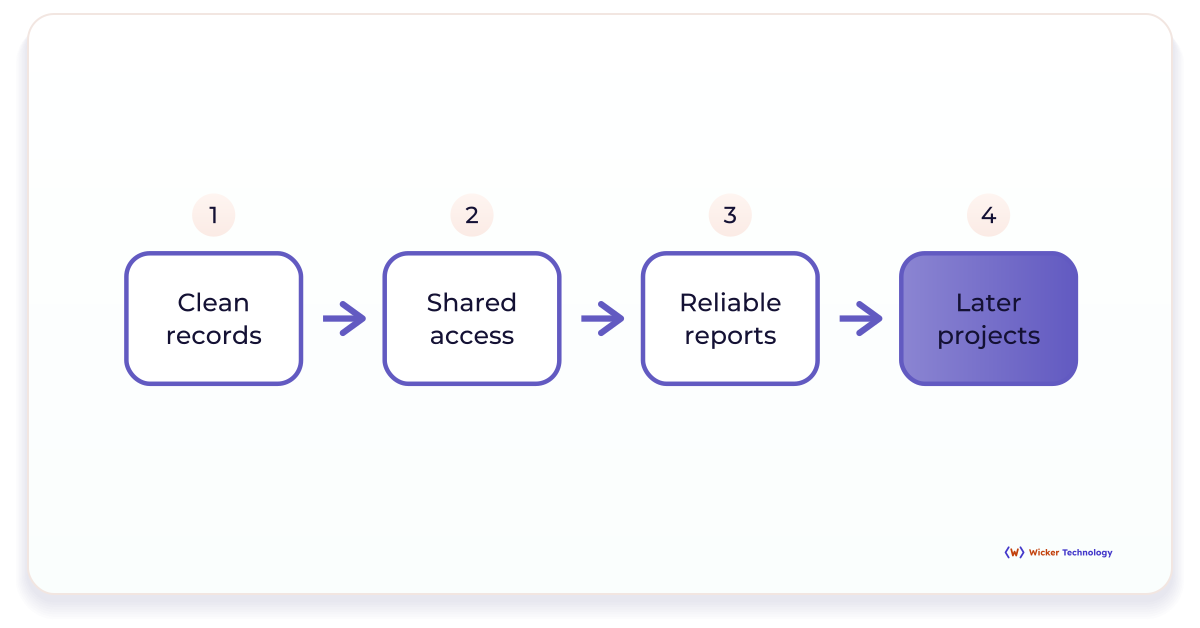
Some work has no visible output: cleaning master data, setting up identity and access, writing down interfaces. It still decides whether later projects take three months or nine. The way to fund it is to tie it to the first project that needs it, instead of selling it as a program of its own.
Say plainly what it unlocks. "We are cleaning customer records" gets a shrug. "Cleaning customer records lets us launch the new quoting tool in the spring" gets approved. If your foundation gaps are large, a technology modernization consulting review can size them before you commit to a date.
Buy Before You Build
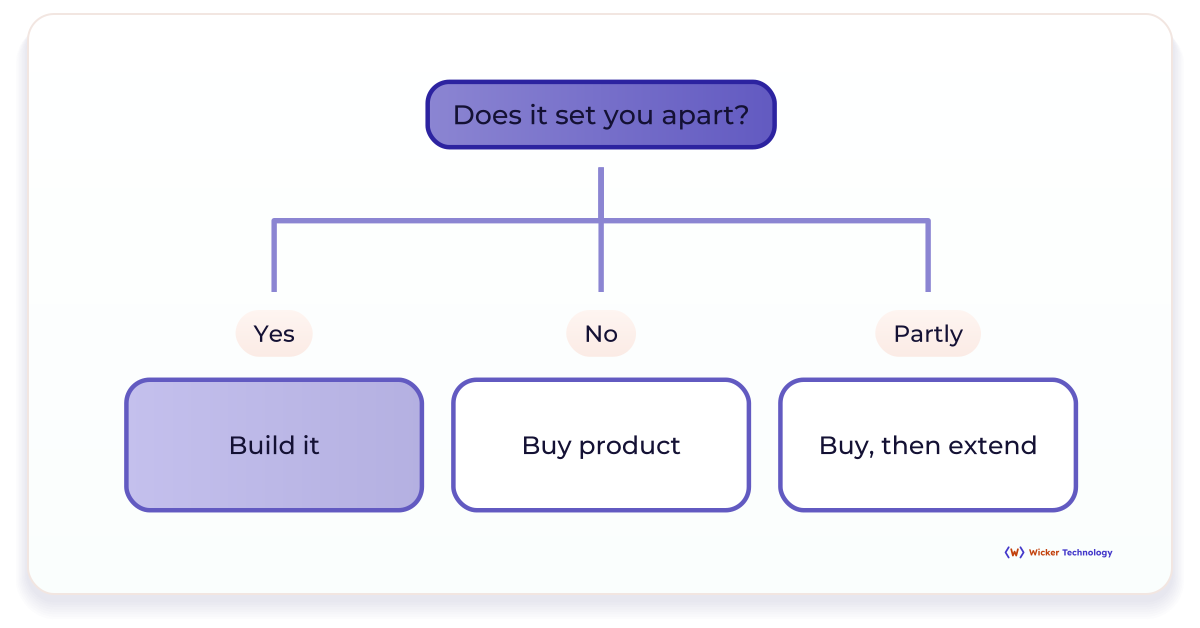
Custom software feels safer because it matches your process exactly. It also needs maintenance forever. If a standard product covers most of the need, use it, and change your process for the rest where the process is not a source of advantage.
Build only where the work gives you an edge your competitors cannot buy. Most firms find this is a small list. For the rest, ask what the vendor's roadmap looks like, how data leaves the product and what a move away would cost. The technology transformation framework includes a buy or build check you can use in the design step.
A Worked Scoring Example
Take a distribution business with four candidates: consolidate two warehouse tools, replace an ERP past support, connect the CRM to billing and build a customer portal. Each is scored from 1 to 5 on the five criteria, then multiplied by the weights above.
The ERP replacement scores 5 on urgency and value, but only 2 on readiness, because master data is a mess. The CRM connection scores 4 on value, 4 on effort (low effort, high score) and 5 on readiness. The portal scores well on value and badly on everything else. The result is a plan: connect the CRM first, run data cleanup for the ERP in parallel, start the ERP move once readiness reaches 4 and leave the portal on the not-to-do list for a year.
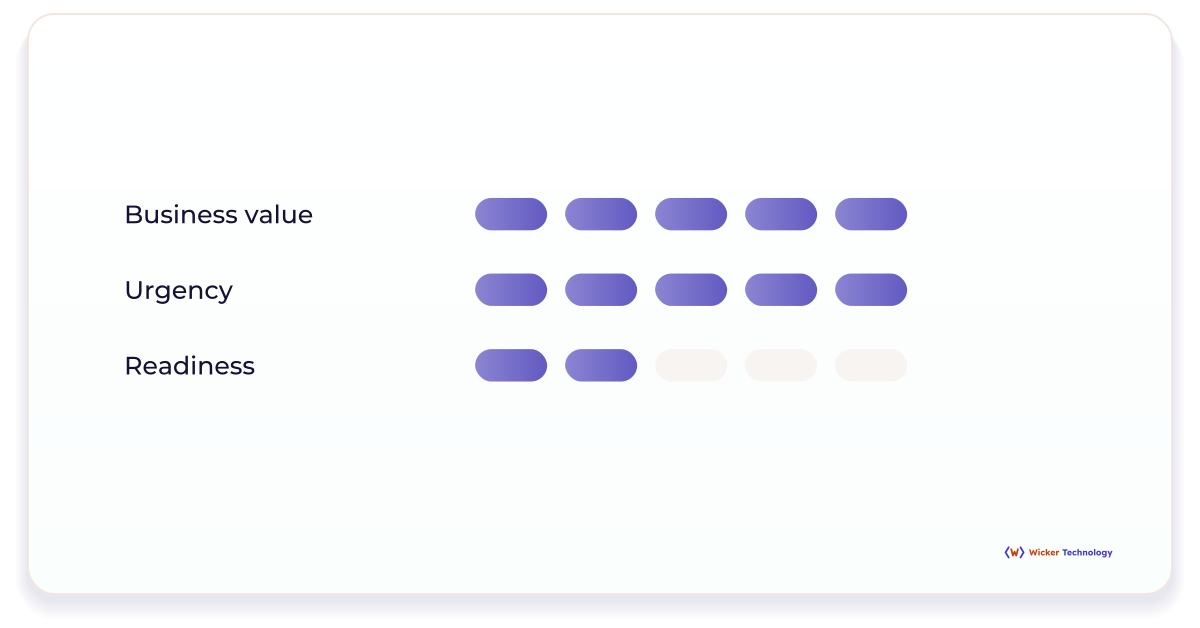
Nobody would have guessed that order from the loudest request, which was the portal. The scoring did not make the decision, but it made the trade-offs visible, and that was enough to end a six-month argument.
Strategy Mistakes to Avoid
Looking back at strategies that did not survive their first year, the failures cluster into a short list. Each has a simple do and avoid pair.
- Do tie every move to a business measure. Avoid a list of technologies with no outcome attached.
- Do name what you will not do. Avoid a plan that says yes to every request.
- Do fund readiness work through the first project that needs it. Avoid a foundation program that shows no result for a year.
- Do re-score each quarter. Avoid treating the first ranking as permanent.
- Do have a business owner. Avoid a strategy that only IT has read.
The most damaging mistake is writing the strategy as a document and not as a decision process. A strategy that nobody consults when a new request arrives is already dead. Put the priority list where requests are triaged, and make the steering group use it.
Getting Leadership to Agree
The scoring workshop is where strategies are won or lost. Invite the people who control budgets and the people who run daily operations, and keep the group to eight or fewer. A larger group turns the session into a presentation.
Start by agreeing the business outcomes, since disagreement there makes the scoring pointless. Then let each leader argue for one candidate for five minutes, with a number attached. In my sessions, the sharpest moment is when two leaders realize their projects depend on the same system and cannot both go first. Resolve that in the room, with the sponsor present, and record the decision.
End with a commitment, not a discussion: who owns each of the first three moves, what the measure is and when the first gate review happens. Send the one-page summary within a day. Strategies lose momentum in the gap between the workshop and the follow-up, and a short, fast summary closes that gap better than any long report.
Expect one or two leaders to be unhappy with the ranking. That is normal and usually means the not-to-do list is real. Offer them a path: a readiness step that moves their project up next quarter, with a date and an owner. It turns a loss into a plan.
Funding and Governance That Keep It Alive
Strategies die in the budget cycle. If every project has to win funding from scratch each year, the long moves lose to the short ones. Many firms solve it with a funded portfolio and a small steering group that releases money phase by phase, based on gate results.
- One steering group with a named chair, meeting monthly.
- Money released per phase against evidence, not per year.
- Quarterly re-scoring of the priority list.
- A single owner for the not-to-do list.
- A short, regular report on measures against baselines.
The measures should come from the goal sheet you wrote at the start. When progress stalls, look first at the technology transformation challenges list, where goals, scope and ownership problems show up early.
How to Choose Your Strategy's Priorities
Start with your next three business outcomes and ask which systems stand in the way of each. Then score the candidate moves and pick the play that fits. Keep the first wave small enough to finish in a year.
If you want to see strategies turn into results, read my technology transformation examples. They show how a consolidation, an integration and a phased move each played out, and where the first estimate was wrong.
Questions About Technology Transformation Strategy
What Is a Technology Transformation Strategy?
It is a short plan that links business outcomes to a small set of technology moves, with priorities and a list of what you will not do. It guides funding and sequencing, while the roadmap adds dates.
How Long Should a Transformation Strategy Be?
Two pages is enough for the core: outcomes and moves. Supporting detail such as scoring sheets and system verdicts can sit in appendices that the steering group rarely needs to open.
How Do I Prioritize Transformation Projects?
Score each on business value, urgency, effort, risk and readiness, using weights your leadership agrees on. Re-score every quarter and fund readiness work separately when a valuable project is not ready.
What Is a Quick Win in This Context?
A visible improvement delivered in a quarter, such as retiring an unused tool or connecting two systems that cause re-keying. Pick one whose sponsor controls your next budget.
Should We Buy or Build?
Buy where a standard product covers most of the need and the process is not a source of advantage. Build only where the capability gives you an edge competitors cannot buy, and plan for its maintenance.
Who Owns the Strategy?
A business executive should own it, with the technology lead as co-owner. If only IT owns it, the strategy tends to drift into a list of technical projects with no business sponsor.
How Often Should the Strategy Be Reviewed?
Review priorities quarterly and the full strategy yearly. An acquisition, a failed audit or a major vendor change can justify an earlier review.
Important: nothing in this article is legal, financial or tax advice. All figures are estimates from typical projects, so verify them with your own providers and advisers.
Was this useful?
We appreciate the feedback.
Paige Mulvaney
Paige leads the Wicker editorial team and works with the consultants who run the roadmaps, software selections, implementations and integrations to turn real client projects into practical guides. Her focus is plain-language advice on IT strategy, choosing business software and connecting systems so they work together. Every article she edits is checked against current vendor pricing and documentation before it is published.