In Short
- Build the roadmap in five phases: baseline, goals, target stack, delivery waves and quarterly review.
- Start with a tool inventory that includes owners, costs, seats in use and renewal dates.
- Tie every keep, replace or retire decision to a written goal with a number and a date.
- Deliver in waves of four to eight weeks with exit criteria written before each wave starts.
A marketing technology roadmap is a dated plan for which tools you keep, replace, connect and buy over the next 12 to 18 months, and who owns each move. The work usually goes better with a partner who has seen the usual traps, which is what marketing technology consulting is for, but you can build a solid first version yourself with the phases below.
I wrote this one as a copy-ready plan. Each phase has an entry condition, a list of tasks, a deliverable and a gate you have to pass before the next phase starts. Most roadmaps I review fail because those gates are missing, so the plan reads well and nobody can tell when a phase is done.
Five Phases, Summarized
Plan for roughly 12 months end to end. Small teams with fewer than ten tools can compress phases one and two into a month. Larger stacks often stretch phase four, because migrations take the time they take.
| Phase | Typical length | What you produce | Gate to the next phase |
|---|---|---|---|
| 1. Baseline | 3 to 4 weeks | Tool inventory, cost and usage per tool, data flow sketch | Every tool has an owner and a yearly cost |
| 2. Priorities | 2 to 3 weeks | Three to five business goals mapped to the capabilities they need | Leadership signs off the goals in writing |
| 3. Target stack | 3 to 4 weeks | Keep, replace, connect and retire list with costs | Finance agrees the budget range |
| 4. Delivery waves | 3 to 9 months | Migrations, integrations and launches in small waves | Each wave meets its own exit criteria |
| 5. Run and review | Ongoing, reviewed quarterly | Usage, cost and result reports; updated roadmap | The roadmap is reissued every quarter |
Phase 1: Baseline What You Already Own
Start with an inventory, because nobody on your team knows the full list. Pull the tool names from three places: finance (card and invoice lines), IT (single sign-on and admin consoles) and the marketers themselves (ask in a short survey). The three lists never match. In my client work the gap between the finance list and the survey list is often a dozen tools, mostly free trials that turned into paid seats.
For every tool record the owner, the yearly cost, the renewal date, the number of paid seats against active users, the data it holds and the systems it connects to. A spreadsheet is enough. The renewal date matters most, because it tells you when each decision is cheap to make.
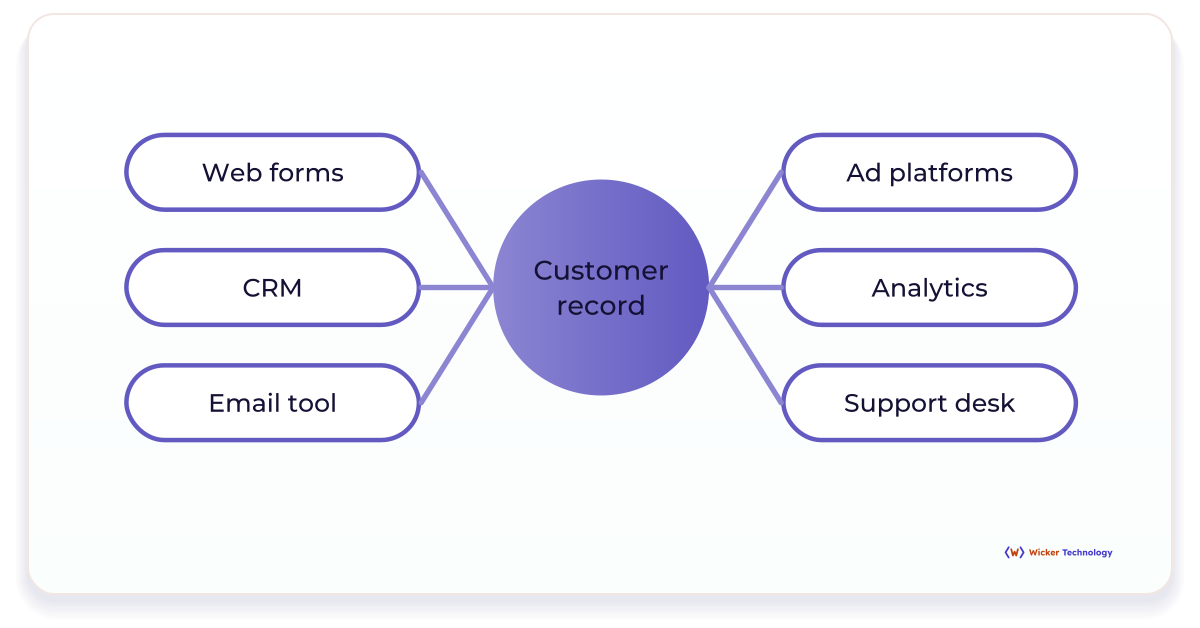
Then sketch the data flow on one page: where a lead is created, which systems it passes through, where it becomes revenue and where reports get built. Gaps show up as arrows drawn by hand, such as a CSV export on Fridays. Each of those hand-drawn arrows is a candidate for phase four. If you want a structured way to score what you find, my marketing technology audit framework covers the review criteria in detail.
Phase 2: Tie the Stack to Business Goals
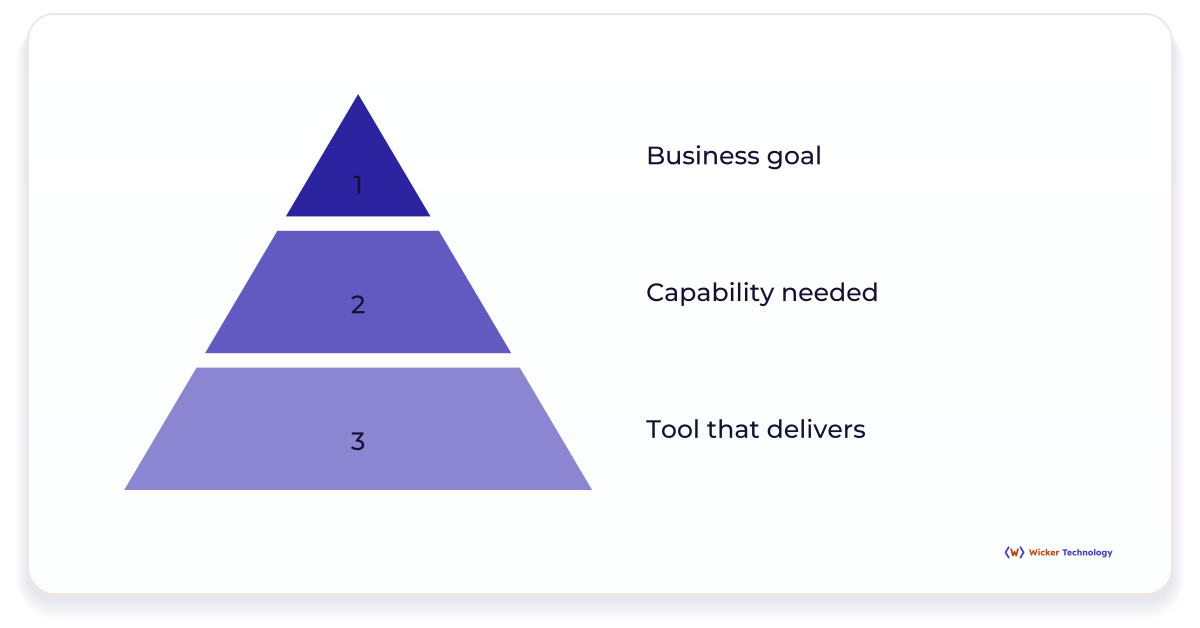
A roadmap without goals turns into a shopping list. Pick three to five goals that leadership already cares about, such as shortening the time from lead to first sales call, lifting repeat purchases, or cutting the cost of acquiring a customer. For each goal, list the capabilities you need: lead routing, consent tracking, attribution, email segmentation, reporting.
Now compare that list with the baseline. Where you own a capability but nobody uses it, the answer is training or removal, not another purchase. Where a capability is missing, you have a real gap. In my experience, about half of the gaps teams name in this phase turn out to be unused features of tools they already pay for.
It also helps to check whether your team is ready for the changes the roadmap will bring. My guide to a marketing technology assessment shows how to rate skills, data quality and ownership before you commit to a timeline.
Write each goal as one sentence with a number and a date. "Reduce lead response time to under one hour by the end of the third quarter" can be tracked. "Improve lead handling" cannot.
Phase 3: Design the Target Stack
Sort every tool into one of four buckets: keep as is, keep and connect better, replace, or retire. Then add the new purchases you cannot avoid. Give each line a cost (license, implementation, training) and a reason that points back to a goal from phase two. If a line has no goal behind it, remove it.
| Decision | When it fits | Cost to watch |
|---|---|---|
| Keep as is | Used weekly, clear owner, data flows cleanly | Seats nobody uses |
| Keep and connect | Tool works but data is copied by hand | Integration build and monitoring |
| Replace | Contract ends soon and a better fit exists | Migration, retraining, parallel running |
| Retire | Overlaps another tool or has no active users | Export of historical data |
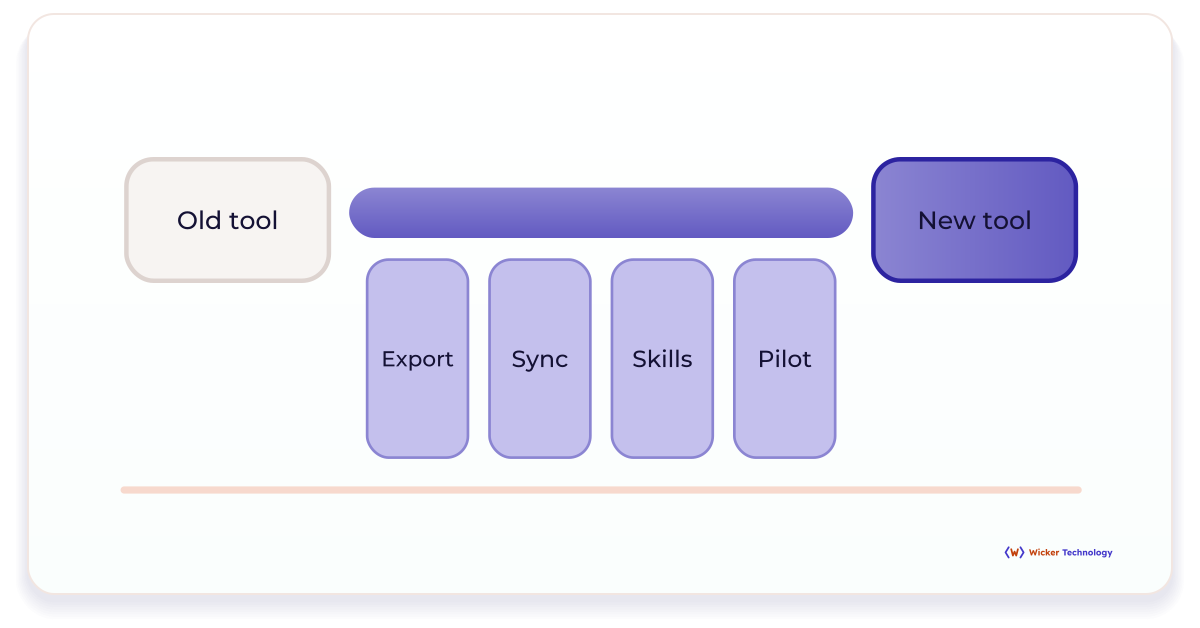
Be careful with the replace column. Replacing a tool is the most expensive and slowest move on the roadmap, and teams underestimate it every time. A migration plan needs a data mapping, a parallel run and a rollback option. If the tool you want to replace is working acceptably, move it to a later wave.
This is also the right time to shortlist vendors for the real gaps. Use a scoring sheet built from your goals instead of a feature checklist from a sales deck. The categories and options I rank in my overview of martech tools are a fair starting point for the longlist.
Phase 4: Deliver in Small Waves
Group the work into waves of four to eight weeks. The first wave should be quick and visible: retire tools nobody uses, fix the worst manual data hand-off and clean up consent and contact data. Those moves pay for themselves and earn you trust for the bigger changes later.
Order the later waves by dependency. Data foundations come first (a clean contact record, consistent naming, a single source of truth for customers). Then comes the integration layer, then the tools that depend on it, and last the reporting that sits on top. Teams who start with the dashboard build it on data they cannot trust.
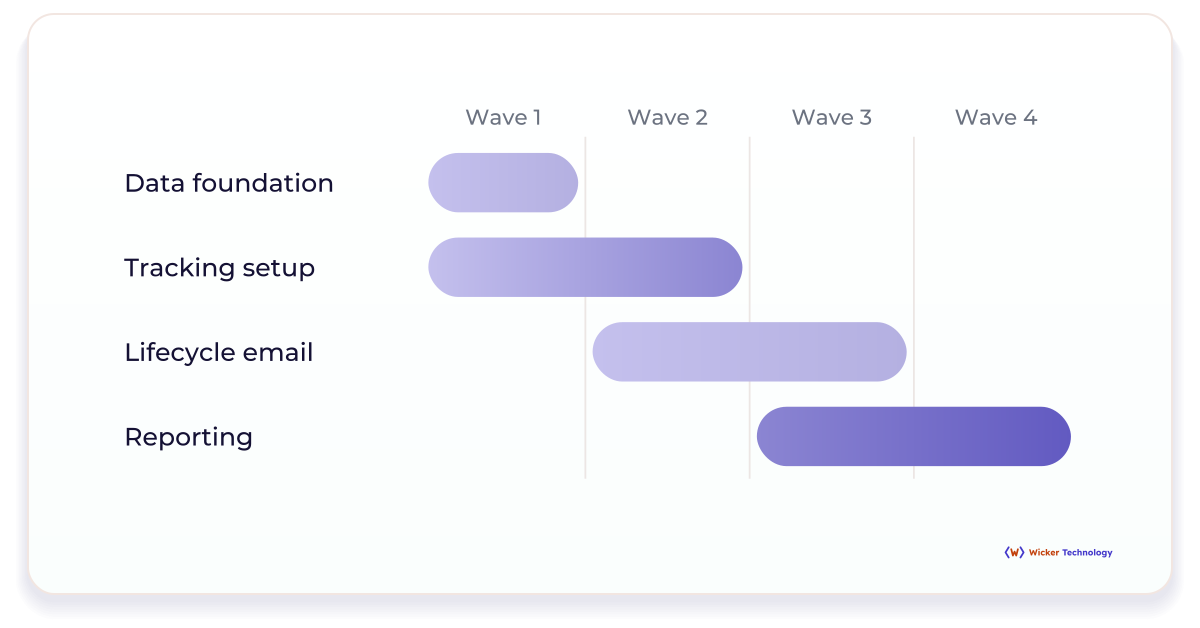
Each wave needs exit criteria written before it starts. Examples: all leads from the web form reach the CRM within five minutes, the old tool is exported and switched off, the team has completed a one-hour training. A wave is done when the criteria are met, not when the work has been busy for the planned number of weeks.
If you are moving into new territory, the stories in my collection of marketing technology examples show how other teams sequenced similar waves and what they changed after the first one.
Phase 5: Run the Roadmap Every Quarter
Once the main waves are done, the roadmap becomes a living document. Review it each quarter with the same four questions. Which goals moved? Which tools lost users? Which renewals are coming? What changed in the business that the plan did not expect?
Keep one page of numbers that you report every quarter: total martech cost, cost per active user, share of seats in use, number of manual data hand-offs left, and the progress on each goal. When these move in the right direction, the roadmap is working. When they do not, change the plan instead of defending it.
For the wider context on how the numbers compare with other companies, see the current marketing technology statistics. Utilization and budget share are the two I check first.
What the Roadmap Costs
Do not put a single number on the whole plan in the first draft. Cost it per wave, split into license changes, implementation work (yours or a partner's) and training time. Implementation is the line teams forget. As a rule of thumb from my own project work, a replacement tool needs implementation effort in the same range as its first-year license, and sometimes more when data is messy.
Use the calculator below to test whether a single tool pays for itself before you add it to a wave. Enter the manual hours it should remove and the monthly price.
Is the Software Worth the Cost?
Move the sliders to match the work you want the tool to cover and the plan you are considering.
Risks That Delay a Roadmap
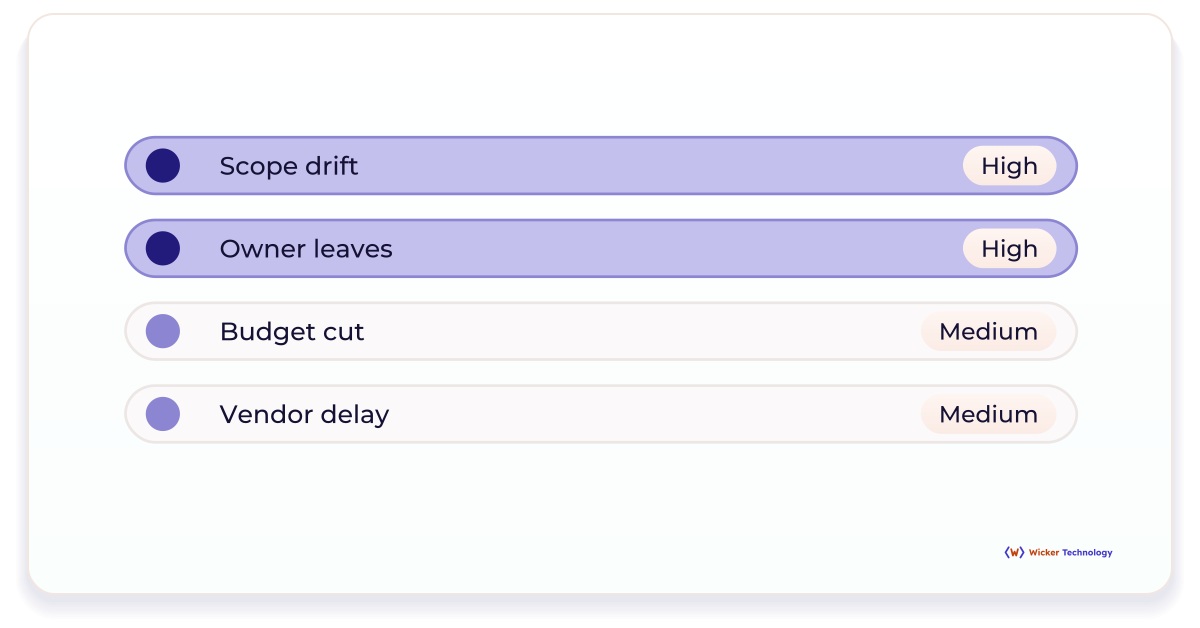
Three risks delay most marketing technology roadmaps. The first is key-person dependency: one operations manager holds all the integration knowledge, and a resignation freezes the plan. Document each integration and name a backup before wave one starts. The second is vendor timelines. A vendor that promises a four-week onboarding often means four weeks after you deliver clean data, which can take longer than the onboarding itself. The third is scope drift, where each wave picks up one more nice-to-have until nothing finishes.
Guard against drift with a short change rule: any addition to a wave must name what leaves it, or move the end date in writing. It sounds strict, and it keeps the plan believable to the people who fund it.
How to Choose Who Owns the Roadmap
One named person has to own the roadmap, and it should not be the person who sells the tools internally. A marketing operations lead is the usual choice. They need the authority to say no to a tool request and a standing slot in the budget meeting.
- Give each tool a business owner and a technical owner, listed in the inventory.
- Hold a monthly 30-minute review for waves in progress and a quarterly review for the whole plan.
- Require a goal and an owner for every new tool request before procurement starts.
- Decide up front when you bring in outside help, for example for migrations or a vendor shortlist.
Teams that lack the skills for phases three and four often hire help for exactly those two. A short call is enough to see whether that makes sense for you.
Questions About a Marketing Technology Roadmap
How Long Should a Marketing Technology Roadmap Cover?
Twelve to eighteen months is the sweet spot. It is long enough to fit migrations and contract renewals, and short enough that your goals will not have changed completely. Review it every quarter and move the end date forward as you go.
What Is the Difference Between a Roadmap and a Strategy?
A strategy says which goals your marketing technology must support and why. A roadmap turns that into dated work: which tools change, in what order, at what cost and under whose ownership. You need the goals before you can build a useful roadmap.
Who Should Be in the Room When I Build the Roadmap?
You need marketing operations, one or two channel owners, someone from IT or security and someone from finance. Sales operations should join when the plan touches the CRM. Keep the group small, around five to seven people, so decisions get made.
How Do I Handle Tools That People Love but Nobody Can Justify?
Check usage and cost first. If the tool is used weekly and costs little, keep it and record the owner. If usage is low and the cost is high, offer the team a trial period with a clear target, then decide at the renewal date.
Should I Replace Tools or Integrate Them?
Integrate first when the tool does its job and the problem is hand-copied data. Replace when the contract is ending, the tool cannot meet a goal or the integration costs more than moving. Replacing is slower and riskier than most teams expect.
How Much Should I Budget for Implementation?
Plan for implementation effort in the same range as the first-year license for a replacement tool, and more when your data is messy or many systems connect to it. Add training time and a parallel running period to the estimate.
When Is It Worth Hiring a Consultant to Build the Roadmap?
Outside help pays off when you have more than a dozen tools, no clear owner, an upcoming migration or a vendor selection with real money behind it. A consultant who has run the same selection many times can shorten phase three considerably.
Important: nothing in this article is legal, financial or tax advice. All figures are estimates from typical projects, so verify them with your own providers and advisers.
Was this useful?
We appreciate the feedback.
Paige Mulvaney
Paige leads the Wicker editorial team and works with the consultants who run the roadmaps, software selections, implementations and integrations to turn real client projects into practical guides. Her focus is plain-language advice on IT strategy, choosing business software and connecting systems so they work together. Every article she edits is checked against current vendor pricing and documentation before it is published.