In Short
- A technology strategy is a short list of priorities tied to business outcomes, each with an owner, a budget and a date.
- Build it in five phases: inventory, outcomes, priorities, funding and governance. Skip none of them.
- Most of the value comes from what you decide to stop, retire or not buy.
- A strategy that is not used to approve or decline requests is a document, not a strategy.
Most organizations I meet do not lack technology. They have too much of it, bought at different times for different reasons, and no shared view of what it is for. Good enterprise technology consulting starts by fixing that, and the document that holds the fix is the strategy.
This playbook walks through the five phases I use, shows what each one produces and lists the decisions that cause the most trouble when they are skipped. Use the table as your project plan and the sections as your checklist.
Five Phases, Summarized
| Phase | The question behind it | What you produce | Who must be involved |
|---|---|---|---|
| 1. Inventory | What do we run, what does it cost and who owns it? | One list of systems, contracts, owners and integrations | IT, finance, procurement |
| 2. Outcomes | What must technology help the business achieve? | Three to five outcomes with a measure each | CEO, CFO, business unit heads |
| 3. Priorities | Which changes matter most and in what order? | A ranked list of initiatives with a decision for each system | CIO, business owners |
| 4. Funding | What will it cost and what will it return? | A budget with a business case for each priority | CFO, CIO |
| 5. Governance | How do we keep decisions consistent? | An intake routine, standards and a review calendar | CIO, architecture lead, security |
Phase 1: Find Out What You Actually Run
You cannot set priorities for a landscape you cannot see. Start with a list of every system, who owns it, what it costs per year, when the contract renews and which other systems it feeds. Include the tools departments paid for on a company card, because that is where the surprises hide.
In one inventory I ran for a distribution company, the finance team counted 140 applications. The expense reports showed 212. The difference was mostly small subscriptions that held customer data nobody in IT had reviewed. Plan for a gap like that and treat it as a finding, not an embarrassment.
Keep the first version rough. A spreadsheet with ten columns is enough. If you want a scoring method for the next step, my guide to the enterprise technology assessment shows how I rate fit, cost and risk.
Phase 2: Tie Technology to Three to Five Business Outcomes
A technology strategy that opens with "modernize the platform" will lose to the next budget conversation. One that opens with "cut order-to-cash time from 21 days to 12" has a chance. Ask each executive what the business must do better in the next two years, then translate it into something measurable.
- Lower the cost to serve a customer or process an order
- Open a new product line, region or channel
- Reduce operational or security risk to a level the board accepts
- Integrate an acquisition within a set number of months
- Give leaders one trusted set of numbers each week
Not every outcome will apply to you. Pick the ones leadership would defend in front of the board, and drop the rest. Five outcomes is already a lot, because every outcome needs funding.
Phase 3: Turn Outcomes Into Ranked Priorities
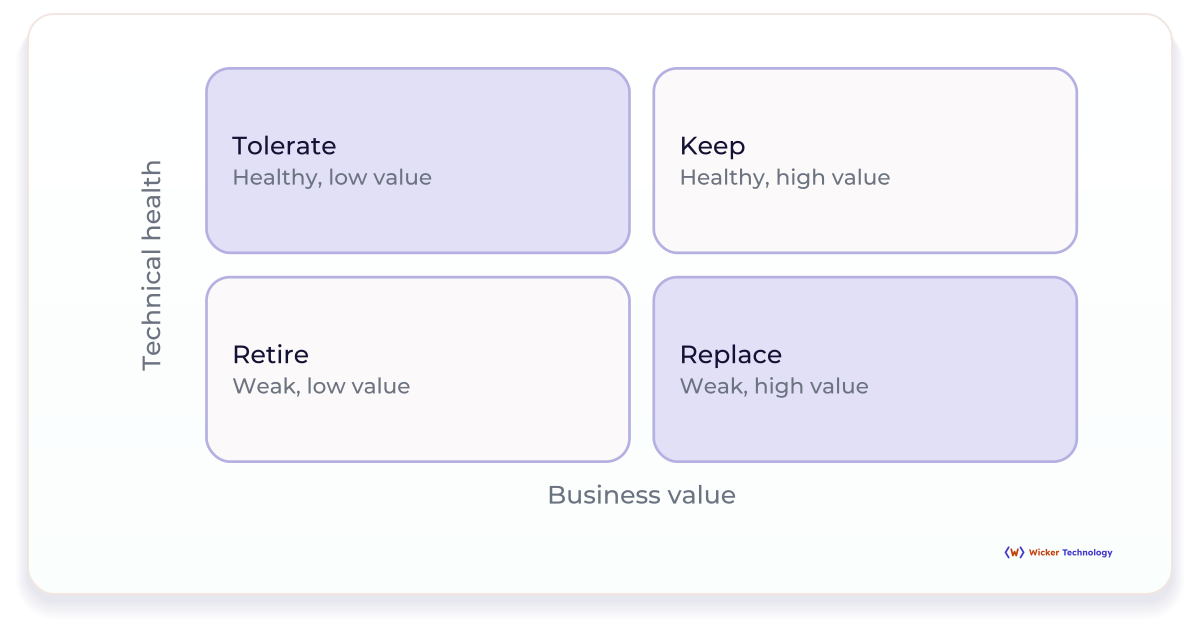
Now connect the inventory to the outcomes. For each system, decide one of five things: keep, improve, connect, replace or retire. Most organizations find that a third of their systems fall into retire or connect, which is where the savings and the risk reduction come from.
Rank the resulting initiatives on three scales: contribution to an outcome, effort and risk. Be honest about dependencies. Replacing a billing system before you have cleaned up customer data only moves the mess to a new screen.
A Simple Ranking Table
| Initiative | Outcome served | Effort | Risk if delayed | Rank |
|---|---|---|---|---|
| Consolidate three CRM tools | Cost to serve | Medium | Low | 3 |
| Replace unsupported ERP module | Risk reduction | High | High | 1 |
| Connect finance and operations data | One set of numbers | Medium | Medium | 2 |
| Retire two reporting tools | Cost to serve | Low | Low | 4 |
The numbers here are an example, not a benchmark. What matters is that the ranking is visible and that leadership argues about it once, in one room, with the table on the screen.
Set a Build, Buy or Partner Rule Before the Projects Start
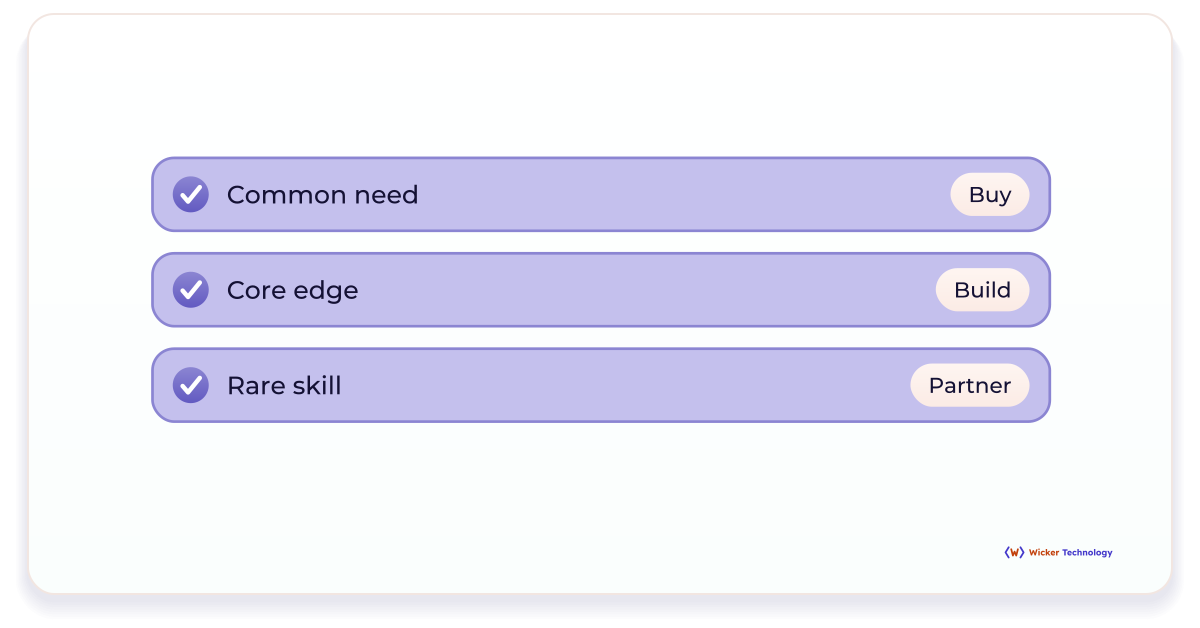
Every large project reopens the same debate. Write the rule once. Buy anything that is common to all companies in your industry. Build only where the capability gives you an edge nobody sells. Partner when you need speed and lack the skills.
I have seen a regional insurer build its own document management system because the first quote looked high. Three years later it owned a product team it never wanted. The rule would have taken ten minutes to write and saved two years of maintenance.
Phase 4: Fund It Like Any Other Investment
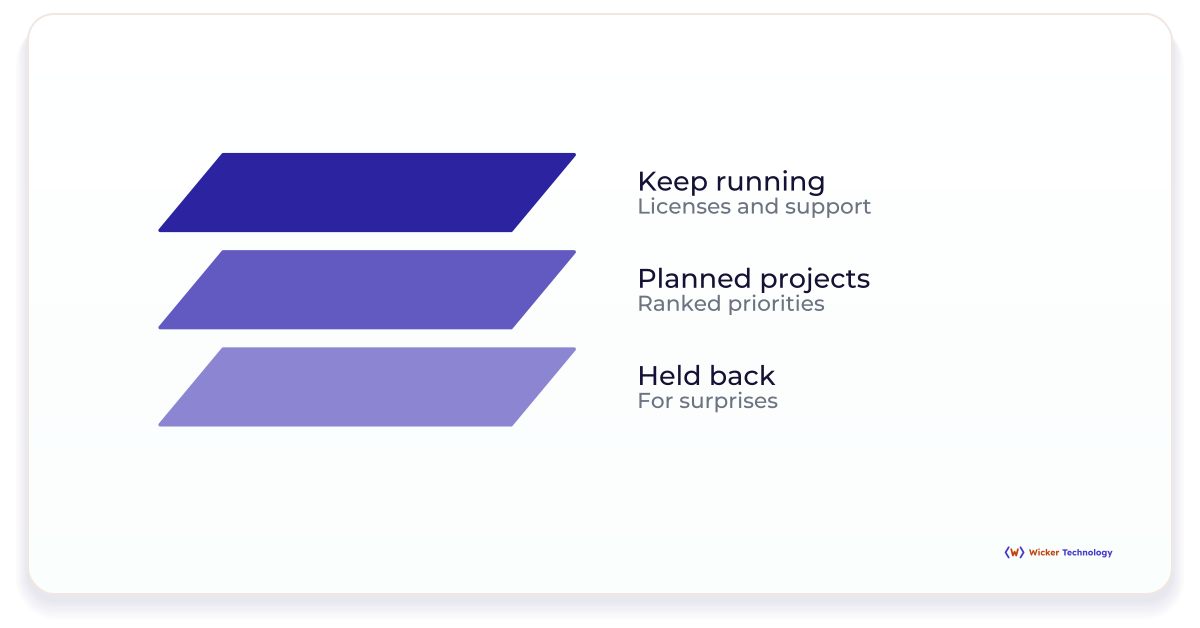
Give every priority a one-page business case: what it costs over three years, what it changes and how you will know it worked. Include run costs, not just the project. A new platform with a lower license fee and a higher integration bill is not a saving.
Hold a share of the budget back for work you cannot predict. I suggest you agree the size of that reserve with the CFO in advance, so unplanned requests do not each need a separate fight. Then sequence the funded work in a plan; the enterprise technology roadmap guide shows how I lay it out by quarter.
Phase 5: Governance That Does Not Slow Everyone Down
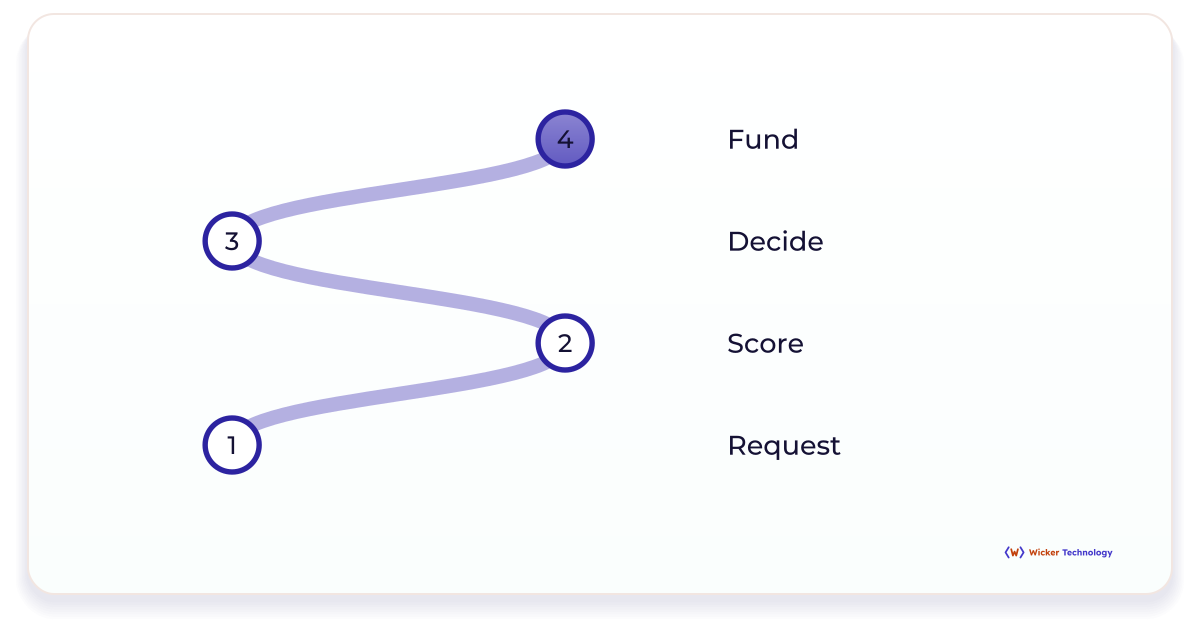
Governance is where strategies go to die, usually because it was designed as a committee. Keep it light. Three things are enough: an intake form for any new technology request, a short list of approved standards and a quarterly review of the plan.
The intake form needs four answers: what problem it solves, which outcome it serves, what it connects to and who will own it. If a request cannot answer those, it goes back. If it can, it moves quickly. Day-to-day running of the approved landscape is a separate topic, which I cover in enterprise technology management.
Make the Strategy Easy to Repeat
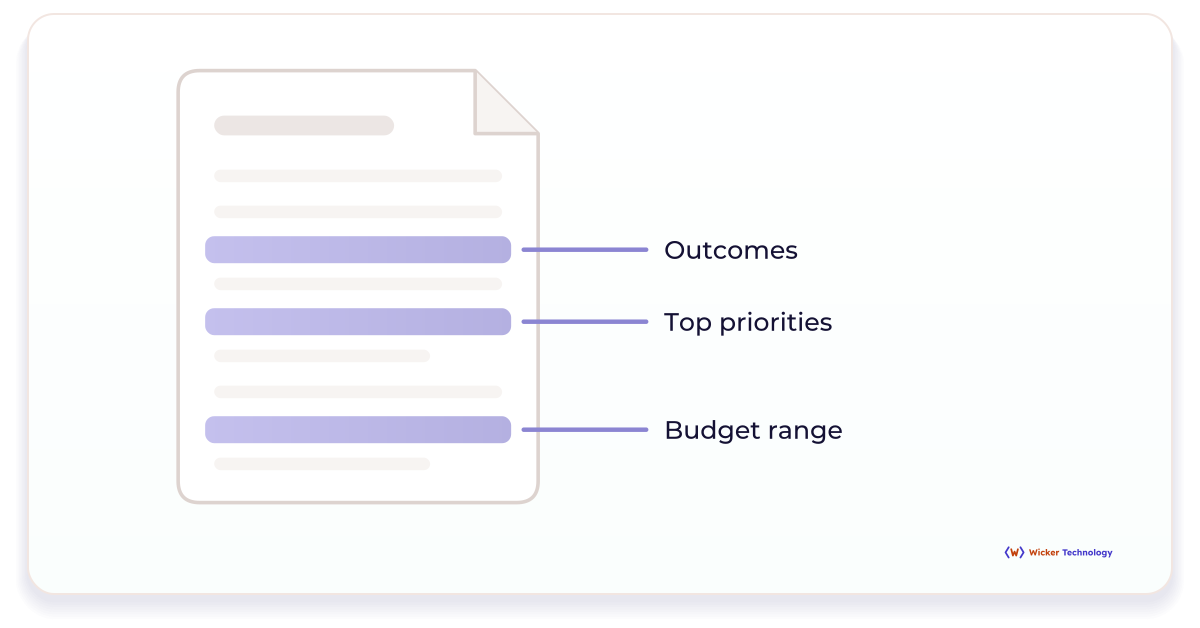
A strategy only works if people can repeat it. Summarize it in one page: the three to five outcomes, the ranked priorities and the rules for build, buy or partner. Put that page in front of every project sponsor and use it in every approval meeting.
I also suggest a short, plain-language version for managers outside IT. They do not need the architecture. They need to know what is coming, when it will affect them and where to send a request. When a manager can explain the priorities in two sentences, you have communicated well.
Finally, publish the decisions you declined. A short list of requests that were turned down, with the reason, teaches the organization how the rules work faster than any policy document.
One more habit helps. Review the strategy against actual spend once a year. If most of your budget still goes to systems you marked for retirement, the strategy is not steering anything yet, and the review should ask why.
If the review shows drift, do not blame the teams first. Check whether the intake routine is too slow or the standards too narrow, because people go around rules that get in their way. Fix the rule, and the behavior usually follows within a quarter.
Mistakes That Sink Enterprise Technology Strategies
- Writing it inside IT alone, so the business never adopts it
- Listing fifteen priorities when the budget supports four
- Choosing vendors before the outcomes are agreed
- Skipping the retire decisions, so cost only ever goes up
- Treating it as finished instead of reviewing it twice a year
The last one is the quietest. A strategy written in January is partly wrong by September, because an acquisition closed or a vendor changed its pricing. Put the review dates in the calendar when you approve the document.
What a Good Strategy Looks Like in Practice
The best ones I have seen are four to eight pages. They open with the outcomes, show the ranked initiatives in one table, state the build, buy or partner rule and end with the governance routine. Everything else sits in an appendix. If you would like to see what organizations have done with such plans, the enterprise technology examples collection has twelve real patterns.
Check your own draft against this short list before you present it:
- Every priority names an outcome, an owner, a budget and a date
- At least one system is marked for retirement
- The business case includes run costs for three years
- A review date is in the calendar
Where Should You Begin?
If you have to pick one phase to begin with, begin with the inventory. It costs the least, it always turns up savings and it makes every later conversation easier. If you already have an inventory, go to outcomes, because that is the step most often skipped. If leadership already agrees on outcomes, jump to priorities and build the ranking table.
An outside view helps most in phase 3, where internal politics tend to decide what gets funded. Someone with no system to protect can say which ones should go.
Questions About Enterprise Technology Strategy
What Is an Enterprise Technology Strategy?
It is a short, written plan that says which business outcomes your technology has to support, which systems carry them, what you will change and in what order. A good one fits on a few pages and names an owner and a budget for every priority.
How Long Should an Enterprise Technology Strategy Take to Write?
For most organizations I work with, the first version takes four to eight weeks, mostly spent on interviews and on finding out what you really run. Writing the document is the quick part. Expect to revisit it once or twice a year.
Who Owns the Strategy?
A senior executive should own it, usually the CIO or CTO, with the CFO and the heads of the main business units as co-signers. If only IT signs it, departments treat it as an IT preference and keep buying their own tools.
How Is a Technology Strategy Different from a Roadmap?
The strategy says what you will do and why. The roadmap says when, in what order and for how much. You need the strategy first, because a roadmap built without it is just a list of requests with dates on them.
How Much Should We Spend on Technology?
There is no single correct share of revenue, and published benchmarks vary widely by industry and by how much of your product is software. Compare your spend with similar organizations, but let your priorities set the number rather than the benchmark.
Should We Build, Buy or Partner?
Buy where the capability is common to every company in your industry, such as payroll or accounting. Build only where the capability gives you an edge nobody sells. Partner where you need speed and have no in-house skills. Write the rule down so each project does not reopen the argument.
What If the Business Strategy Is Not Clear Yet?
Start with the two or three outcomes leadership already agrees on, such as lowering cost to serve or entering a new region. A technology strategy built around those is useful now and can be adjusted as the business plan firms up.
Important: nothing in this article is legal, financial or tax advice. All figures are estimates from typical projects, so verify them with your own providers and advisers.
Was this useful?
We appreciate the feedback.
Paige Mulvaney
Paige leads the Wicker editorial team and works with the consultants who run the roadmaps, software selections, implementations and integrations to turn real client projects into practical guides. Her focus is plain-language advice on IT strategy, choosing business software and connecting systems so they work together. Every article she edits is checked against current vendor pricing and documentation before it is published.