In Short
- A business technology roadmap takes about 12 weeks to build and fits on a few pages.
- Rank projects by benefit, cost, risk and urgency, and map dependencies before you set dates.
- Limit active projects to two or three per quarter and keep a buffer.
- Review the roadmap each quarter and keep a change log.
A technology roadmap tells people what will change, in which order, who is responsible and what it will cost. If you are building one for the first time, the work is less about technology than about choices. A good outside view, such as business technology consulting, helps because it compares your list with what other companies do.
This guide shows the roadmap in six phases, with timing, outputs and a sample you can copy. I wrote it for companies with 50 to 500 people, where one IT lead usually carries the plan. Adjust the timing for your size.
The Six Phases and Their Timeline
Most roadmaps take about 12 weeks to build, with some phases running in parallel. The table gives the outline. Each phase below explains the work, the output and the traps I see.
| Phase | Timing | What you produce |
|---|---|---|
| Phase 1: Take Stock | Weeks 1 to 4 | Inventory of systems, owners, contracts and costs |
| Phase 2: Set Goals and Constraints | Weeks 3 to 6 | Three to five business goals with numbers, plus budget and staffing limits |
| Phase 3: Rank the Projects | Weeks 5 to 8 | A scored list of projects with cost, benefit, risk and dependencies |
| Phase 4: Build the Timeline | Weeks 7 to 10 | Quarter-by-quarter plan with milestones, owners and decision gates |
| Phase 5: Fund It and Name Owners | Weeks 9 to 12 | Budget by quarter and one named owner per project |
| Phase 6: Review and Update | Every quarter | A short update that changes the plan when facts change |
Phase 1: Take Stock
Weeks 1 to 4. Every roadmap starts with a list of what you own. It sounds basic, and in my experience it is the step most companies skip. In one client's first inventory we found 63 subscriptions, of which finance knew about 40. The rest were bought on cards by team leads.
List each system with its owner, annual cost, renewal date, number of users, and the business process it supports. Add a column for how well it connects to other systems, and a column for how happy users are. A short survey of ten users per major system is enough.
- Export the last 12 months of invoices and card statements.
- Ask each department head to confirm their systems.
- Record contract terms, especially renewal and exit dates.
- Rate each system for fit, risk and cost.
Phase 2: Set Goals and Constraints
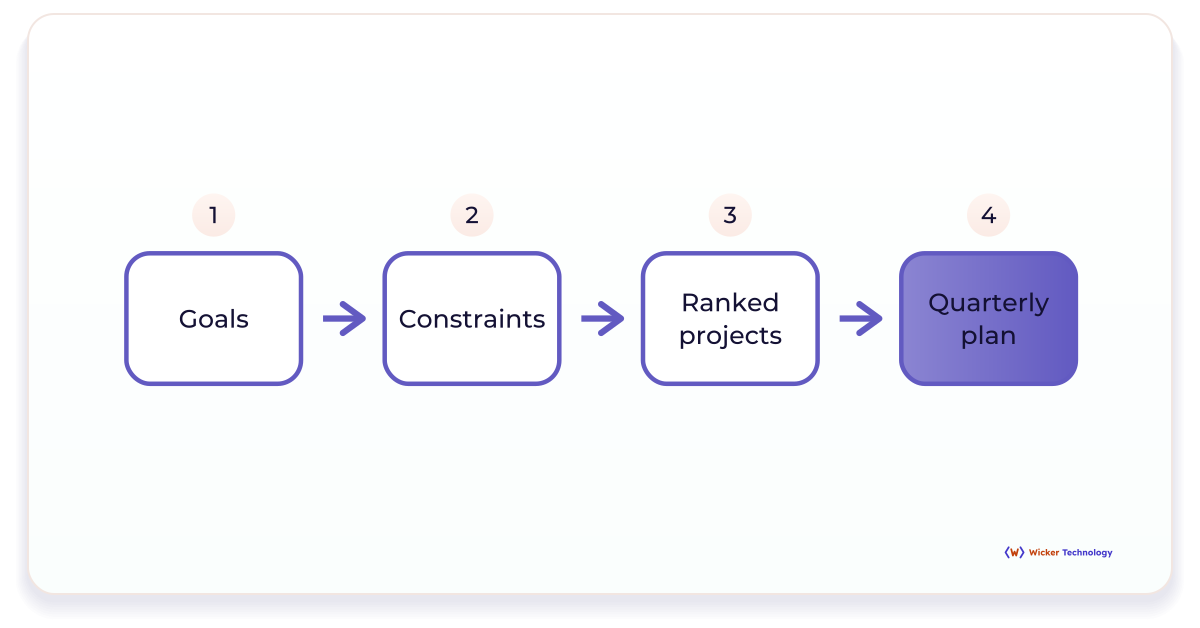
Weeks 3 to 6. A roadmap without goals becomes a wish list. Turn the company plan into technology goals with a number and a date, such as closing the books in six days instead of twelve, or cutting software spend by a set share at the next renewal cycle.
Constraints matter as much as goals. Write down the budget range, the number of people who can work on projects, blackout periods such as year-end and any commitments already signed. Roadmaps fail when they assume resources that do not exist.
- Interview the leaders of finance, sales and operations.
- Translate each goal into one measurable result.
- List budget, staff time and fixed dates.
- Agree the goals with the executive sponsor in writing.
Phase 3: Rank the Projects
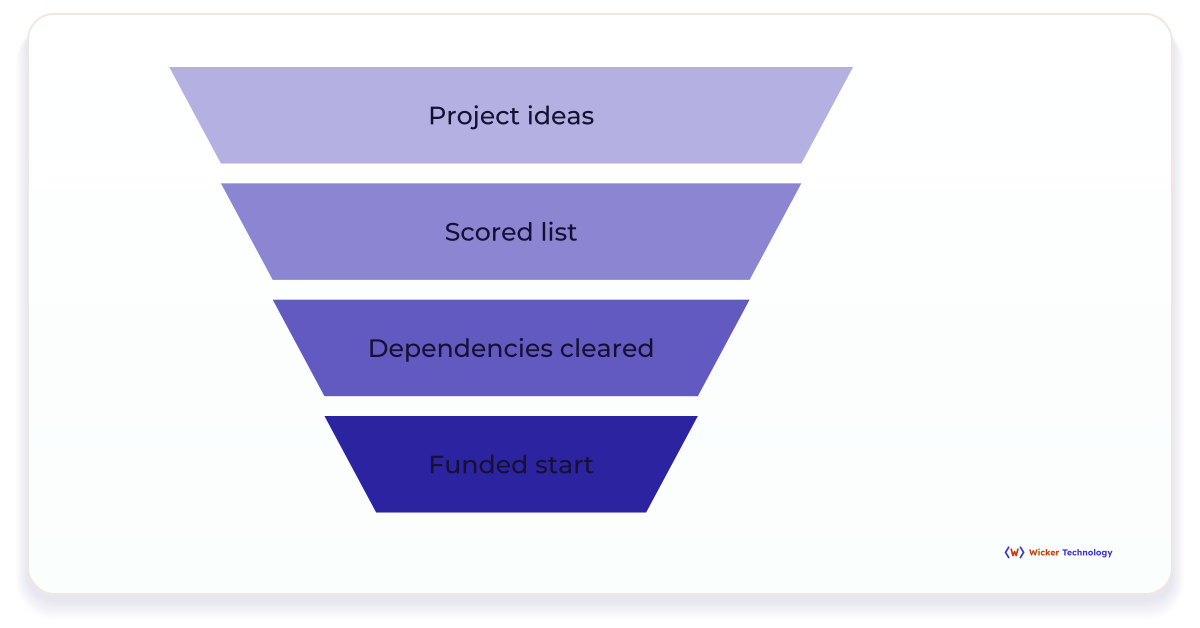
Weeks 5 to 8. Now list candidate projects and score them. I use four scores: benefit, cost, risk and urgency. Add dependencies, because many projects cannot start until another is done. A new CRM, for example, usually waits for a data cleanup.
Be blunt in the ranking. Some projects score well and still should wait because they depend on a risky one. Others score poorly but are cheap and unblock three more. The business technology strategy behind the roadmap decides these trade-offs, so keep the two documents consistent.
- Write every candidate project as a one-line problem statement.
- Score each one for benefit, cost, risk and urgency.
- Map dependencies between projects.
- Drop or defer anything that fails the budget limit.
Phase 4: Build the Timeline
Weeks 7 to 10. Place the ranked projects on a calendar. Limit yourself to two or three active projects per quarter in a mid-sized company, because the same people usually work on all of them. Leave a quarter in which little new starts, to absorb overruns.
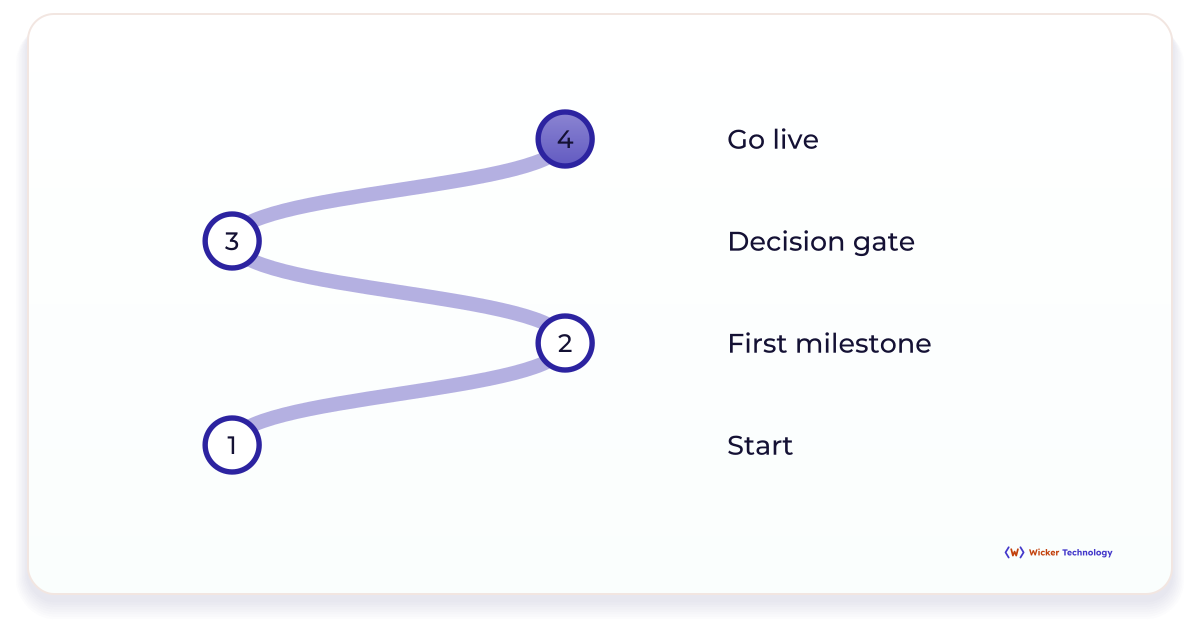
Every project needs a start, a milestone at about one third of the way, a go-live date and a review date after go-live. Add decision gates where leadership can stop or change course. A roadmap that has no gates is a schedule, and schedules break.
- Slot the first project into the earliest quarter that fits your capacity.
- Add milestones and a post-go-live review date to each project.
- Mark decision gates and who decides.
- Add a buffer quarter for overruns.
Phase 5: Fund It and Name Owners
Weeks 9 to 12. Attach a budget to each project, covering licenses, implementation, training and the time of your own team. Use ranges for later quarters and firm numbers for the next two. A realistic roadmap shows a range and an assumption behind each figure.
Name one owner per project. If you have to put two names, pick one. Owners need time in their calendar, not just a line in a plan. I check that each owner has a few hours a week reserved before I sign off the roadmap.
- Estimate cost for licenses, services, training and internal time.
- Set the budget as a range for later quarters.
- Name one owner per project and confirm their available hours.
- Get leadership sign-off on the first two quarters.
Phase 6: Review and Update
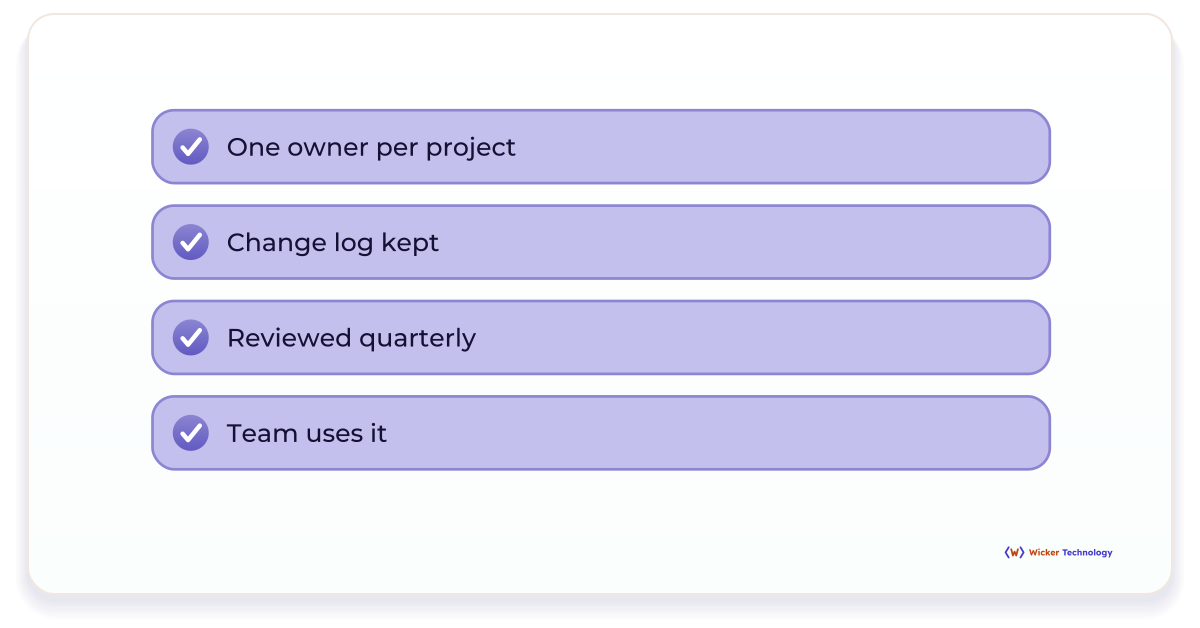
Every quarter. A roadmap is a living document. Review it each quarter for 90 minutes: what finished, what slipped, what changed in the business and whether the order still makes sense. Update the plan, not the story you tell about it.
Keep a change log. When a project moves, record why. After a year, the log tells you where your estimates run optimistic, which makes the next roadmap more accurate. Good business technology management turns this review into a habit rather than a one-off event.
- Hold a quarterly review with the same people each time.
- Compare actual cost and dates with the plan.
- Update priorities based on what has changed.
- Publish a one-page summary to the leadership team.
A Sample Roadmap You Can Copy
Here is a one-year roadmap for a company of about 200 people, built from the pattern I use most often. It starts with cheap, fast projects to build trust and leaves the heavier platform changes for later quarters. The examples behind several rows appear in my write-up of business technology examples.
| Quarter | Project | Owner | Result to measure |
|---|---|---|---|
| Q1 | License review and single sign-on | IT lead | Seats cut, one login per person |
| Q2 | Customer data cleanup, then CRM upgrade | Sales operations | Duplicate records removed, quote time |
| Q3 | Connect CRM to billing | Finance lead | Orders entered once, failed syncs alerted |
| Q4 | Backup test and recovery runbook | IT lead | Recovery time proven against target |
| Buffer | Overruns and review | Executive sponsor | Plan updated for next year |
Notice the ratio. One project per quarter does most of the work, and the buffer sits last. If your list looks different, that is fine. The point is that every row has an owner, a measure and a place on the calendar.
What a Roadmap Costs and What It Saves
The visible cost is time. Building a roadmap takes roughly 12 weeks at a few hours per week from each department head, plus perhaps 40 to 80 hours from the IT lead. If you use outside help, add a fee, which you should ask for as a fixed quote.
The savings come from avoided mistakes. In my client work, a roadmap exercise typically uncovers duplicate tools, expiring contracts and projects that would have collided. One license review inside a roadmap paid for the whole exercise at the next renewal.
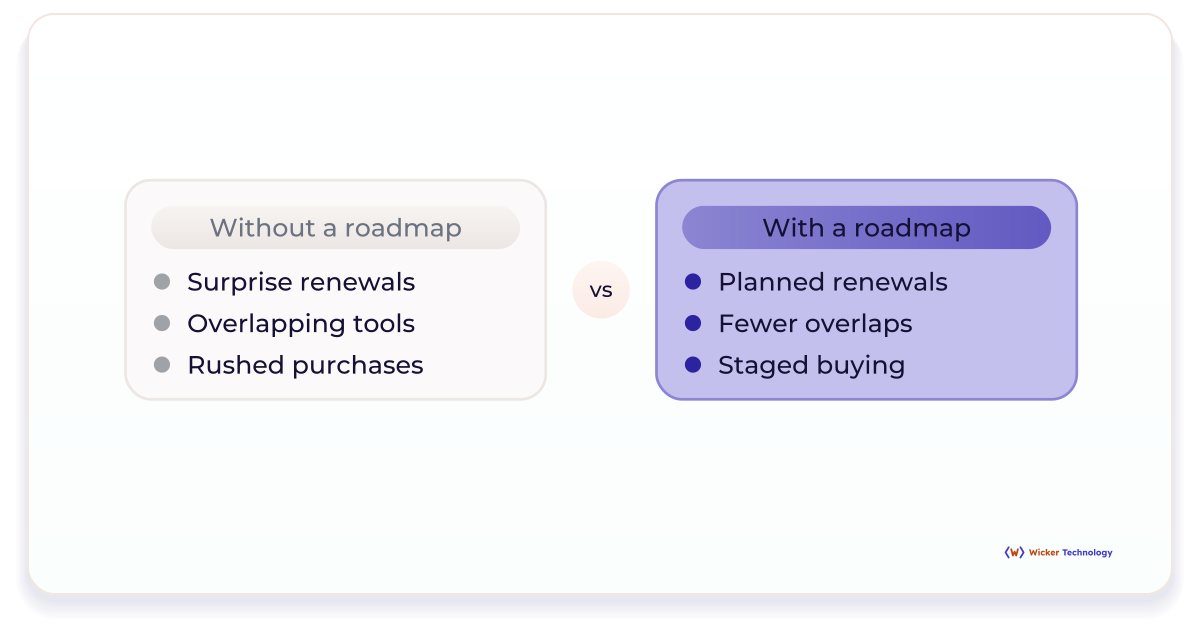
Treat the roadmap as an asset with a running cost too. Plan about a day per quarter for the review and one more for updating the summary. Companies that skip this end up redoing the whole exercise every two years, which costs far more than the small quarterly habit. Ask your finance lead to track avoided costs alongside the budget, so the value of the plan is visible when someone questions it.
Mistakes That Break Roadmaps
Four mistakes cause most roadmap failures. The first is too many projects in the first year. The second is hiding the budget, which turns every discussion into a fight. The third is skipping the post-go-live review, so no one learns from the result. The fourth is picking products before the plan, and the ranked list in my guide to business technology solutions works best after you know what job each product must do.
I also see roadmaps written for a board and never used by the team. Test yours by asking an IT admin what is planned for next quarter. If they cannot answer, the roadmap is a presentation, not a plan.
How to Know Your Roadmap Is Ready
Before you publish it, check these points:
- Each project has one owner with time reserved.
- Each project has one number it should move.
- The first two quarters have a firm budget.
- The plan includes a buffer and a quarterly review.
- Leadership has signed off on the order, not just the list.
Questions About Business Technology Roadmaps
What Is a Business Technology Roadmap?
It is a plan that lists the technology projects you will do, in what order, with owners, costs and measures. It links company goals to specific system changes and gives you one place to see what is happening next.
How Long Should a Technology Roadmap Cover?
Plan 12 months in detail and 24 to 36 months as a rough outline. Technology and business needs change too fast for a detailed five-year plan. Review quarterly and extend the outline as you go.
Who Should Own the Roadmap?
One person owns it, usually the IT lead or head of operations, with an executive sponsor who can resolve conflicts. A committee can advise, but a roadmap without one owner drifts.
How Much Does It Cost to Build a Roadmap?
If you do it yourself, the main cost is about 12 weeks of part-time effort from you and the department heads. Outside help adds a fee but shortens the time and brings comparisons from other companies. Ask for a fixed quote.
What Is the Difference Between a Strategy and a Roadmap?
A strategy says what you want to achieve and why. A roadmap says which projects you will run, in which order and with what resources. You need the strategy first, or the roadmap becomes a list of requests.
How Often Should I Update the Roadmap?
Review it every quarter and update it when something material changes, such as a budget cut, an acquisition or a vendor contract. Keep a change log so you can see why plans moved.
What Should Be on a Technology Roadmap?
Each project needs a name, an owner, a start date, a milestone, a go-live date, a budget and one measure of success. Add dependencies, decision gates and a buffer. Keep it to a few pages.
Disclaimer: This article is general information, not legal, tax or financial advice. Timelines and costs depend on your company.
Important: nothing in this article is legal, financial or tax advice. All figures are estimates from typical projects, so verify them with your own providers and advisers.
Was this useful?
We appreciate the feedback.
Paige Mulvaney
Paige leads the Wicker editorial team and works with the consultants who run the roadmaps, software selections, implementations and integrations to turn real client projects into practical guides. Her focus is plain-language advice on IT strategy, choosing business software and connecting systems so they work together. Every article she edits is checked against current vendor pricing and documentation before it is published.