In Short
- Six stages take a review from scope to integration handover, each with one output and one decision gate.
- Scope first: name the three or four areas where a technology problem would change the price.
- Rate every finding by impact and effort, then link it to a price change, a condition or an accepted risk.
- A review that ends in a first 100 days plan is the only one that pays back after closing.
A framework keeps a technology review from turning into a long list of observations. Teams that work without one tend to spend three weeks on whatever the seller sends first and one day on what the deal actually depends on. If you want help applying the method to a live deal, our technology due diligence consulting team can run it with you.
The model below has six stages. I built it from reviews across healthcare, finance and logistics targets, and it works for deals from a small acquisition to a full merger. Only the depth of each stage changes.
The Six Stages in One Table
| Stage | Main output | Decision gate | Typical time |
|---|---|---|---|
| Stage 1: Scope the Review | One-page scope | Deal sponsor agrees on depth and budget | 1 to 2 days |
| Stage 2: Request and Triage Evidence | Request list and triage log | Enough documents to plan interviews | 3 to 5 days |
| Stage 3: Test the Evidence | Draft findings log | Every major area has at least two sources | 1 to 2 weeks |
| Stage 4: Rate Each Finding | Ranked findings table | Each finding has a cost range and an owner | 2 to 3 days |
| Stage 5: Turn Findings Into Terms | Deal recommendation | Price, conditions or walk-away decided | 2 days |
| Stage 6: Hand Over to Integration | First 100 days plan | Named owner for every open item | Ongoing, 100 days |
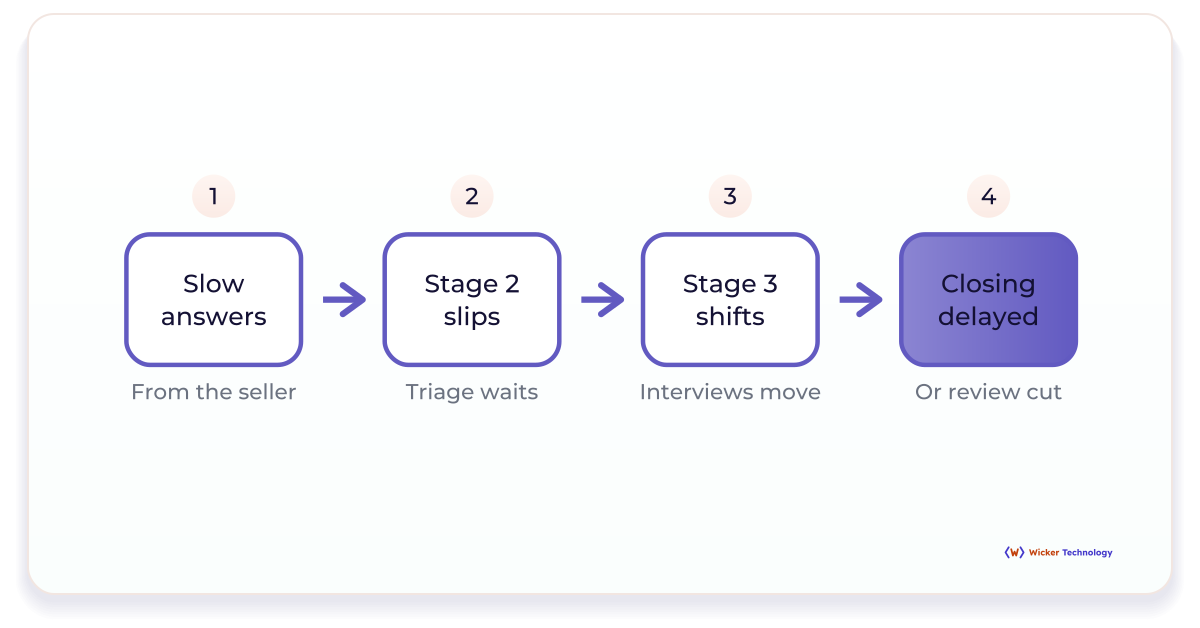
The times assume a mid-sized target and a seller who answers requests within a few days. Slow answers move stage two, and everything after it moves too.
Stage 1: Scope the Review
Start by writing down what the deal depends on. A software company lives or dies on its code and team. A distributor lives on its warehouse and ordering systems. The scope names the three or four areas where a technology problem would change the price, and gives everything else a lighter look.
Set the time box here as well. A review without a deadline expands to fit whatever the seller sends. I usually agree on a start date, a draft date and a final date before any request goes out.
You leave this stage with a one-page scope, and you move on once this is true: deal sponsor agrees on depth and budget.
Stage 2: Request and Triage Evidence
Send one request list, grouped by area, with a due date for each item. When documents arrive, sort them into three piles: clear, needs a question and missing. The missing pile is often the most useful part of the whole review.
Resist reading everything. A first pass of the inventory, contract list and last security report is enough to decide where the interviews should go.
You leave this stage with a request list and triage log, and you move on once this is true: enough documents to plan interviews.
Stage 3: Test the Evidence
Documents show what the seller wants you to see, so confirm them with people and systems. Interview the team that runs the system, ask for a live demonstration of one critical process and sample real data where you can.
At this stage my due diligence checklist is the working document. Each of its eight points gets a short session and a line in the findings log.
You leave this stage with a draft findings log, and you move on once this is true: every major area has at least two sources.
Stage 4: Rate Each Finding
Give every finding two scores: impact if it goes wrong and effort to fix it. A high-impact, low-effort item goes into the first 100 days. A high-impact, high-effort item goes into the price discussion.
Be honest about the limits of your estimate. A range with a stated assumption is more useful to a deal team than a single number that looks exact.
You leave this stage with a ranked findings table, and you move on once this is true: each finding has a cost range and an owner.
Stage 5: Turn Findings Into Terms
Findings only matter if they change something. Link each serious item to one of three actions: lower the price, add a closing condition or accept the risk with a plan. If an item has no action, it does not belong in the summary.
Some risks are easier to handle in the contract than in the price. The technology due diligence risks I see most often fit one of these three actions.
You leave this stage with a deal recommendation, and you move on once this is true: price, conditions or walk-away decided.
Stage 6: Hand Over to Integration
The review is wasted if it lives in a folder after closing. Hand the findings log to whoever runs integration, with the owners and dates already filled in.
Revisit the log at day 30 and day 100. Some findings will turn out smaller than expected, and a few new ones will appear once you have real access.
You leave this stage with a first 100 days plan, and you move on once this is true: named owner for every open item.
A Simple Way to Score Findings
I use a three-level scale for both impact and effort. Anything you cannot place after a few minutes of discussion needs more evidence, so mark it open and move on.
| Impact | Low effort to fix | High effort to fix |
|---|---|---|
| High | Add a closing condition or fix in the first 30 days | Adjust the price or reconsider the deal |
| Medium | Put it in the first 100 days plan | Plan and budget it in year one |
| Low | Note it and fix it when convenient | Accept the risk and write down why |
A Worked Example: A Regional Distributor
To show how the stages fit together, here is a composite of a deal I have seen in several forms. A buyer wanted to acquire a regional distributor with about 150 employees. The buyer's main worry was whether the target's order and warehouse systems could run on the buyer's platform.
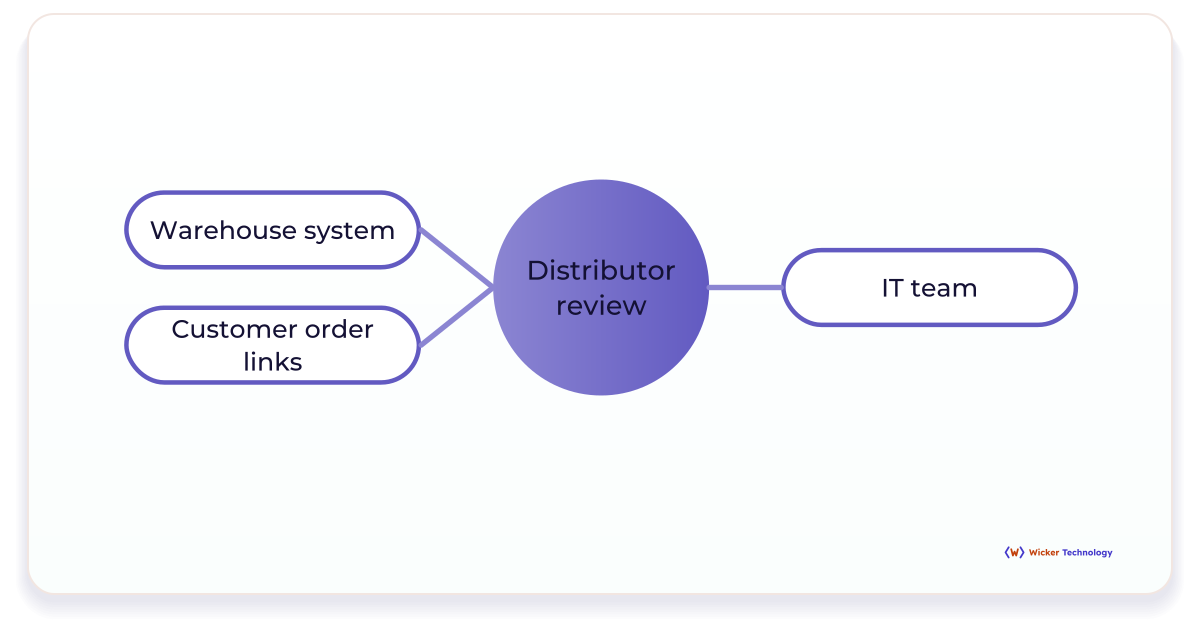
In stage one the scope named three areas: the warehouse system, the ordering links to major customers and the IT team. Everything else got a light look. Stage two produced a request list of 23 items, and 9 of them came back late. The late items clustered around the warehouse system, so the interviews in stage three went there first.
The interviews showed that the warehouse system was 14 years old and supported by a single contractor on a part-time basis. In stage four the finding scored high on impact and high on effort. The cost range for a replacement was large enough to matter, so stage five turned it into a price reduction plus a retention agreement with the contractor.
Stage six handed a plan to the integration lead: keep the old system for twelve months, document it in the first 100 days and select a replacement in year two. The buyer closed with a clear idea of what the systems would cost, and nobody was surprised in month three.
Where the Framework Gets Misused
A framework can fail in predictable ways. The most common is treating it as a form to fill in. Teams run every stage at the same depth and finish with a thick report that no one reads. The scope in stage one exists to prevent that, so use it.
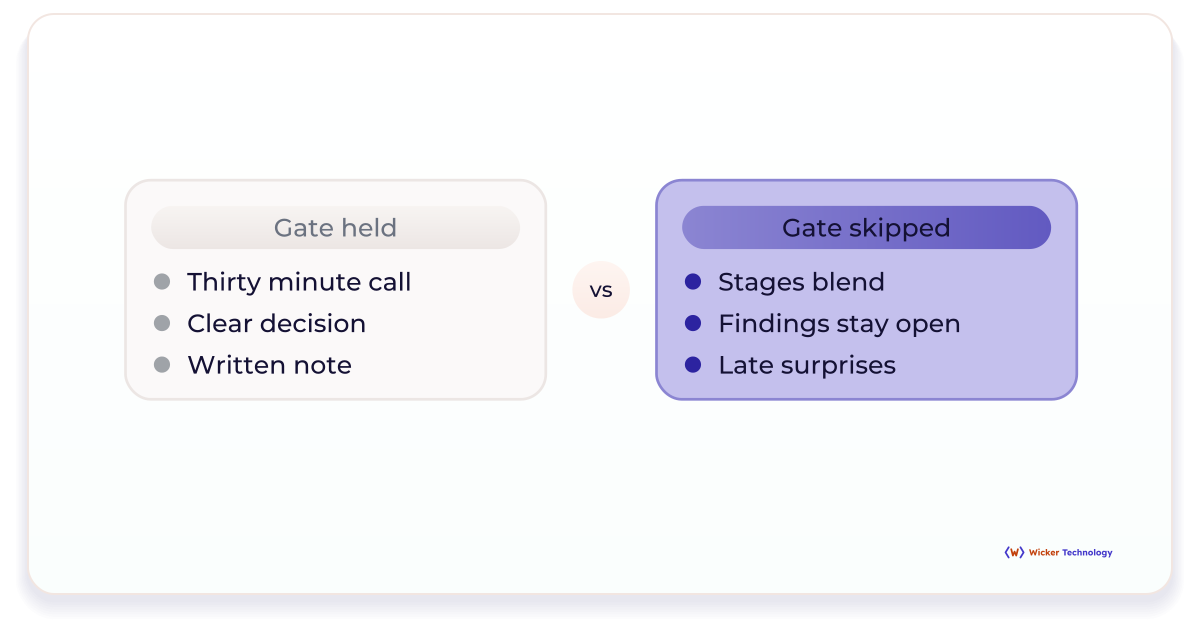
The second misuse is skipping the gates. If the sponsor never says go, fix or stop, the stages blend into one long task list and findings stay open until closing. A gate can be a thirty-minute call, but it needs a decision and a written note.
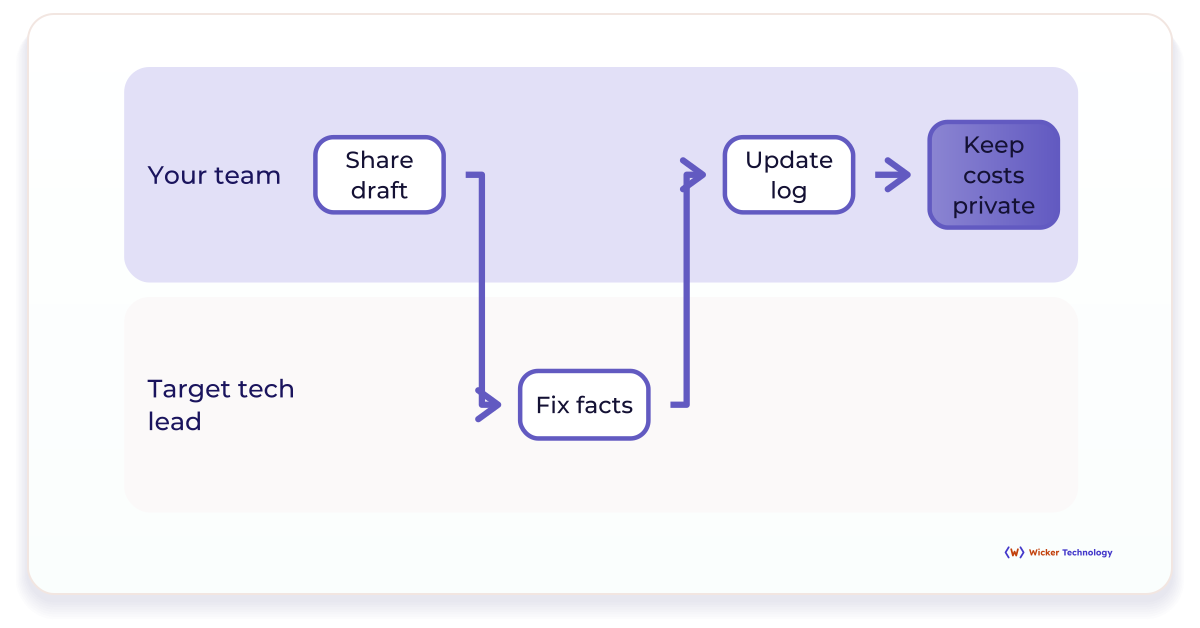
The third is reviewing in secret. Findings that the seller sees late become arguments. Share draft findings with the target's technology lead at the end of stage three. They will correct factual errors, and you will learn which findings they consider fair. Keep the cost estimates and deal terms to yourself.
Adapting the Framework to Your Deal
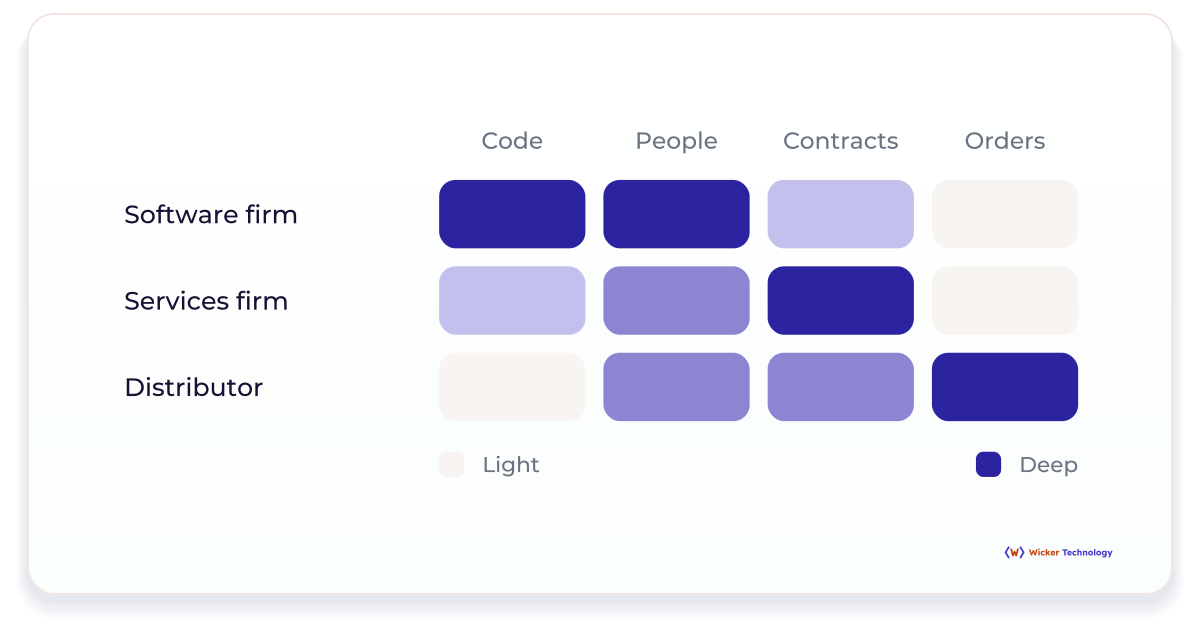
The stages stay in order, but the weight moves with the target. A software business spends most of its time in stage three on code and people. A services business spends it on contracts, vendors and data. A distributor spends it on the systems that touch orders and stock.
For a small deal, compress stages one and two into one afternoon and run stage three as two or three interviews. For a large deal, add a second reviewer and a weekly findings meeting during stage three. If you plan to merge the systems after closing, my technology implementation framework picks up where stage six ends.
How to Choose Who Runs the Framework
The person who runs the model needs three things: deal experience, independence from the sponsor and enough technical depth to ask the second question. An internal leader who has done a few deals can do it. For a first deal, or a target with customer data or custom software, an outside reviewer usually pays for itself.
- They have reviewed targets in your industry before.
- They can show a sample report with costs next to each finding.
- They will tell the deal sponsor something unwelcome.
- They hand over a plan, not only a list.
Questions About the Technology Due Diligence Framework
What Is a Technology Due Diligence Framework?
It is a repeatable method for reviewing the technology of a company before you buy, merge with or invest in it. It sets the order of the work, the evidence you need at each stage and the point where you decide to go deeper, adjust the price or stop.
How Is a Framework Different from a Checklist?
A checklist tells you what to look at. A framework tells you in what order, how deep and what to do with the answers. I use the checklist inside stage three of the framework below.
How Many Stages Should a Framework Have?
Six is enough for most deals. Fewer stages tend to skip the scoping step or the integration step, and more stages usually split the same work into extra meetings.
Can the Framework Work for a Small Acquisition?
Yes. Run the same six stages in a shorter form: a one-page scope, a short document request, two interviews and a findings table. The order stays the same and only the depth changes.
Who Needs to Approve the Findings?
The deal sponsor owns the decision, but the technology lead should sign off on the facts. When both agree on the findings table, the price conversation is much shorter.
When Should Technology Due Diligence Start?
As soon as there is a serious letter of intent. Starting earlier wastes effort on deals that fall through, and starting later leaves too little time to act on what you find.
What Should the Final Report Contain?
A one-page summary, a ranked findings table with costs and owners, a first 100 days plan and a list of open questions. Keep detail in an appendix so the decision makers read the first page.
Important: nothing in this article is legal, financial or tax advice. All figures are estimates from typical projects, so verify them with your own providers and advisers.
Was this useful?
We appreciate the feedback.
Paige Mulvaney
Paige leads the Wicker editorial team and works with the consultants who run the roadmaps, software selections, implementations and integrations to turn real client projects into practical guides. Her focus is plain-language advice on IT strategy, choosing business software and connecting systems so they work together. Every article she edits is checked against current vendor pricing and documentation before it is published.