In Short
- Epic and Oracle Health suit large systems, while athenaOne, eClinicalWorks, NextGen and Tebra fit ambulatory practices.
- Doxy.me and Phreesia fill specific gaps: video visits and digital check-in.
- Most vendors do not publish prices, so budget for software, implementation, interfaces and training together.
- Score vendors on your own workflows and check exit terms before you compare price.
The Best Healthcare Technology Solutions at a Glance
| Solution | Type | Best for |
|---|---|---|
| 1. Epic | Enterprise EHR | Large hospitals and health systems |
| 2. Oracle Health | Enterprise EHR | Hospitals and government health systems |
| 3. MEDITECH Expanse | Hospital EHR | Community and rural hospitals |
| 4. athenaOne | Cloud EHR and billing | Ambulatory practices that want billing support |
| 5. eClinicalWorks | Ambulatory EHR | Small and mid-size ambulatory practices |
| 6. NextGen Healthcare | Ambulatory EHR | Specialty groups and health centers |
| 7. Tebra | Practice management and EHR | Independent practices |
| 8. Doxy.me | Telehealth | Small practices starting with video visits |
| 9. Phreesia | Patient intake and engagement | Groups that want digital check-in |
The 9 Best Healthcare Technology Solutions, Ranked
I start with the platforms that suit the widest range of organizations and move toward specialist tools. Where I could read them, I used live G2 ratings and review counts, and where a vendor does not publish prices I say so. If you want help narrowing the list, my healthcare technology consulting work begins with exactly this kind of scoring.
Epic
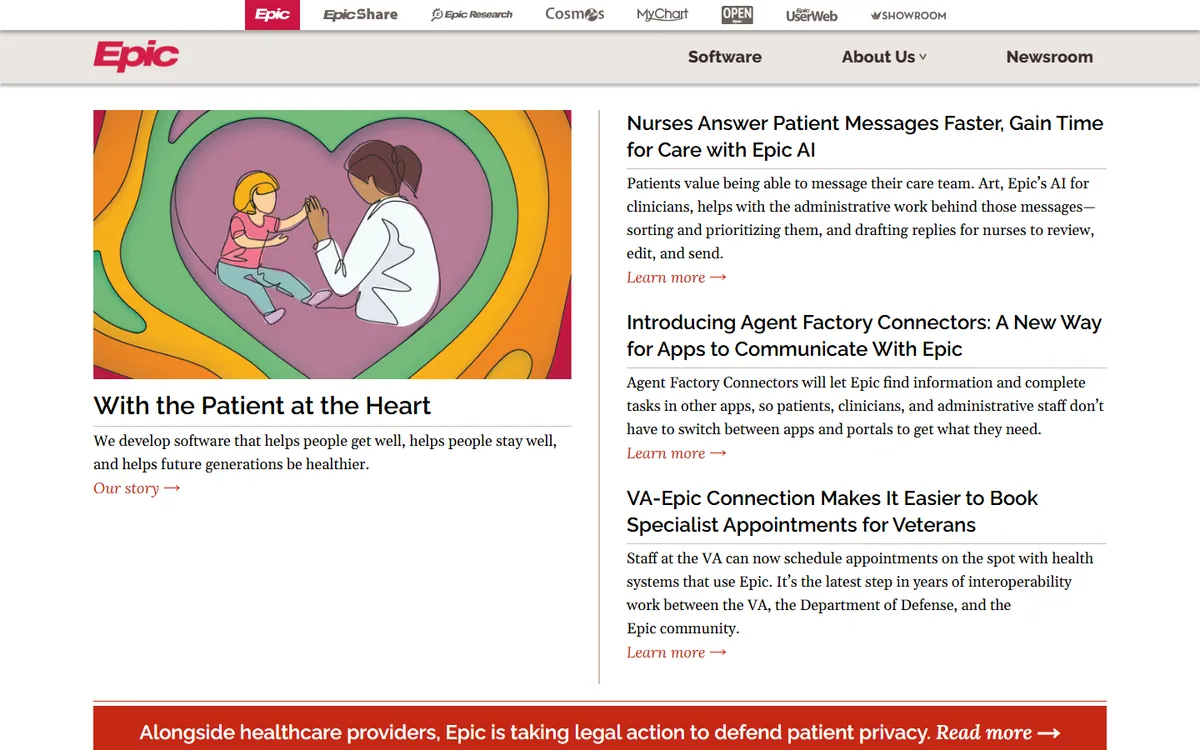
The Default Choice for Large Health Systems That Want One Record Across Every Setting
Epic is a single-vendor EHR platform with clinical, billing, patient portal and analytics modules that share one patient record.
Epic is the system I expect to see at large academic centers and multi-hospital groups. Its strength is breadth: inpatient, outpatient, revenue cycle, scheduling and the MyChart patient portal all sit on one data model, and the product is deeply customizable to local workflows.
That breadth has a cost. Implementations are large, staff need real training and your organization usually has to take Epic's way of doing things. I recommend it when you have the scale and budget to support a dedicated team, and I steer small practices elsewhere.
Where Epic Shines
- One record across inpatient, outpatient and billing
- MyChart is widely known to patients and used across many systems
- Strong analytics and a very large user community
Where Epic Falls Short
- High cost and long implementations
- Smaller practices often find it too heavy
Epic Pricing
Epic does not publish prices, and costs depend on organization size, modules and services. G2 shows a perceived cost of $$$$$, its highest level, and reviewers on Capterra describe it as expensive and better suited to large hospitals and networks.
Epic Reviews
- G2: rated 4.2/5 (across 941 ratings)
- Capterra: rated 4.4/5 (across 456 ratings)
Oracle Health
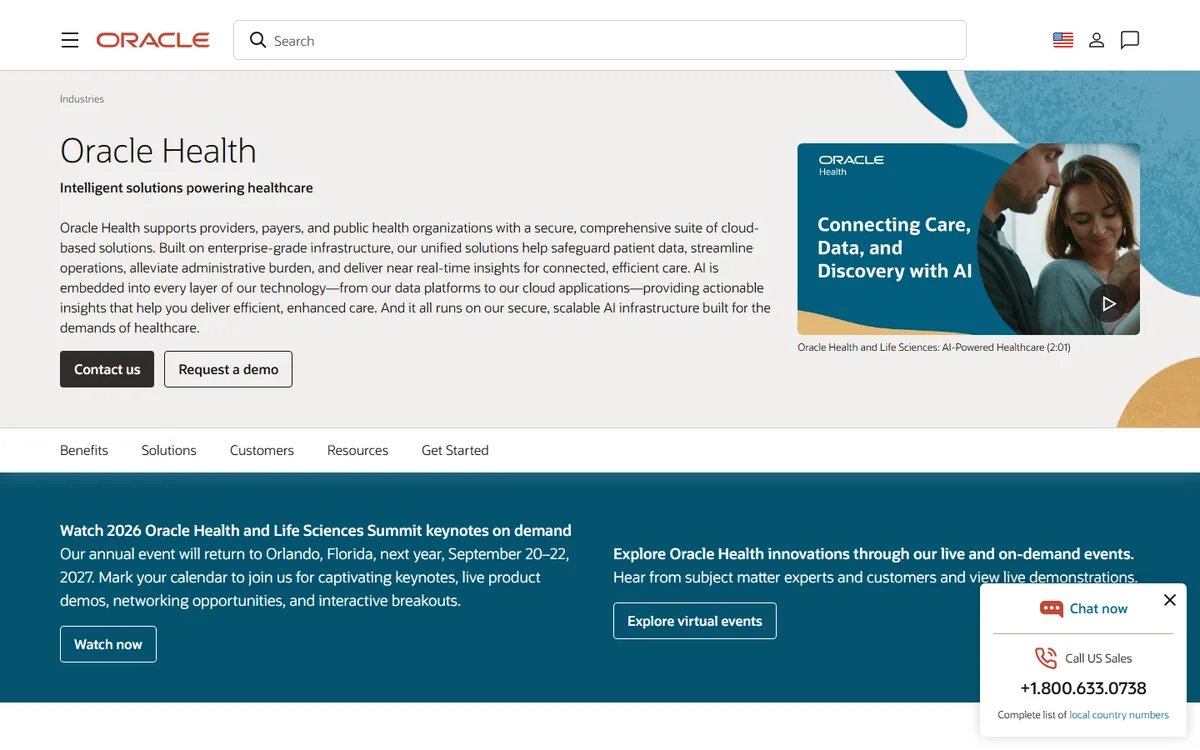
A Broad Hospital Platform With Strong Reach, Best for Organizations Already Invested in Oracle
Oracle Health, formerly Cerner, offers an EHR and related clinical, revenue and analytics tools for hospitals and health systems.
Oracle Health inherited Cerner's large installed base and has put effort into a newer cloud architecture and AI features. For organizations already on Cerner Millennium, the path forward often runs through Oracle's roadmap, which makes the product a strategic question more than a shopping choice.
I tell clients to look closely at reference sites of their size and at the roadmap commitments in writing. The G2 score is lower than several competitors, and implementation time is long, so plan for change management and ask hard questions about support.
Where Oracle Health Shines
- Large installed base across hospitals and public sector
- Broad clinical and revenue cycle coverage
- Cloud and AI investments in the roadmap
Where Oracle Health Falls Short
- Reviewer scores are lower than most peers on G2
- Long implementations and heavy change management
Oracle Health Pricing
Oracle Health does not list prices. G2 shows a perceived cost of $$$$$ and reports an average implementation time of 7 months, so budget for services and training on top of licenses.
Oracle Health Reviews
- G2: rated 3.5/5 (across 239 ratings)
MEDITECH Expanse
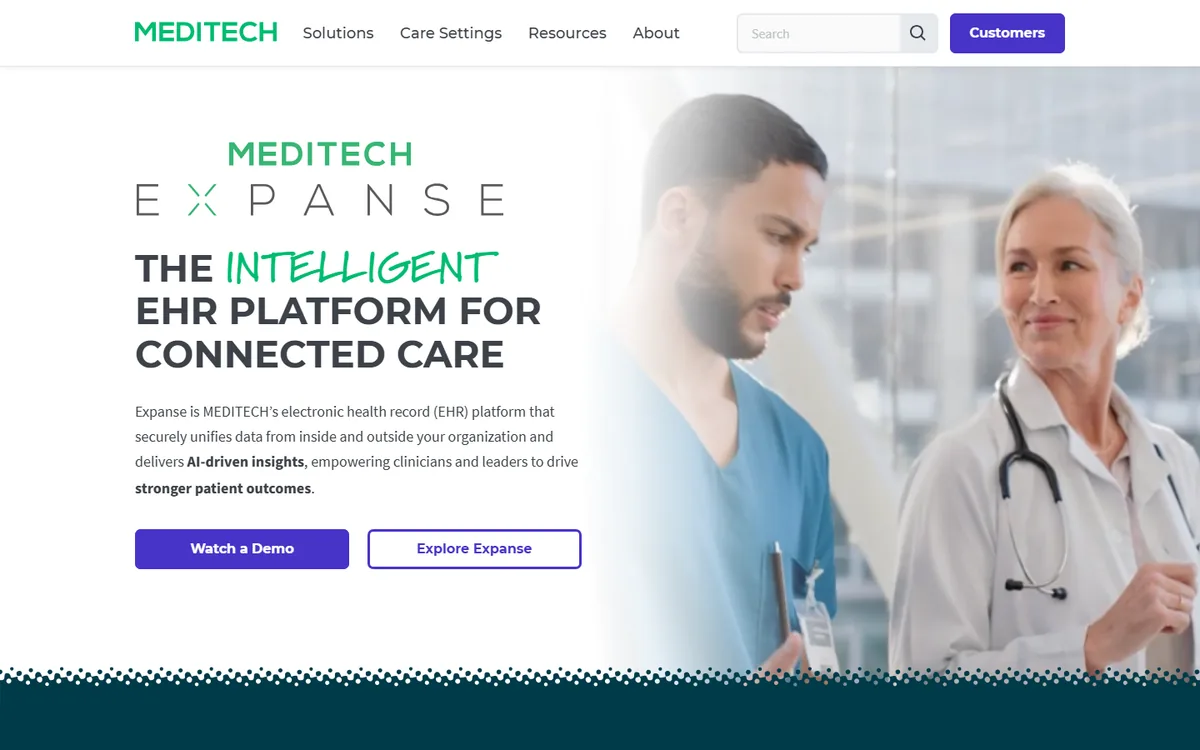
A Hospital-Focused EHR Popular With Community Hospitals That Want a Single Platform
MEDITECH Expanse is an EHR for hospitals and ambulatory settings, with web-based access and a long track record among community hospitals.
MEDITECH has a loyal base among community and critical access hospitals. Expanse brings clinical documentation, revenue cycle and patient access into one platform, and the vendor has worked on mobile access and cloud hosting for smaller organizations.
The review scores are modest, and reviewers mention workflow complexity. I see it work best when a hospital values a single vendor relationship, has clinical champions and invests in training. Compare it with peers on usability and total cost, not only on features.
Where MEDITECH Expanse Shines
- Strong presence in community and rural hospitals
- One platform for clinical and revenue workflows
- Hosting options that reduce local infrastructure
Where MEDITECH Expanse Falls Short
- Reviewer scores trail several competitors
- Workflows can feel complex without good training
MEDITECH Expanse Pricing
MEDITECH does not publish prices on its site. G2 shows a perceived cost of $$$$$, the highest tier, so ask for a quote with all modules, hosting and training itemized.
MEDITECH Expanse Reviews
- G2: rated 3.1/5 (across 116 ratings)
athenaOne
A Cloud Platform Built Around Revenue Cycle for Independent and Group Practices
athenaOne combines an ambulatory EHR, practice management and revenue cycle services in one cloud platform.
athenahealth's pitch is that billing outcomes improve when the EHR and revenue cycle sit in one system with a network-wide rules engine. For independent and mid-size groups, that appeals because it shifts some billing work to the vendor.
Reviewers on G2 give it a middling score, and several mention cost and support responsiveness. I suggest you model the percentage-of-collections pricing against your current billing costs, and ask existing customers about support after the first year.
Where athenaOne Shines
- Cloud platform with integrated billing services
- Network-based rules to reduce claim errors
- Good fit for independent and group practices
Where athenaOne Falls Short
- Pricing can be a concern for smaller practices
- Some reviewers report slow support resolution
athenaOne Pricing
athenahealth does not publish a price list. G2 shows a perceived cost of $$$$$, an average discount of 6% and an average implementation time of 2 months. Ask for a written quote that shows how fees scale with collections.
athenaOne Reviews
- G2: rated 3.4/5 (across 115 ratings)
eClinicalWorks
A Practical Ambulatory EHR With Published Starting Prices and Broad Specialty Coverage
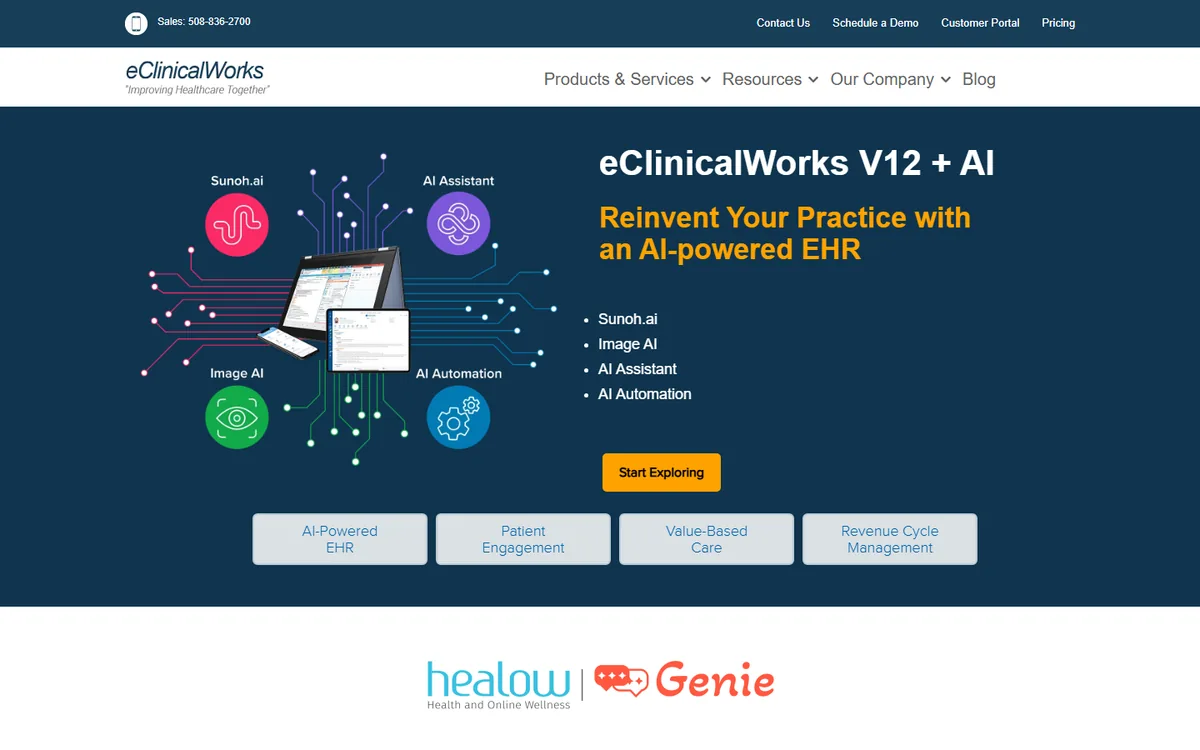
eClinicalWorks provides cloud EHR, practice management, patient engagement and telehealth for ambulatory practices.
eClinicalWorks is one of the most common systems in small and mid-size practices. It covers scheduling, charting, billing, a patient portal and telehealth, and the vendor offers specialty templates that cut setup time.
It is one of the few products on this list with prices visible on G2, which helps you budget. Reviewers describe a capable system with a learning curve, and I advise running a scripted demo of your busiest visit type before you decide.
Where eClinicalWorks Shines
- Wide specialty coverage and templates
- Integrated patient portal and telehealth
- Prices listed on G2 for budgeting
Where eClinicalWorks Falls Short
- Interface can take time to learn
- Reviewers mention uneven support quality
eClinicalWorks Pricing
G2 lists eClinicalWorks pricing, provided by the vendor, at $449 for EHR only and $599 for EHR with practice management. The listing does not say whether these are monthly or per-provider figures, so confirm the unit and any setup fees in your quote.
eClinicalWorks Reviews
- G2: rated 3.7/5 (across 159 ratings)
NextGen Healthcare
A Specialty-Strong Ambulatory EHR for Groups That Need Configurable Workflows
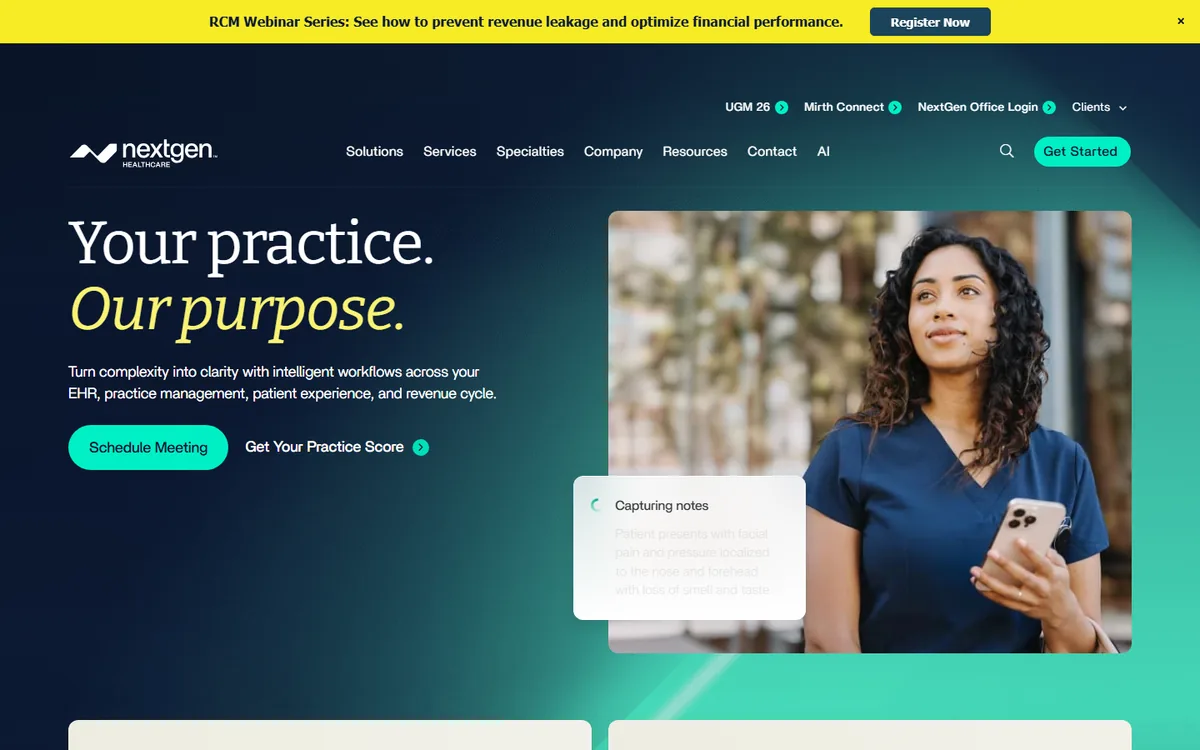
NextGen Healthcare offers an ambulatory EHR and practice management suite with specialty content and population health tools.
NextGen has long served specialty groups and community health centers. Its templates and configuration options suit practices with specialty-specific workflows, and the company supports value-based care reporting.
The G2 rating is similar to eClinicalWorks, and reviewers often mention both capability and a learning curve. I recommend checking your specialty references and asking about upgrade cadence, since configuration-heavy products need care at every update.
Where NextGen Healthcare Shines
- Specialty templates and configurable workflows
- Reporting for value-based care programs
- Practice management and EHR in one suite
Where NextGen Healthcare Falls Short
- Configuration needs skilled administrators
- Reviewers report a learning curve
NextGen Healthcare Pricing
NextGen does not list prices on G2. The listing shows an average discount of 11% and an average return on investment of about 18 months, so negotiate and ask for a full quote with training and interface fees.
NextGen Healthcare Reviews
- G2: rated 3.7/5 (across 178 ratings)
Tebra
One of the Higher-Rated Options for Independent Practices That Want Billing and Marketing in One Place
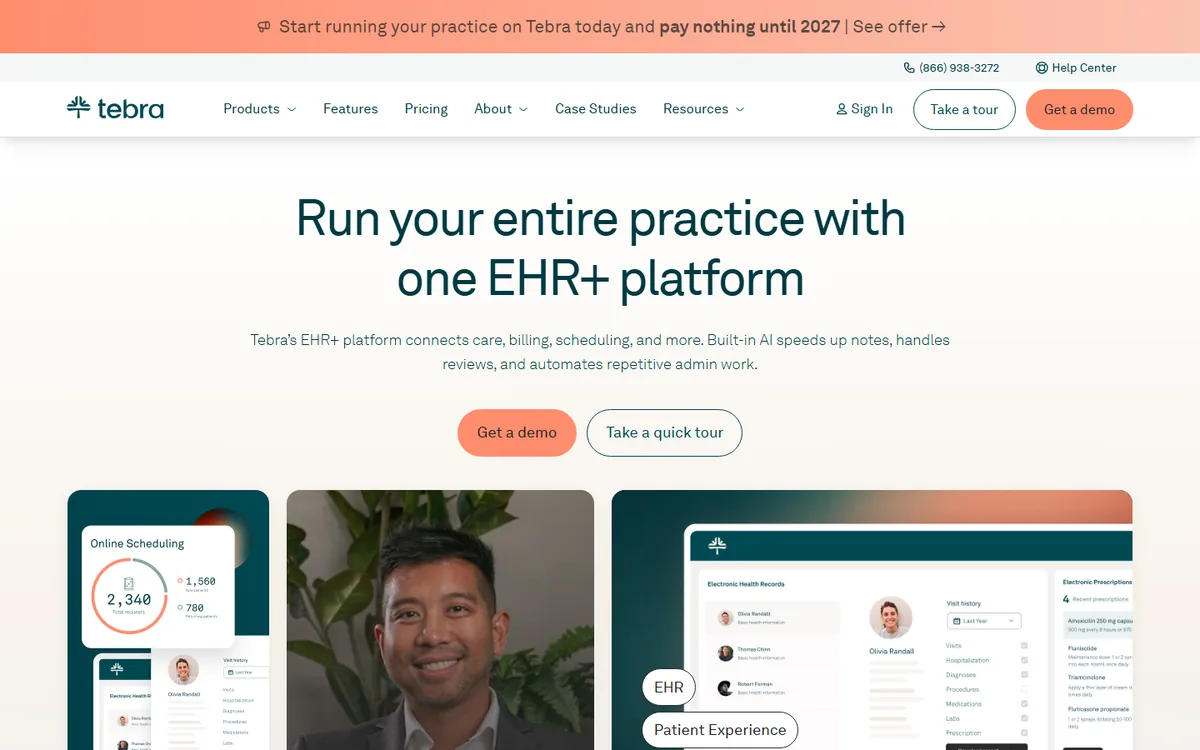
Tebra, formed from Kareo and PatientPop, combines an EHR, billing and patient acquisition tools for independent practices.
Tebra targets small independent practices with a platform that handles charting, billing and online reputation and scheduling. Of the ambulatory systems here, it has one of the stronger G2 scores, with a reasonable number of reviews behind it.
I see it fit practices that want to avoid managing many vendors. It is less suited to complex specialty workflows or large groups. Ask about contract length and how billing support is staffed, since these shape your experience more than the feature list.
Where Tebra Shines
- Higher G2 rating than most ambulatory peers
- Billing, EHR and patient acquisition in one vendor
- Aimed at small independent practices
Where Tebra Falls Short
- Less suited to complex specialty needs
- Reviewers mention pricing and contract questions
Tebra Pricing
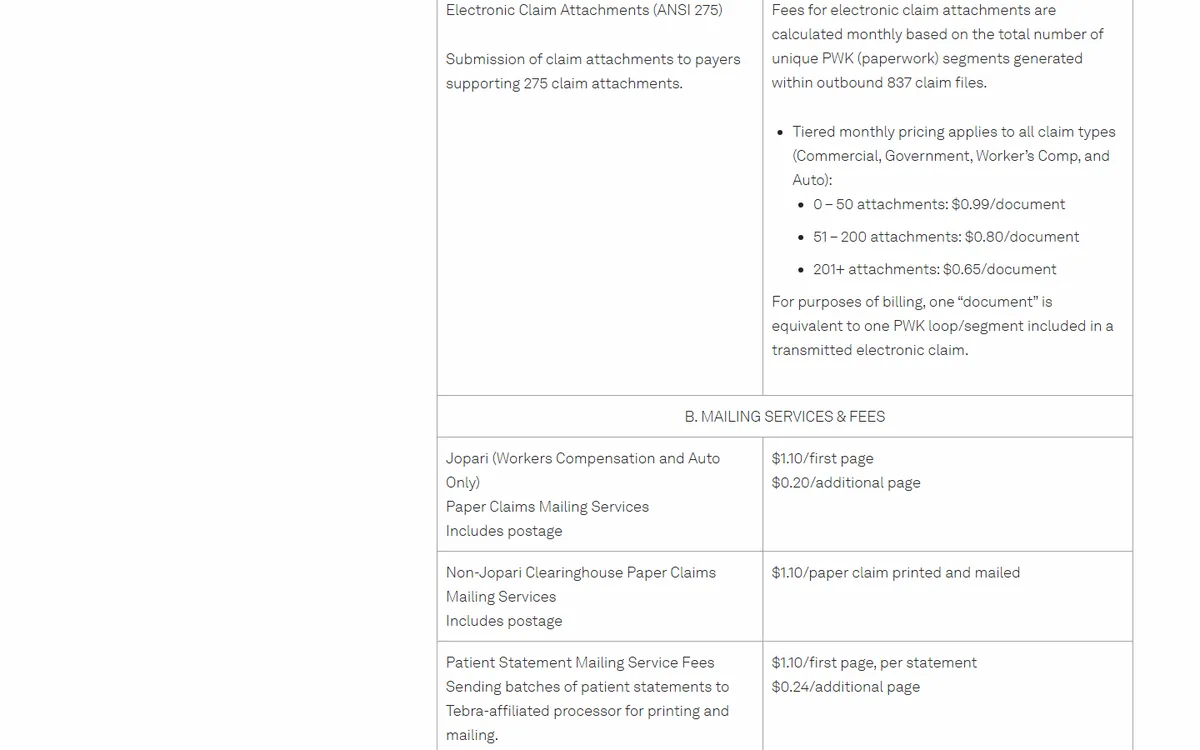
Tebra does not publish prices on the G2 listing, which shows an average discount of 13% and an average return on investment of 15 months. Request a quote that separates software, billing services and marketing add-ons.
Tebra Reviews
- G2: rated 4.1/5 (across 265 ratings)
Doxy.me
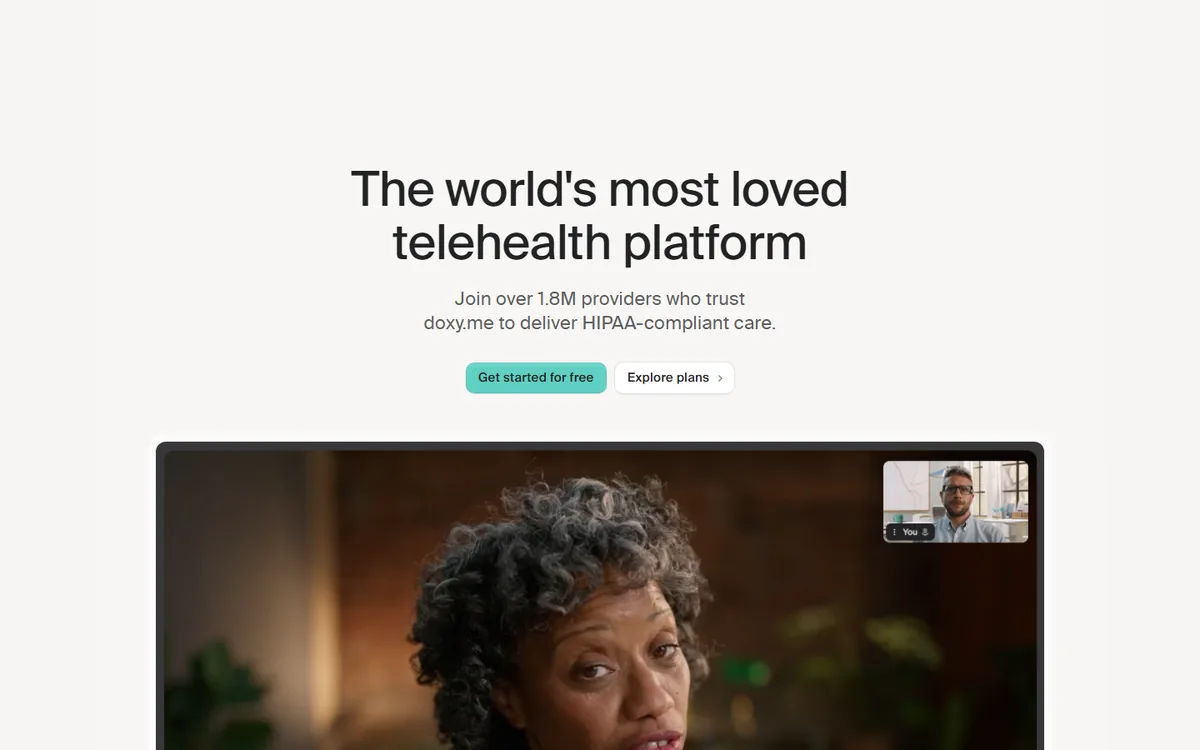
The Simplest Way to Start Video Visits Without Buying a Platform
Doxy.me is a browser-based telehealth service with a free plan, a waiting room and no software for patients to download.
Doxy.me exists to make video visits easy. Patients click a link, wait in a virtual room and join, with no app download. Providers get a simple interface, and the free plan is enough for a solo clinician to start.
It is not an EHR, so notes and billing stay in your other systems. I recommend it when you want to test telehealth cheaply or add video to a small practice. Large organizations usually prefer the telehealth module inside their EHR.
Where Doxy.me Shines
- Free plan and flat-priced premium plan
- No patient download required
- Quick to set up for a solo or small practice
Where Doxy.me Falls Short
- No EHR features, so notes live elsewhere
- Fewer enterprise controls than built-in modules
Doxy.me Pricing
G2 lists Doxy.me at $0 a month for the Free plan, $29 a month flat for Premium and custom pricing for the larger plan. Confirm current terms on the vendor site, since plan features change.
Doxy.me Reviews
- G2: rated 4.5/5 (across 98 ratings)
Phreesia
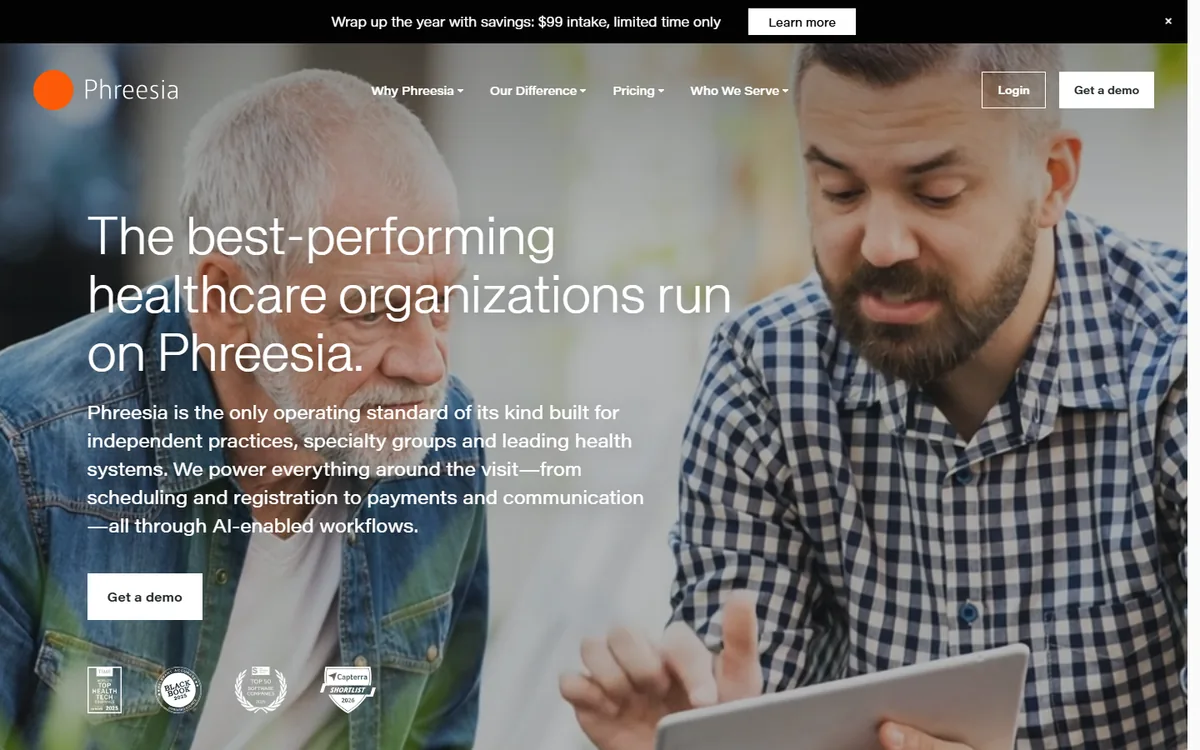
A Focused Intake and Payments Tool That Works Alongside Your Existing EHR
Phreesia handles patient check-in, forms, payments and scheduling tools that connect to many practice management systems.
Phreesia replaces the clipboard. Patients complete forms and pay copays on a tablet, kiosk or phone, and answers flow into your system. For groups with high visit volume, the time saved at the front desk is the main appeal.
It sits next to your EHR and does not replace it, so integration quality matters. Ask for reference sites on your exact EHR and test how answers map into the chart. Reviews are fewer than for larger products, and the G2 score is solid but not top of this list.
Where Phreesia Shines
- Reduces front desk data entry at check-in
- Handles forms, copay collection and reminders
- Connects with many EHR and practice management systems
Where Phreesia Falls Short
- Another vendor and integration to manage
- G2 lists a high perceived cost
Phreesia Pricing
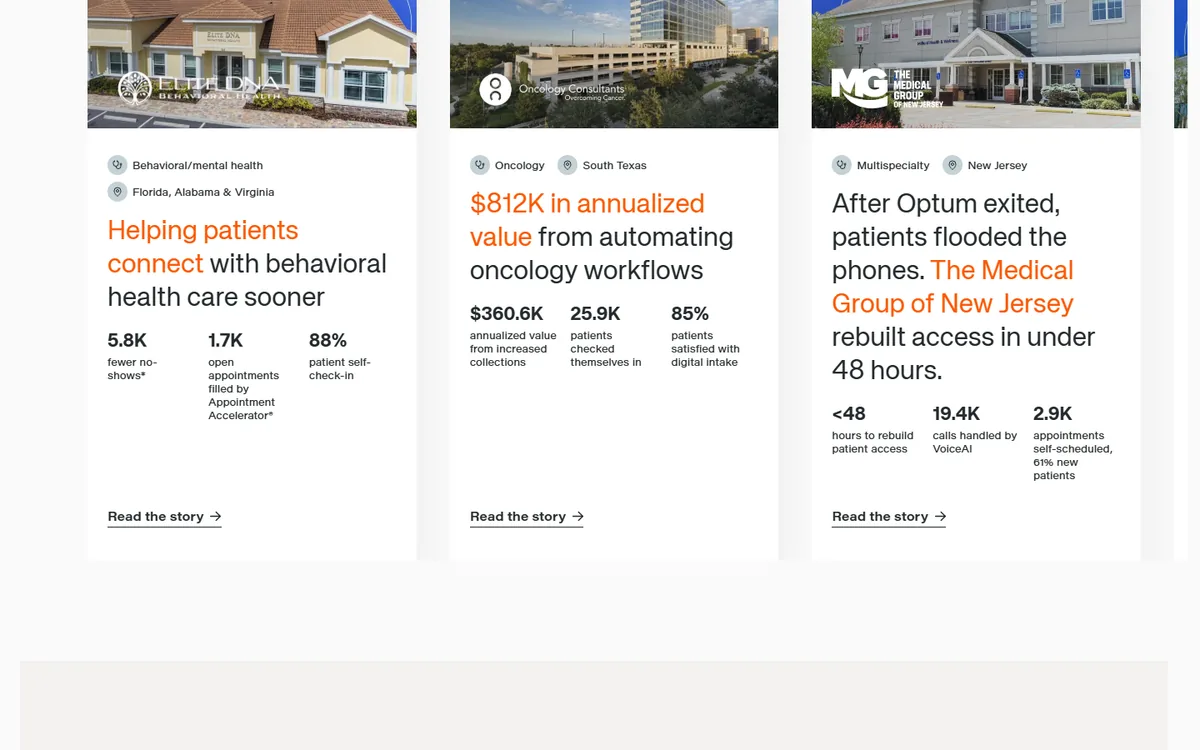
Phreesia does not list dollar prices on G2, which shows a perceived cost of $$$$$ and reports an average implementation time of 2 months and a return on investment of about 9 months. Request a per-visit or per-provider quote in writing.
Phreesia Reviews
- G2: rated 4.0/5 (across 46 ratings)
Estimate the Return on a Healthcare Technology Tool
Before you shortlist a vendor, test whether the numbers work. Enter the manual hours the tool would cover, such as front desk intake or claim rework, and the monthly price you are quoted. You will see a rough yearly return before implementation costs.
Is the Software Worth the Cost?
Move the sliders to match the work you want the tool to cover and the plan you are considering.
How to Choose the Right Healthcare Technology Solution
In my experience, fit with your workflows decides more than any feature list. Before you compare vendors, answer four questions:
- How many providers and sites do you have, and how fast will you grow?
- Which visit types and specialties drive most of your volume?
- Which systems must the new tool connect to, and are the interfaces proven?
- What are the exit terms, data export format and renewal cap?
If you run a large hospital group, look at Epic, Oracle Health or MEDITECH. If you run an ambulatory practice, compare athenaOne, eClinicalWorks, NextGen and Tebra on a scripted demo. If you only need video or intake, start with Doxy.me or Phreesia. Make the decision part of a wider plan, and my guide to healthcare technology strategy shows how to fit it in. Common problems after go-live appear in my list of healthcare technology challenges, real projects in my healthcare technology examples and market figures in my healthcare technology statistics.
Questions About Choosing Healthcare Technology Solutions
What Is the Best Healthcare Technology Solution Overall?
It depends on your size. Epic suits large systems that can support it, athenaOne and eClinicalWorks fit many ambulatory practices, and Tebra suits small independent ones. The right choice is the system that scores best on your own workflows, not on a general ranking.
Do I Need an EHR and a Separate Telehealth Tool?
Not always. Many EHRs include telehealth, which keeps notes in one place. A separate tool like Doxy.me makes sense when you want to test video cheaply or your EHR lacks it.
How Much Does an EHR Cost?
Most vendors do not publish prices, and costs vary with provider count, modules, hosting and training. Plan for software, implementation, interfaces and training together, and request a five-year quote.
How Long Does an EHR Implementation Take?
G2 users report an average of 7 months for Oracle Health and about 2 months for athenaOne and Phreesia. Your timeline depends on size, data migration and how much you customize.
Should I Switch EHRs?
Switch when the vendor no longer supports your needs, the contract blocks essential integrations or costs outweigh value. A switch is expensive, so first check whether configuration, training or interfaces can fix the problem.
How Do I Compare Vendors Fairly?
Write scripts from your busiest visit types, run each vendor through them, score on the same sheet and check references of your size and specialty. Review exit terms and data export before price.
Can a Consultant Help Me Choose?
Yes. A vendor-neutral consultant builds the scoring sheet, runs demos and reference checks and reviews contracts. It is most valuable when the decision is expensive to reverse.
Disclaimer: Prices, plans and ratings change often. They were checked when this article was last updated, so confirm them on each vendor's site before you buy. Nothing here is legal or financial advice.
Was this useful?
We appreciate the feedback.
Paige Mulvaney
Paige leads the Wicker editorial team and works with the consultants who run the roadmaps, software selections, implementations and integrations to turn real client projects into practical guides. Her focus is plain-language advice on IT strategy, choosing business software and connecting systems so they work together. Every article she edits is checked against current vendor pricing and documentation before it is published.