In Short
- Build the roadmap in seven phases, and treat dates as the last step.
- Rank three to five business goals first, then map systems and gaps against them.
- Score initiatives on value, risk, effort and dependencies, and check capacity before you commit.
- Review quarterly and set change rules, or the roadmap turns into a list of past plans.
A technology roadmap fails for a simple reason: it gets built as a list of projects. Someone collects every request, puts dates next to them and calls it a plan. Six months later half the dates have passed and nobody can say why. If you want to avoid that, start with a technology roadmap consulting mindset: the roadmap is a set of decisions, and the dates come last.
Below is the seven-phase model I use with clients. It fits a company with 50 people as well as one with 5,000, because each phase has a small output you can check. Use the table to see the whole path, then read the phases that matter most for you.
The Seven Phases at a Glance
| Phase | The question behind it | Output | Typical time |
|---|---|---|---|
| 1. Goals | What must technology help the business achieve? | Three to five ranked business goals | 1 week |
| 2. Current state | What do you run today, and how healthy is it? | System inventory with cost, owner and condition | 2 to 3 weeks |
| 3. Gaps | Where do goals and systems not match? | List of gaps and risks | 1 week |
| 4. Initiatives | Which projects close the gaps? | Initiative list with scope and benefit | 1 to 2 weeks |
| 5. Scoring | Which ones come first? | Ranked list with scores | 1 week |
| 6. Capacity and cost | What can you afford and staff? | Budget and resource view by quarter | 1 to 2 weeks |
| 7. Governance | How does the roadmap stay true? | Review rhythm and change rules | Ongoing |
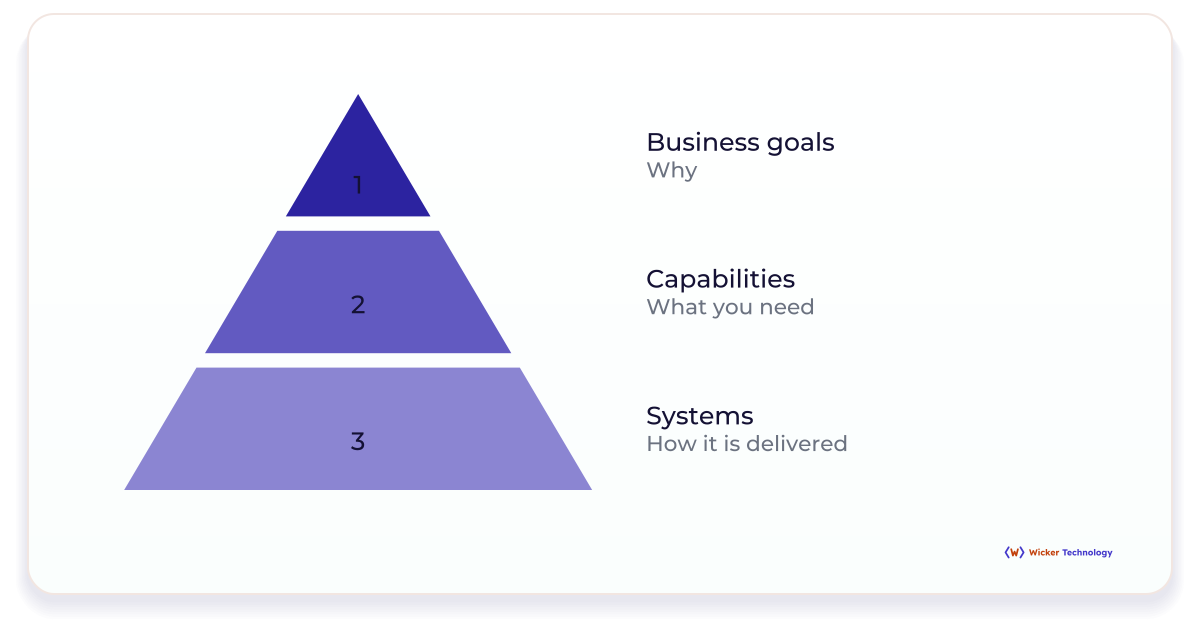
Phase 1: Anchor the Roadmap in Business Goals
Ask your leadership team for the goals of the next two to three years in plain words: open two new sites, cut order errors in half, pass a customer security audit, prepare for a sale. Then translate each goal into what technology has to make possible. A goal such as "faster onboarding of new clinics" turns into a need for repeatable system setup, shared patient scheduling and clean data transfer.
Rank the goals. Three that matter beat ten that all matter. In one engagement with a regional distributor, the leadership list started with eleven goals. After a ninety-minute ranking session it had four, and two long-running IT projects turned out to serve none of them.
Phase 2: Take Stock of What You Run
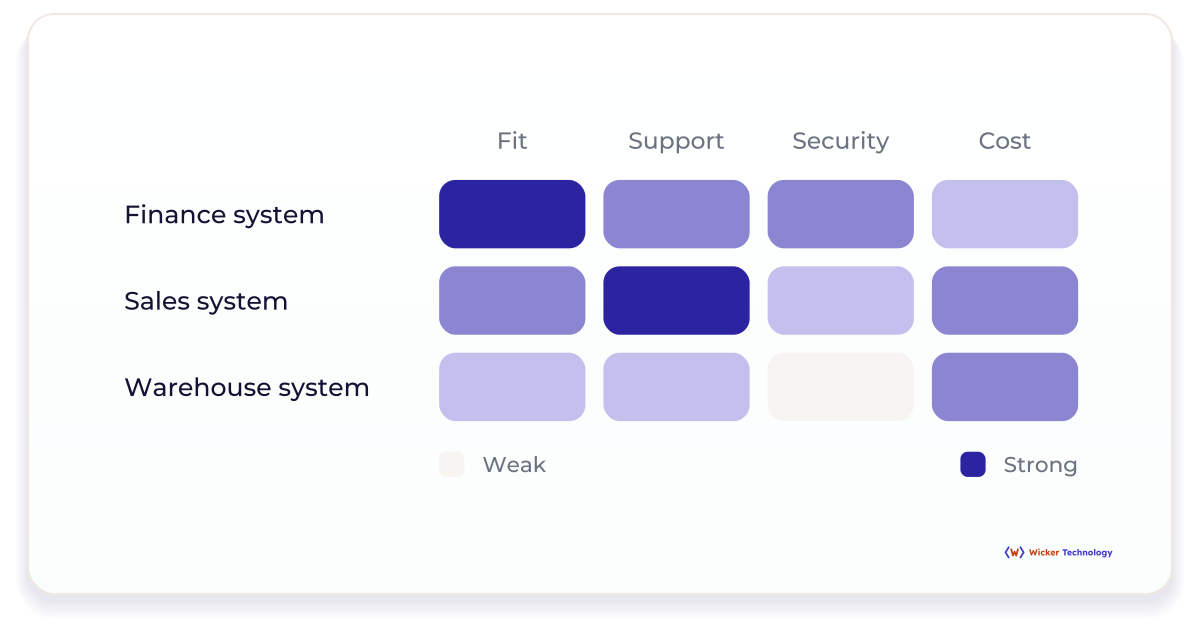
You cannot plan a route without knowing where you stand. Build an inventory of every system that carries real work: name, owner, users, annual cost, contract end date, vendor support status, main integrations and a simple condition rating from one to five. Pull the facts from contracts, invoices and sign-in logs, because memory leaves out the system a former employee set up.
Condition ratings are the most useful column. A system rated five works well, is supported and fits the goals. A system rated one is a risk with a renewal date. Expect to find tools nobody remembers and at least one critical system with no named owner. If you want the inventory step done for you, technology roadmap examples show how top performers keep theirs short enough to stay current.
Phase 3: Find the Gaps Between Goals and Systems
Lay the goals from phase 1 next to the inventory from phase 2. For each goal, ask whether today's systems can carry it. The answers fall into four groups: fully supported, supported with workarounds, not supported and at risk. Write each gap as a short sentence that names the goal, the system and the problem, for example "Opening a second warehouse needs inventory visibility that the current system cannot give across sites."
Add risks that no goal mentions: end-of-support dates, single points of failure, security findings and vendors in trouble. These rarely appear on a wish list, and they are the items that wreck a roadmap in year two.
Phase 4: Turn Gaps Into Initiatives
An initiative is a piece of work with an owner, a scope, an expected benefit and a rough size. Several gaps often share one initiative, such as replacing an old order system that fixes three problems at once. Keep initiatives to a size that one team can finish in a quarter or two, and split large programs into stages that each deliver something usable.
Write the benefit in business terms and put a number on it if you can: hours saved, errors avoided, revenue protected, risk reduced. Where a number is a guess, say so. A rough estimate marked as rough is more useful than a precise one nobody believes. If you are choosing between products as part of an initiative, the technology roadmap software comparison helps with the tooling for the roadmap itself.
Phase 5: Score and Sequence
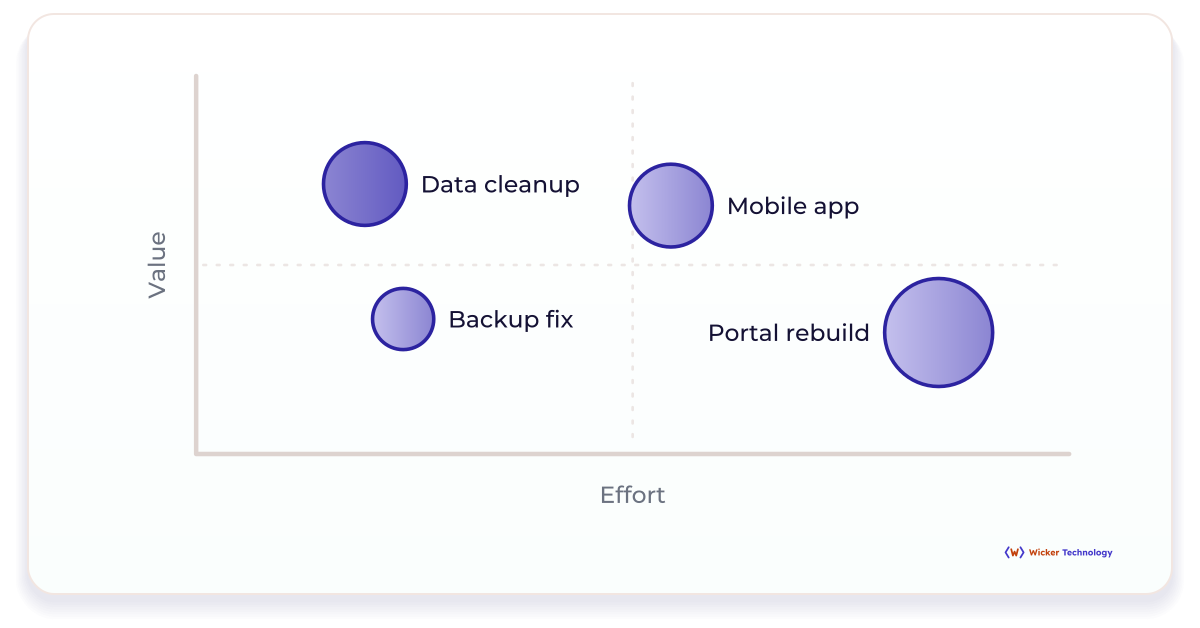
Score each initiative on four things: value to the ranked goals, risk reduced, effort and dependency. A simple 1 to 5 scale works. Add value and risk, subtract effort, and note which initiatives must come before others. Then sort. The sort is a starting point for a discussion, not a verdict.
| Criterion | What a 5 means | What a 1 means |
|---|---|---|
| Value | Directly enables a top-ranked goal | Nice to have, no goal behind it |
| Risk reduced | Removes a serious or near-term risk | No change in risk |
| Effort | Small, under a quarter, one team | Multi-year, many teams |
| Dependency | Nothing needs to happen first | Blocked by two or more other initiatives |
Dependencies decide the order more often than scores do. A data cleanup may score low on value and still have to come first, because three high-value initiatives need it. Draw the dependencies on a whiteboard before you finalize the sequence. I have seen a roadmap lose a full year because nobody noticed that a new reporting tool needed an integration that was still unplanned.
Phase 6: Check Capacity and Cost
A roadmap that ignores capacity is a wish list. Put the initiatives into quarters and compare the load with the people and money you really have. Count the run work first: support, upgrades, renewals and security routines take most of an IT team's time. What is left is the capacity for change, and it is usually 20 to 40 percent smaller than the first guess.
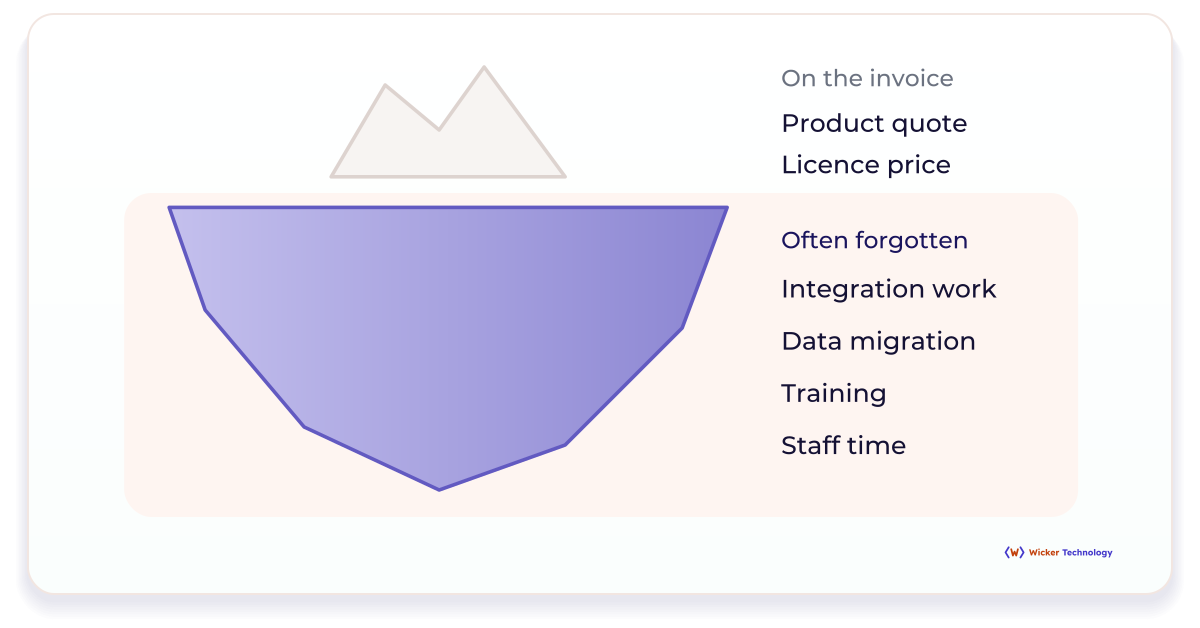
Cost needs the same honesty. For each initiative, include licenses, implementation help, integrations, training and the internal time. Then add a contingency. In my client work, the first estimate for a system replacement is too low more often than too high, so I add a buffer and say openly what it is for.
| Cost line | Often forgotten because | How to estimate |
|---|---|---|
| Integration work | Vendors quote the product, not the connections | Count systems to connect, ask for a fixed quote per connection |
| Data migration | Looks like a technical detail | Count records and sources, plan a test run |
| Training and change | Treated as optional | Budget hours per user, plus a support period |
| Internal staff time | Does not appear on an invoice | Hours per role multiplied by loaded cost |
Phase 7: Put Governance Around the Roadmap
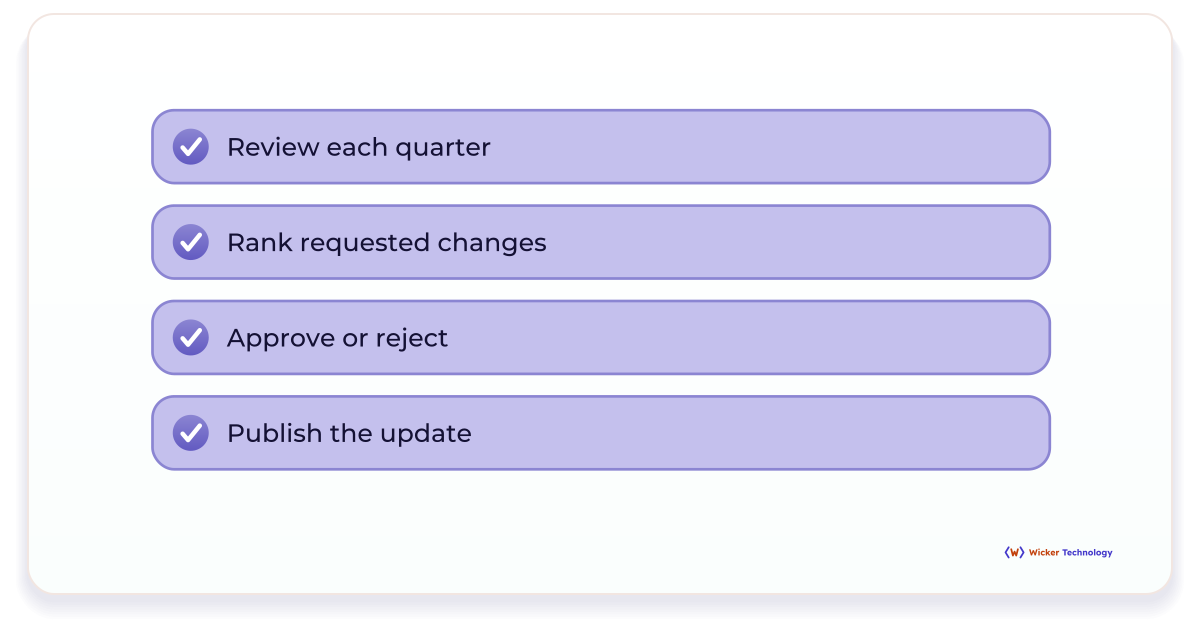
A roadmap is only useful while it matches reality. Set a quarterly review with your leadership and the owners of the biggest initiatives. Each review answers three questions: what finished, what changed in the business, and what moves up or down. Keep a change log with the reason for every move, so the roadmap does not drift without anyone noticing.
Agree on change rules up front. Who may add an initiative? What has to leave when something enters? Without those rules, every urgent request wins and the plan becomes a record of the past. A roadmap view that works well for most audiences uses three horizons: now (committed, funded), next (planned, not funded) and later (ideas to revisit).
Mistakes That Break the Model
Four patterns come up again and again. The first is skipping phase 1 because everyone believes they know the goals. Ask three leaders for the top goal separately and compare the answers. The second is building the inventory once and never updating it. The third is scoring without dependencies. The fourth is a roadmap that only IT can read. Your finance lead and your operations lead should be able to open it and see where their needs sit.
A related trap is treating the roadmap as a commitment to every date. Dates in the "now" horizon are commitments. Dates beyond that are intentions. Say so on the page, and your leadership will stop quoting year-two dates as promises.
Deciding Where to Start
You do not need all seven phases at full depth on day one. If your systems are in good shape and your goals are clear, start at phase 4 with a light inventory. If you are about to sign a large contract, start at phase 2 and 3 first, because the inventory may change the decision. If your leadership disagrees on goals, stay in phase 1 until it does. No tool fixes that.
Before you begin, check these four things:
- One person owns the roadmap and has time for it each week.
- Your leadership team will take part in the goal ranking.
- You can get contract and cost data for your main systems.
- You have decided how often the roadmap will be reviewed.
Questions About the Technology Roadmap Framework
How Long Does It Take to Build a Technology Roadmap?
For a mid-sized company, a first useful version takes six to ten weeks, depending on how quickly you can reach your leaders and collect contract data. Smaller firms can finish in three or four weeks. The inventory and the goal ranking take the longest, and both are worth doing properly.
How Far Ahead Should a Technology Roadmap Look?
Most companies plan in detail for the next twelve months and in outline for two to three years. Anything further out changes too quickly to be useful. Review the whole plan every quarter and move the window forward.
Who Should Own the Technology Roadmap?
One accountable owner, usually your head of IT or a technology lead, with business sponsors for each major initiative. Shared ownership with no single name tends to end in a plan that nobody updates.
What Is the Difference Between a Technology Strategy and a Roadmap?
Strategy sets direction and principles: where technology should take you and why. The roadmap turns that direction into sequenced initiatives with owners, costs and timing. You need the strategy first, or the roadmap has nothing to follow.
Which Tool Should I Use to Build the Roadmap?
A spreadsheet is enough for the first version. Dedicated roadmap software helps once several teams share the plan and need views for different audiences. Pick the tool after the model works, not before.
How Do I Handle Urgent Requests That Are Not on the Roadmap?
Use the change rules from phase 7. Each urgent request goes through the same scoring, and something of similar size leaves the plan or moves back. If a request always wins without trade-offs, the roadmap loses trust quickly.
How Often Should We Update the Roadmap?
Review it every quarter and update dates monthly for committed work. Large events, such as an acquisition or a vendor ending support, justify an immediate review outside the cycle.
Important: nothing in this article is legal, financial or tax advice. All figures are estimates from typical projects, so verify them with your own providers and advisers.
Was this useful?
We appreciate the feedback.
Paige Mulvaney
Paige leads the Wicker editorial team and works with the consultants who run the roadmaps, software selections, implementations and integrations to turn real client projects into practical guides. Her focus is plain-language advice on IT strategy, choosing business software and connecting systems so they work together. Every article she edits is checked against current vendor pricing and documentation before it is published.