In Short
- Plan four quarters: facts, foundations, delivery and review.
- Limit major projects to match your team's capacity, often two at a time.
- Give every initiative one owner, a cost range and an exit measure.
- Finish next year's plan before the budget cycle starts.
A technology roadmap fails for one of two reasons: it is too long to read, or it ignores the capacity of the team that has to deliver it. This version fits on one page per quarter and is built for organizations with a small IT team. Use it as a starting point for your own strategic technology consulting work or copy it into a spreadsheet and fill it in.
I will give you the 12-month overview, the detail for each quarter and a template with the columns I use. The dates are relative, so you can start in any month.
The 12-Month Roadmap at a Glance
| Quarter | Main work | Exit condition |
|---|---|---|
| Q1: Get the facts straight | Inventory, goals, scored initiative list, budget view | Priority list approved by leadership |
| Q2: Fix the foundations | Risk reduction, contract renegotiation, governance setup | Two foundation items finished, governance running |
| Q3: Deliver priority projects | Up to two major projects with owners and exit measures | Projects live and measured |
| Q4: Review and reset | Results review, refreshed inventory, next year's plan | Plan ready before the budget cycle |
Quarter 1: Get the Facts Straight
Months 1 to 3
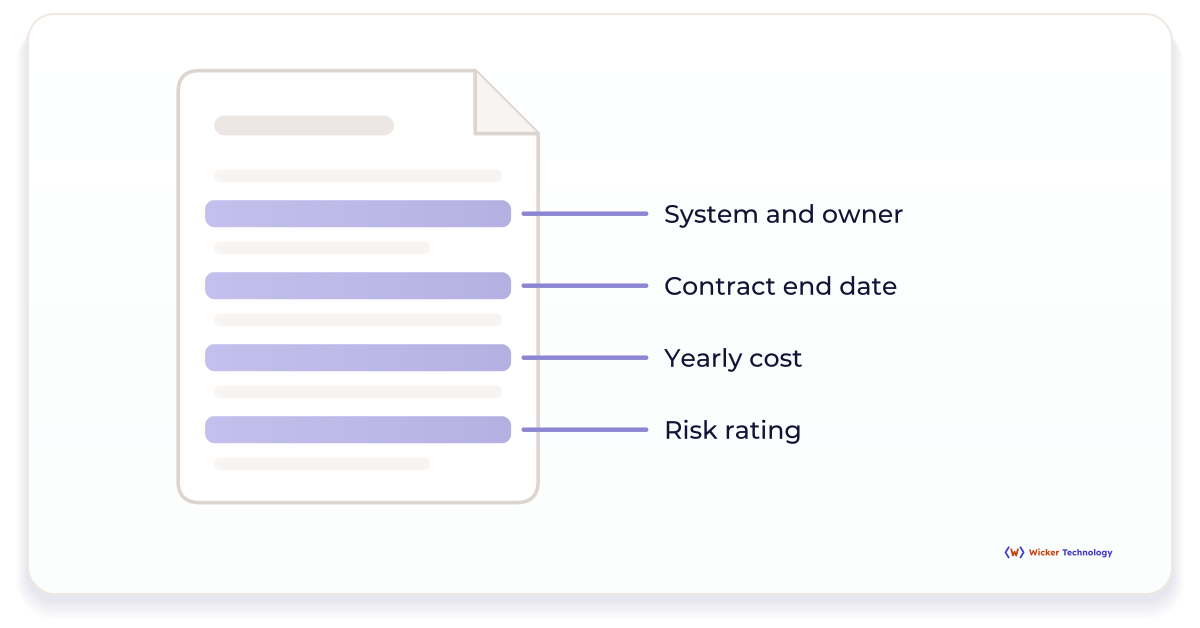
Start with an honest inventory. List every system, contract, owner, annual cost and renewal date. In a typical mid-sized company I find 15 to 30% more applications than IT believes it runs, mostly department purchases. Add the integrations between them, because those are where outages and manual work hide.
Next, write down three to five business goals for the year with the leader who owns each one. Then map each goal to the systems that support it. Gaps and overlaps show up quickly: a goal with no supporting system, or a system with no goal.
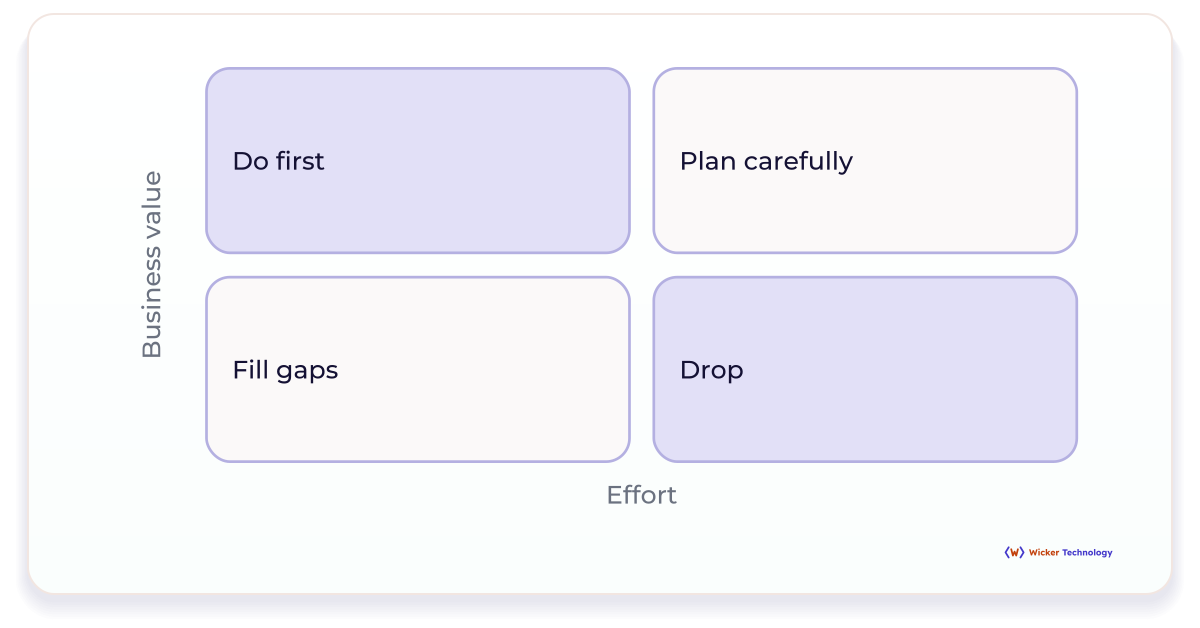
Finish the quarter with a scored list of initiatives and a first budget view. My strategic technology framework gives the scoring rules for that list.
Quarter 2: Fix the Foundations
Months 4 to 6
Pick the two or three items that reduce risk or unlock later work. Typical choices are access control and backups, a clean data source for customers or patients, and the retirement of one overlapping tool. These are rarely exciting, but every later project depends on them.
Use this quarter to renegotiate contracts that renew within nine months. Having the inventory in hand gives you leverage, and consolidating two vendors often pays for the work that quarter.
Set up governance now: a monthly 45-minute review with finance, operations and IT, one backlog and one decision log.
Quarter 3: Deliver the Priority Projects
Months 7 to 9
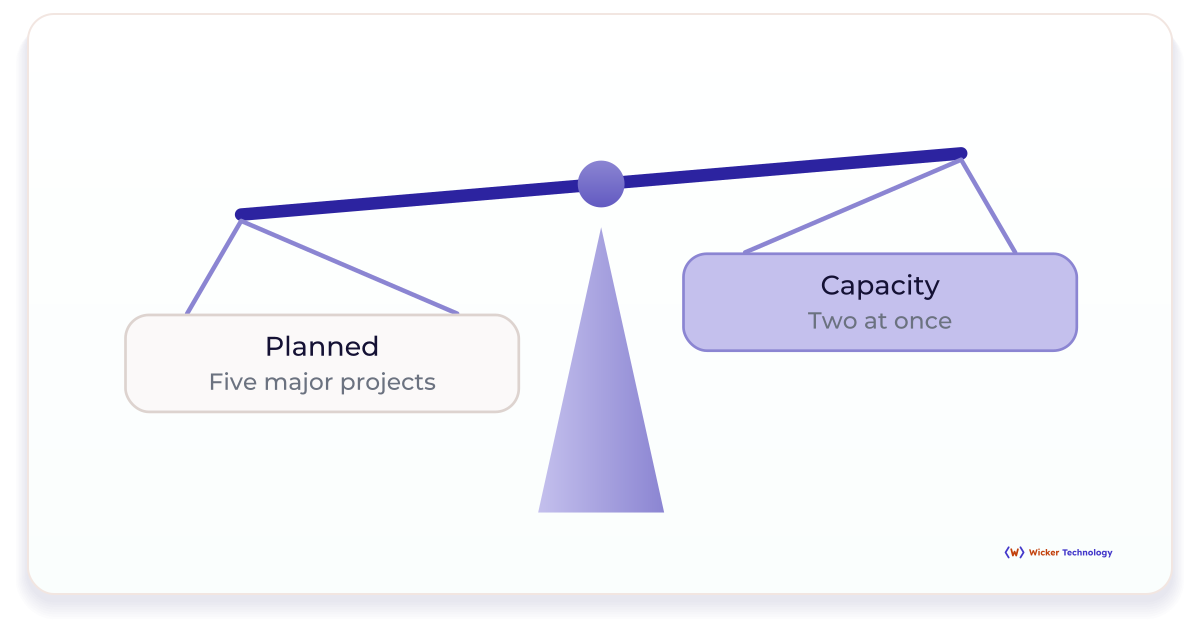
Run no more than two major projects at once for a team under 15 people. Capacity is the limit I see most, not budget. Assign one owner per project, agree the exit measures and review them monthly.
Plan integration work early. A new system that does not connect to billing or reporting creates manual work immediately. If you are choosing software in this quarter, the selection should already be scored against your requirements.
Quarter 4: Review, Reset and Plan the Next Year
Months 10 to 12
Compare results against the goals you set in quarter 1. Which projects delivered, which slipped and why? Write down three lessons and change the scoring rules where they misled you.
Refresh the inventory, update the risk list and build the next year's plan before the budget cycle starts. A roadmap that lands after the budget is set has little effect. Trends in strategic technology trends can inform the next cycle without driving it.
Copy This Roadmap Template
Create one row per initiative with these columns. Keep the sheet to one page per quarter, so every leader can read it in two minutes.
| Column | What to write | Example |
|---|---|---|
| Initiative | Short name and one-sentence outcome | Retire legacy billing tool, invoices out two days sooner |
| Business goal | The goal it supports | Faster cash collection |
| Owner | One named person | Finance director |
| Cost range | One-time and yearly, in a range | $40k to $60k plus $12k per year |
| Dependencies | What must exist first | Customer data clean-up |
| Exit measure | How you will know it worked | Invoice cycle under 3 days |
| Decision date | When leadership decides | End of month 5 |
Four Ways This Roadmap Goes Wrong
I see the same failure modes in client work. Each one has a simple guard.
- Too many items: cap active projects by team capacity and push the rest to the next quarter.
- No owners: every row needs one name, never a department.
- Fixed dates for uncertain work: use ranges for items that depend on vendors or other projects.
- No review: put the monthly meeting in calendars before the roadmap is shared.
Example: A 90-Day Start for a Clinic Group
A regional clinic group with eight sites and a four-person IT team used this roadmap. In the first 30 days, they listed 47 applications and found nine that nobody could name an owner for. In days 31 to 60, leadership agreed three outcomes: fewer missed appointments, billing errors cut in half and a clean backup and access setup. In days 61 to 90, they scored 21 candidate projects and funded five, with two scheduled for the second half of the year.
Nothing about this was fast or glamorous. The value showed up in the budget meeting, where the team could explain what each dollar bought and what was delayed on purpose. That conversation is the real product of a roadmap.
How to Present the Roadmap to Leadership
Use one page per quarter and a one-page summary. Start with the outcomes, then show what you will do about them, what it costs and what you will not do. Leaders respond to the list of items you chose to delay more than to the list you chose to do, because it shows trade-offs were made.
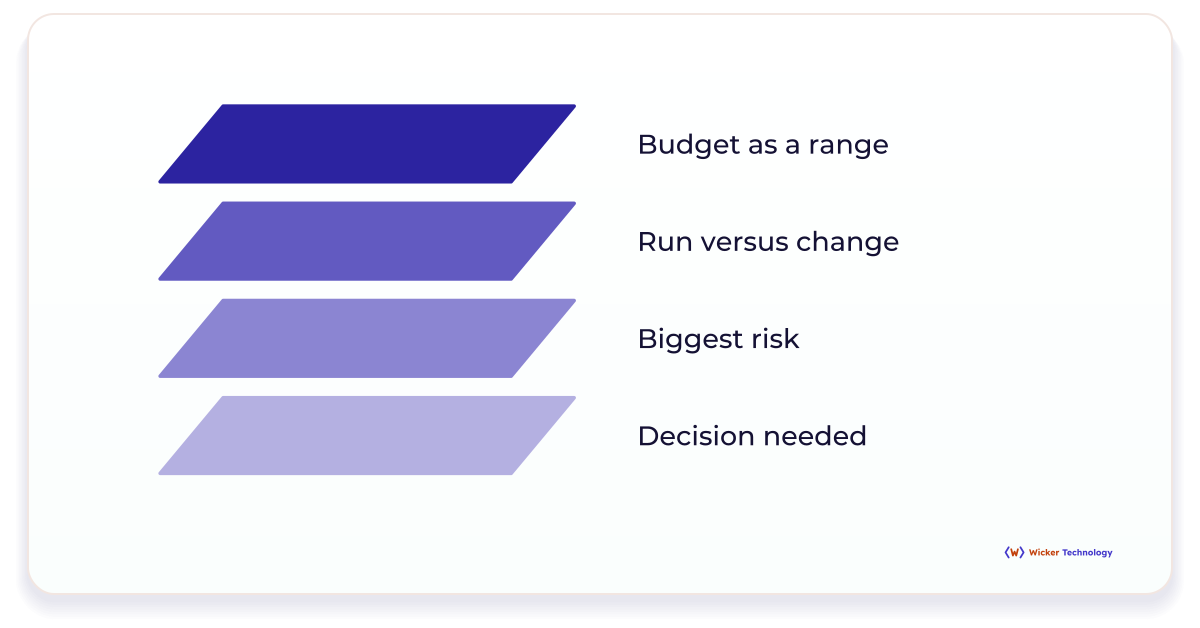
Bring three numbers: total budget as a range, the share that goes to running current systems and the share that goes to change. Add the biggest risk and the decision you need from them. End the meeting with dates for the monthly review, and send the file within a day.
Measures That Show the Roadmap Works
Track five measures every quarter. They are easy to collect and hard to argue with.
| Measure | What it shows | What good looks like |
|---|---|---|
| Initiatives finished vs planned | Shows whether the plan matches capacity | At least 80% of plan |
| Spend vs range | Shows whether cost ranges were realistic | Within the range |
| Applications retired | Shows consolidation progress | Steady decline in count |
| Open high risks | Shows whether foundation work is landing | Falling each quarter |
| Exit measures met | Shows business value | Most initiatives hit target |
Targets are examples from my projects, so tune them to your situation. If you hit 50% of planned initiatives two quarters in a row, cut the plan instead of pushing harder.
One last habit helps more than any template. After each quarter, write a half-page note on what changed in the plan and why. Over a year these notes become the history that new leaders and new team members read first, and they stop old arguments from restarting.
Share the notes with the people who own initiatives. When owners see that their feedback leads to changes in the plan, they report problems earlier, which gives you more time to react when something starts to slip.
Which Tools to Use for the Roadmap
A spreadsheet is enough for most organizations. One tab holds the inventory, one the initiative list and one the quarter view. If you outgrow it, a project portfolio tool or a shared board can help, but the discipline matters more than the software. I have seen roadmaps in expensive tools that nobody updated and roadmaps in plain sheets that ran for years.
Keep the file in a shared location, give editing rights to two or three people and write the update date at the top. Export the quarter view as a one-page PDF for leadership meetings, so people read the same version.
Risks to Put on the Roadmap Itself
Add a short risk list to the roadmap, not as an appendix. List the three things most likely to push the plan off course: a key person leaving, a vendor delaying a delivery and a budget cut in the second half of the year. For each, write the early warning sign, the person who watches for it and the action you will take.
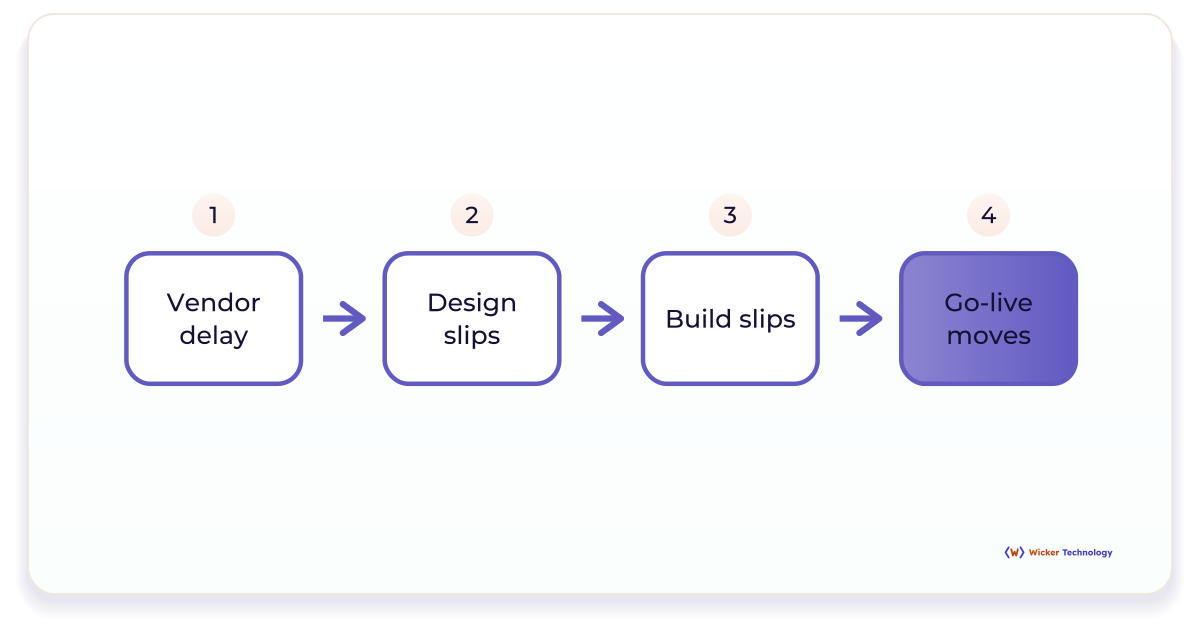
A vendor delay, for example, shows up as a missed design milestone four to six weeks before the go-live date. If you see it, decide at once whether to move the date or cut scope. Waiting for the date itself is the most expensive option, since downstream tasks and contracts are already booked by then.
Review the list at every monthly meeting and remove items that no longer apply. A short, current risk list is more useful than a long one that nobody reads, and it shows leadership that you have thought about what could go wrong before they ask.
Also record the assumptions behind the plan, such as headcount, budget level and vendor timelines. When an assumption changes, you know which initiatives to revisit instead of rebuilding the whole plan from scratch.
How to Choose What Goes Into Your Own Roadmap
Start from outcomes, not tools. Ask each leader what must be true by the end of the year, then ask what technology supports that. Rank initiatives by impact on the goal, cost, effort and risk, and compare the top five against your team's real capacity.
- Every initiative links to a business goal and an owner.
- Foundation work is in the first half of the year.
- Active projects match team capacity.
- Contract renewals in the next 12 months are on the calendar.
- A review meeting is booked for every month.
If you want the roadmap built with you, a consultant can run the inventory and the leadership workshop within a few weeks and leave you with the files to maintain.
Questions About a Strategic Technology Roadmap
What Is a Strategic Technology Roadmap?
It is a time-ordered plan that shows which technology investments you will make, in what order, at what cost and with what owner. It links each item to a business goal, so leadership can approve it and track it.
How Far Ahead Should a Technology Roadmap Look?
Plan 12 months in detail and 24 months at a high level. Technology and business priorities shift quickly, so detail beyond a year goes out of date fast.
Who Should Own the Roadmap?
The IT or technology lead maintains it, and an executive sponsor approves it. Each initiative has its own owner, usually the leader of the business area that benefits.
How Often Should I Update It?
Review monthly in a short meeting and refresh quarterly. Do a full rebuild once a year, ahead of budget planning.
How Many Projects Can a Small Team Run at Once?
For a team under 15 people, two major projects at a time is a sensible limit in my experience. Smaller items can run alongside if they do not need the same people.
Should the Roadmap Include Costs?
Yes, as ranges. Show one-time and yearly costs, so leaders see the run cost they will carry. Update ranges as quotes arrive.
What Is the Difference Between a Roadmap and a Strategy?
Strategy sets direction and priorities. The roadmap turns them into dated, owned initiatives with budgets. You need both, and the strategy should come first.
Important: nothing in this article is legal, financial or tax advice. All figures are estimates from typical projects, so verify them with your own providers and advisers.
Was this useful?
We appreciate the feedback.
Paige Mulvaney
Paige leads the Wicker editorial team and works with the consultants who run the roadmaps, software selections, implementations and integrations to turn real client projects into practical guides. Her focus is plain-language advice on IT strategy, choosing business software and connecting systems so they work together. Every article she edits is checked against current vendor pricing and documentation before it is published.