In Short
- Work through four layers: outcomes, capabilities, systems and investments.
- Set a target Run, Grow and Transform budget mix on purpose and track it.
- Pass each initiative through four decision gates before it is funded.
- Review monthly in 45 minutes with finance, operations and IT.
Most technology plans fail at the same point: leaders agree on goals, then fund projects in the order they were requested. A framework puts a structure between the two. This one has four layers and a budget formula, and it comes from the work I do in strategic technology consulting with mid-sized organizations.
I will explain the four layers, the budget formula with a worked example, the decision gates and a checklist. You can apply it in a half-day workshop with your leadership team.
The Four Layers of the Framework
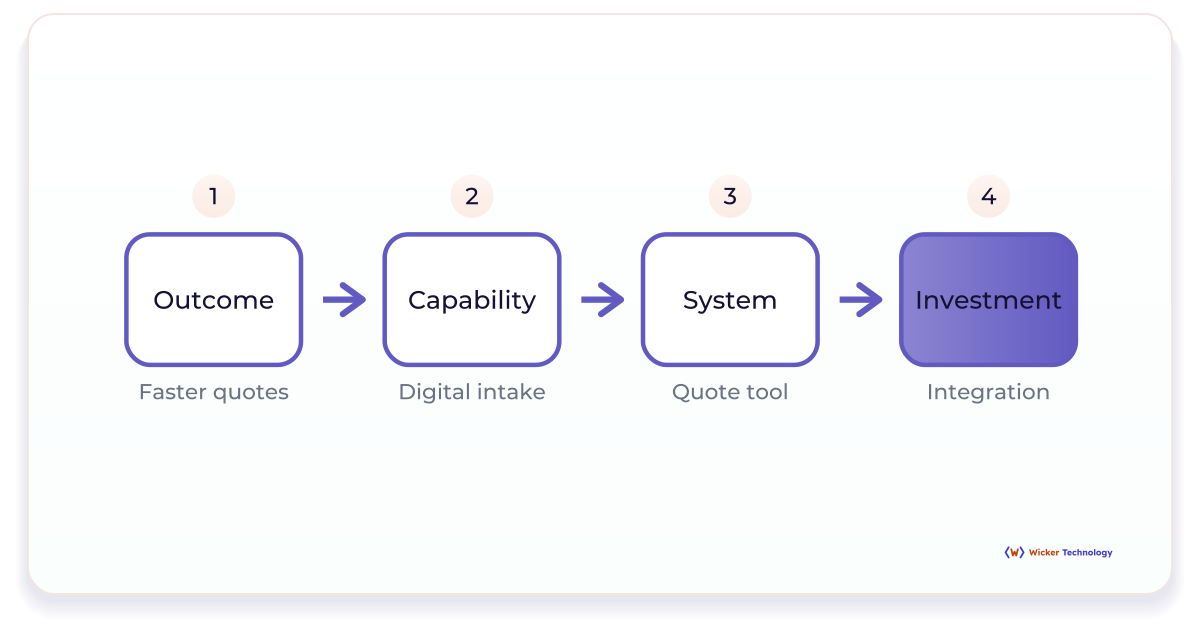
Think of the framework as a stack. Each layer answers one question, and each depends on the one above it. Skipping a layer is what turns a plan into a list of purchases.
| Layer | Question | Output |
|---|---|---|
| 1. Business outcomes | What must be true in 12 to 24 months? | Three to five outcomes with owners and measures |
| 2. Capabilities | What must the organization be able to do to get there? | A capability list, such as digital intake or real-time stock view |
| 3. Systems and data | Which systems and data support each capability today? | A map with gaps, overlaps and risks |
| 4. Investments | What do you fund, in what order and with what budget? | A ranked list with cost ranges and gates |
The capability layer is the one most teams skip. Without it, a goal such as "faster onboarding" jumps straight to a tool, and nobody checks whether intake, identity checks or data entry is the real delay.
The Budget Formula: Run, Grow, Transform
Technology spend falls into three buckets. Run keeps current systems working. Grow adds capacity or features to existing processes. Transform changes how the business works or opens a new line. The formula sets a target mix and shows where you drift:
Target mix: Run share + Grow share + Transform share = 100% of technology budget
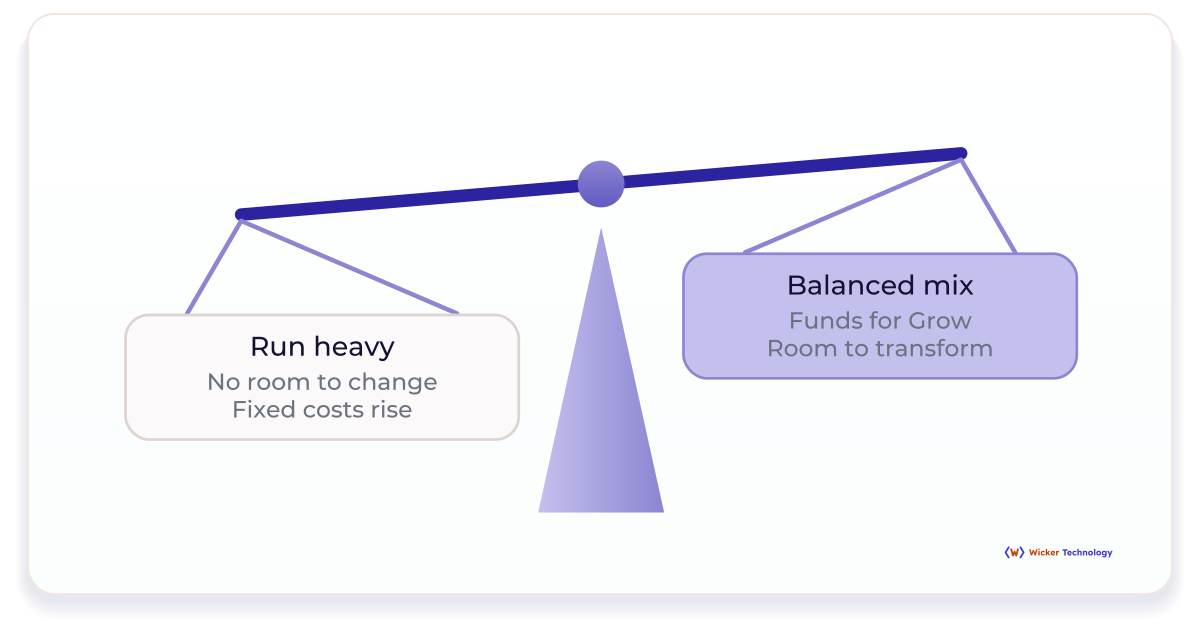
Many mid-sized organizations I work with start at 75 to 85% Run, which leaves almost nothing for change. A common target is 60 to 65% Run, 20 to 25% Grow and 10 to 15% Transform, and the right mix depends on your goals and the age of your systems. The point is to choose the mix on purpose and track it.
| Bucket | What belongs in it | Example today | Example target |
|---|---|---|---|
| Run | Licenses, hosting, support, maintenance | 78% | 62% |
| Grow | Extra users, new modules, integrations | 15% | 24% |
| Transform | New platform, new service line, major process change | 7% | 14% |
A Worked Example
A regional distributor with $60 million in revenue spends $1.8 million a year on technology. Leadership wants shorter order cycles and a second warehouse in 18 months. The current mix is 80% Run, 14% Grow and 6% Transform.
| Initiative | Bucket | Budget change | Outcome |
|---|---|---|---|
| Contract clean-up | Run | -$140k | Retire two overlapping tools |
| Order-to-invoice integration | Grow | +$180k | Shorter order cycle |
| Warehouse system for site two | Transform | +$220k | Second warehouse live |
| Backup and access upgrades | Run | +$60k | Risk reduction |
The net change is plus $320k on a $1.8 million base, which the distributor funds by reducing Run elsewhere and phasing the warehouse system over two budget years. After the plan the mix moves toward 70% Run, 19% Grow and 11% Transform. The numbers are illustrative, but they show how a framework turns goals into a budget conversation.
Decision Gates for Every Investment
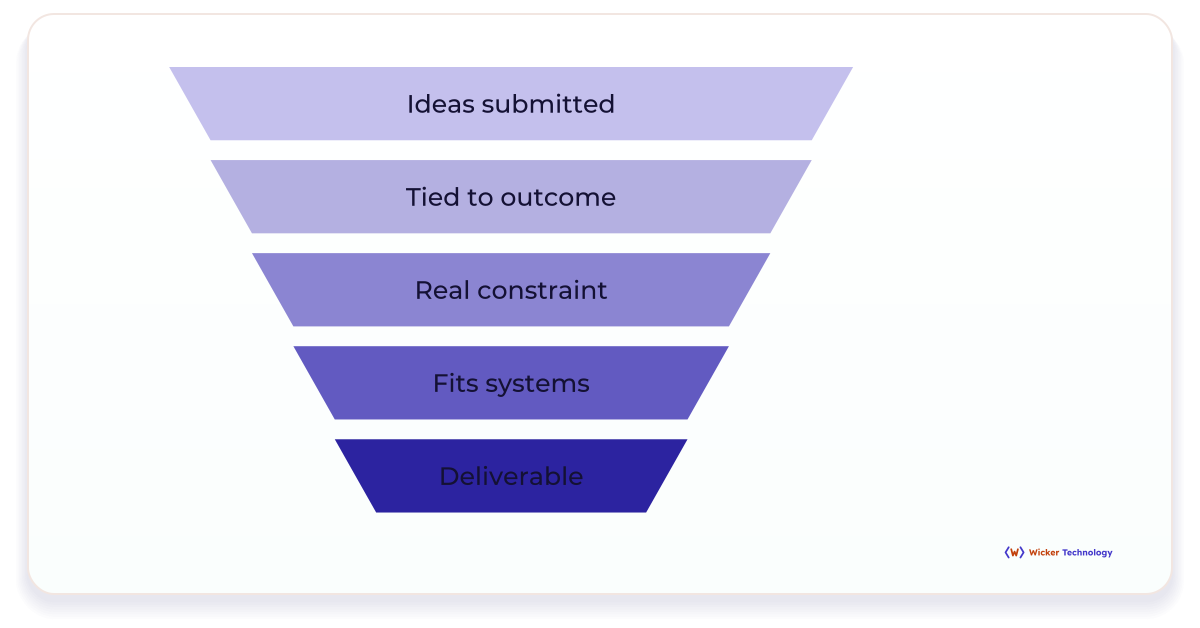
Each initiative passes four gates before it gets funded. The gates are short questions, and each has a named person who answers it.
| Gate | Question | Who answers |
|---|---|---|
| Outcome gate | Which business outcome does this support, and how will you measure it? | Business owner |
| Capability gate | Which capability does it add, and is it the real constraint? | Process owner |
| Fit gate | Does it work with your current systems, data and security needs? | IT lead |
| Capacity gate | Can the team deliver it alongside other projects this quarter? | Project office or IT lead |
Items that fail a gate are not rejected forever. They return to the list with the reason written next to them, which makes the next review faster. The scoring approach for ranking, if you want a numeric one, is the same you can use in the strategic technology roadmap, where passed initiatives get placed on a calendar.
Governance That Keeps the Framework Alive
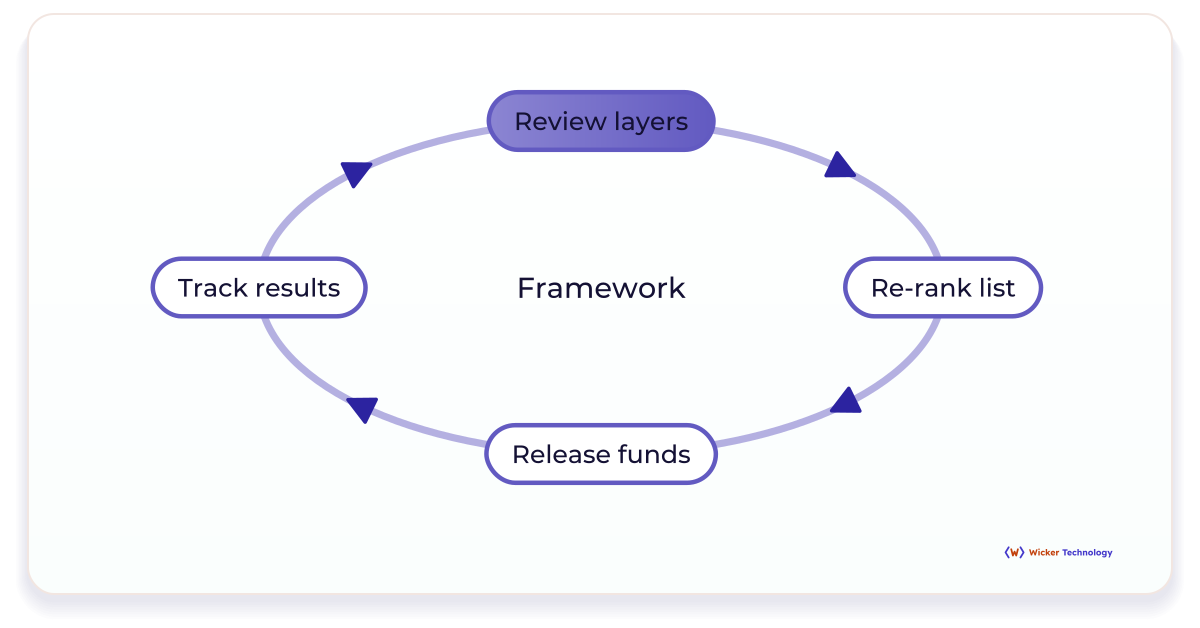
A framework used once is a document. A framework used monthly is a habit. Hold a 45-minute review with finance, operations and IT. Use one backlog, one decision log and one page that shows the Run, Grow and Transform mix.
Refresh the outcome layer once a year and the capability and systems layers whenever the business changes in a major way, such as an acquisition. To see which external shifts deserve a place in the plan, my article on strategic technology trends lists the ones I watch.
How the Layers Look in Healthcare and Logistics
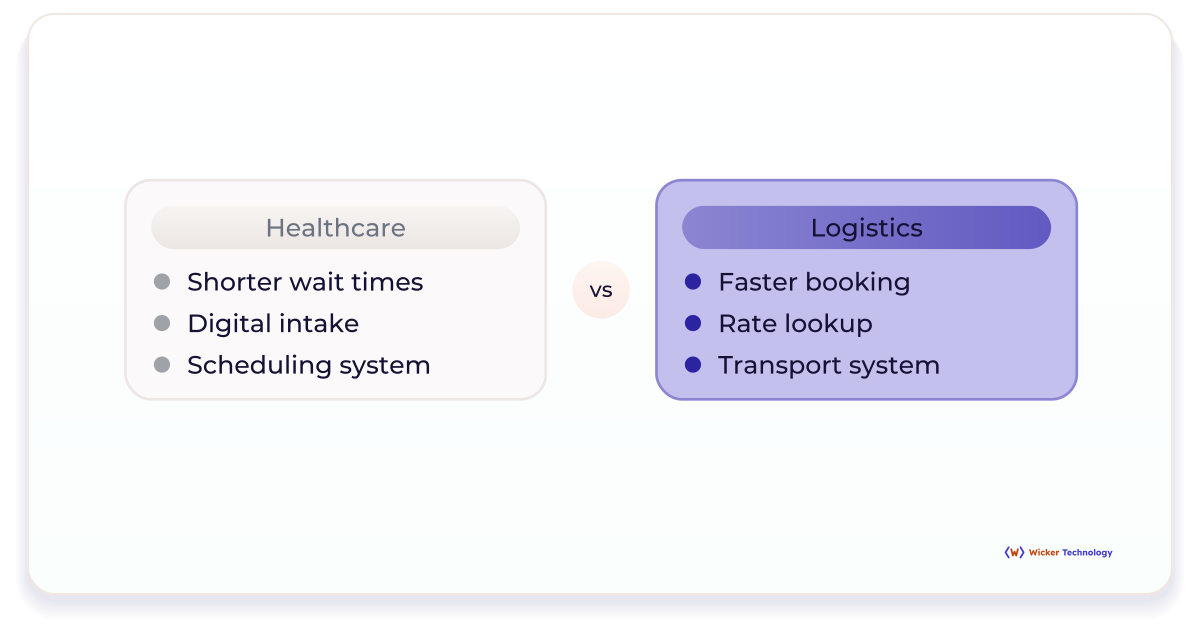
The framework is industry-neutral, yet the content of each layer changes. In a clinic group, the outcome might be fewer missed appointments. The capabilities are reminders, online booking and a single patient record view. The systems layer shows scheduling, billing and records in three tools with no shared identifier, and the investment list starts with the integration, not a new platform.
In a freight business, the outcome might be faster quote-to-booking time. The capabilities are rate lookup, carrier communication and a live shipment view. The map shows rates in spreadsheets and bookings typed twice, so the first investment is a connection between the quoting tool and the transport system. Same four layers, very different answers. That is why I always start with the outcome and never with a product list.
Mistakes I See When Teams Adopt a Framework
Four mistakes show up often. Teams write outcomes that are really projects, such as "implement a new ERP", which hides the goal. They build a capability list so long that nothing is prioritized. They treat the budget mix as a rule instead of a direction and punish every deviation. And they never run the gates after the first workshop, so the list returns to being first come, first served.
The fix for each is small. Rewrite outcomes as results with a measure. Cap capabilities at about ten. Review the mix quarterly and ask why it moved, not who broke it. Put the gate questions in the request form so every new item arrives with answers.
Connecting the Framework to Selection and Delivery
Once an investment passes the gates, it moves into software selection or delivery with a clear brief: the outcome, the capability, the systems it must connect to and the cost range. That brief is better than a feature list, because vendors respond to the problem, and you can score responses on the same terms. During delivery, the exit measure from the outcome layer becomes the acceptance test. If the project ships on time and misses the measure, it is not finished, and the review should say so.
What It Takes Before the Workshop
A half-day workshop works only when the inputs are ready. Ask the finance lead for last year's technology spend split by vendor and the next 12 months of renewals. Ask IT for the application list with owners and the main integrations. Ask each business leader for their top three goals in one sentence. Collect these in a shared folder one week before the session.
Send a short agenda that shows the four layers and the time for each: 30 minutes on outcomes, 45 on capabilities, 45 on the systems map, 60 on investments and the budget mix, and 30 on gates and next steps. Participants who see the structure ahead of time spend less of the session asking what it is for. After the workshop, send the notes within 48 hours, with a list of open questions and a named owner for each one. A framework only becomes a habit if the first output arrives quickly and looks like what was agreed in the room.
Scaling the Framework as You Grow
As the organization grows, the framework scales by adding owners, not steps. A second business unit gets its own outcome list and capability map, and the shared systems layer shows what both units depend on. The budget mix is tracked per unit and in total, which makes it clear where central platforms serve everyone and where a unit pays for its own change.
After an acquisition, run layers 3 and 4 first for the new business. The systems map shows overlaps with your own stack, and the gates help decide what to keep, merge or retire. A short technology review before closing makes this much easier, because the systems map already exists on day one.
Keep one person accountable for the framework itself, often the head of IT or a head of operations. That person owns the files, runs the monthly review and flags when the budget mix drifts from the target for two quarters in a row. Without this role, the framework slowly turns back into a list of requests handled in the order they arrive.
Where Should You Begin?
If you have no plan yet, start with layers 1 and 2 in a half-day workshop. If you have goals but spend is chaotic, start with the budget mix. If you are drowning in requests, start with the gates.
- Three to five business outcomes, each with an owner and a measure.
- A capability list linked to each outcome.
- A systems and data map with gaps and overlaps.
- A current and target Run, Grow and Transform mix.
- Four gates and a monthly review in the calendar.
An outside facilitator can speed up the first workshop and bring benchmarks from similar organizations, which makes the target mix easier to set.
Questions About a Strategic Technology Framework
What Is a Strategic Technology Framework?
It is a structured way to link business outcomes to capabilities, systems and investments, and to decide what gets funded in what order. It gives leadership a shared method instead of a list of requests.
How Is a Framework Different from a Roadmap?
The framework is the decision method. The roadmap is the dated plan that results from it. Use the framework to decide what belongs, then place it on the roadmap.
What Is a Good Run, Grow, Transform Split?
It depends on your goals and the age of your systems. Many mid-sized organizations start with 75 to 85% Run and aim for 60 to 65% Run, 20 to 25% Grow and 10 to 15% Transform. Treat the target as a direction.
How Long Does It Take to Apply the Framework?
A first pass takes a half-day workshop plus one to two weeks of follow-up on the systems map and cost ranges. Later cycles are quicker.
Who Should Be in the Workshop?
The executive sponsor, finance, one or two business unit leaders, the IT lead and a process owner. Five to eight people is a good size.
Can a Small Organization Use This?
Yes. A small company can run the four layers on one page and review it quarterly. The gates and budget mix still help you say no to low-value requests.
What If the Gates Reject Most Requests?
That usually means requests are not linked to outcomes. Review the outcome list with leadership and check that departments understand it before they bring new requests.
Important: nothing in this article is legal, financial or tax advice. All figures are estimates from typical projects, so verify them with your own providers and advisers.
Was this useful?
We appreciate the feedback.
Paige Mulvaney
Paige leads the Wicker editorial team and works with the consultants who run the roadmaps, software selections, implementations and integrations to turn real client projects into practical guides. Her focus is plain-language advice on IT strategy, choosing business software and connecting systems so they work together. Every article she edits is checked against current vendor pricing and documentation before it is published.